


Innate immune activation: Parallels in alcohol use disorder and Alzheimer's disease
- PMID: 36157070
- PMCID: PMC9505690
- DOI: 10.3389/fnmol.2022.910298
Innate immune activation: Parallels in alcohol use disorder and Alzheimer's disease
Abstract
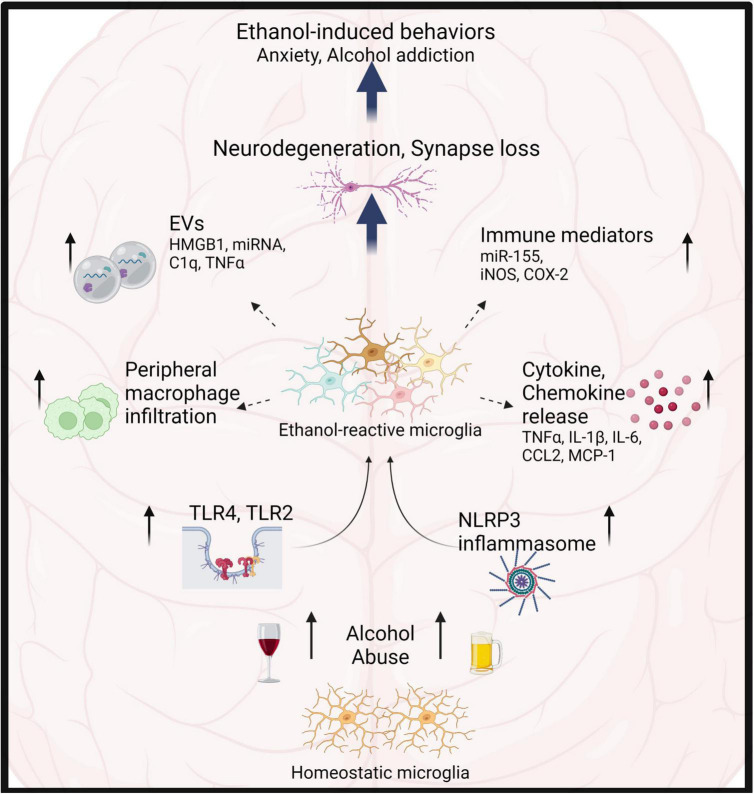
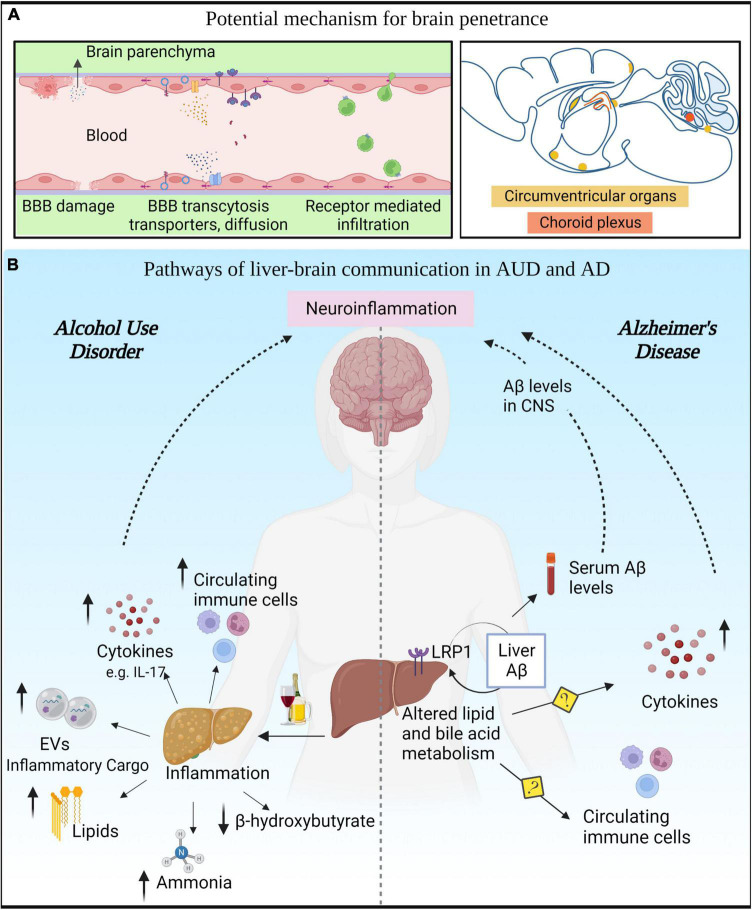
Alcohol use disorder is associated with systemic inflammation and organ dysfunction especially in the liver and the brain. For more than a decade, studies have highlighted alcohol abuse-mediated impairment of brain function and acceleration of neurodegeneration through inflammatory mechanisms that directly involve innate immune cells. Furthermore, recent studies indicate overlapping genetic risk factors between alcohol use and neurodegenerative disorders, specifically regarding the role of innate immunity in the pathomechanisms of both areas. Considering the pressing need for a better understanding of the relevance of alcohol abuse in dementia progression, here we summarize the molecular mechanisms of neuroinflammation observed in alcohol abuse and Alzheimer's disease, the most common cause of dementia. In addition, we highlight mechanisms that are already established in the field of Alzheimer's disease that may be relevant to explore in alcoholism to better understand alcohol mediated neurodegeneration and dementia, including the relevance of the liver-brain axis.
Keywords: Alzheimer’s disease; alcohol; innate immunity; liver-brain axis; microglia; neuroinflammation.
Copyright © 2022 Ramos, Joshi and Szabo.
Conflict of interest statement
GS was the editor-in-Chief of Hepatology Communication., consults for Cyta Therapeutics, Durect, Evive, Merck, Novartis, Pandion Therapeutics, Pfizer, Surrozen and Terra Firma, received royalties from UptoDate and Springer and also holds equity in Glympse Bio, Zomagen and Satellite Bio. The remaining authors declare that the research was conducted in the absence of any commercial or financial relationships that could be construed as a potential conflict of interest.
Figures
References
-
- Addolorato G., Mirijello A., Barrio P., Gual A. (2016). Treatment of alcohol use disorders in patients with alcoholic liver disease. J. Hepatol. 65 618–630. - PubMed
Publication types
LinkOut - more resources
Full Text Sources
