


Gut microbiota and rheumatoid arthritis: From pathogenesis to novel therapeutic opportunities
- PMID: 36159786
- PMCID: PMC9499173
- DOI: 10.3389/fimmu.2022.1007165
Gut microbiota and rheumatoid arthritis: From pathogenesis to novel therapeutic opportunities
Abstract
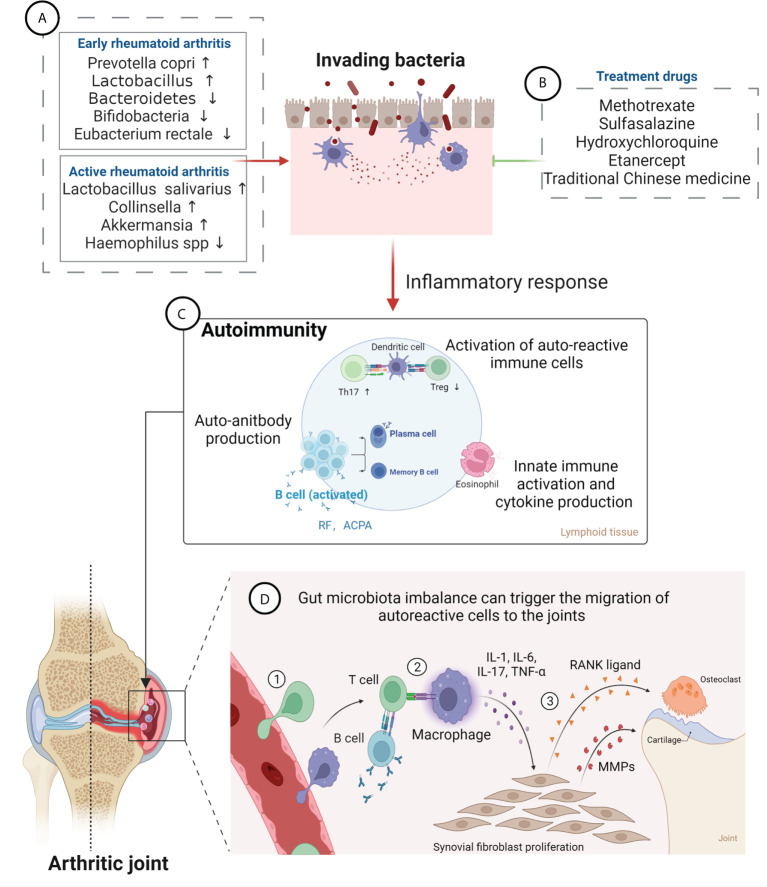
Rheumatoid arthritis (RA) is a chronic autoimmune disease that primarily affects the joints. Microbial infection is considered a crucial inducer of RA. Alterations in the composition of intestinal bacteria in individuals with preclinical and established RA suggest a vital role of the gut microbiota in immune dysfunction characteristic of RA. However, the mechanisms by which gut dysbiosis contributes to RA are not fully understood. Furthermore, multiple therapies commonly used to treat RA may alter gut microbiota diversity, suggesting that modulating the gut microbiota may help prevent or treat RA. Hence, a better understanding of the changes in the gut microbiota that accompany RA should aid the development of novel therapeutic approaches. This mini-review discusses the impact of gut dysbiosis in the pathogenesis of RA, the selection of gut microbiota-related biomarkers for diagnosing RA, and provides examples of cross-modulation between the gut microbiota and some drugs commonly used to treat RA. Some suggestions and outlooks are also raised, which may help guide future research efforts.
Keywords: drug treatment; gut microbiota; immune response; inflammation; rheumatoid arthritis.
Copyright © 2022 Zhao, Wei, Zhu, Xie, Hai, Li and Qin.
Conflict of interest statement
The authors declare that the research was conducted in the absence of any commercial or financial relationships that could be construed as a potential conflict of interest.
Figures
References
Publication types
MeSH terms
LinkOut - more resources
Full Text Sources
Other Literature Sources
Medical
