


Nano-iron oxide accelerates growth, yield, and quality of Glycine max seed in water deficits
- PMID: 36160973
- PMCID: PMC9500458
- DOI: 10.3389/fpls.2022.992535
Nano-iron oxide accelerates growth, yield, and quality of Glycine max seed in water deficits
Abstract
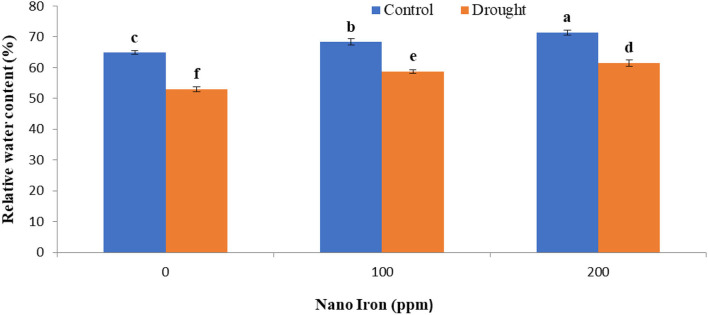
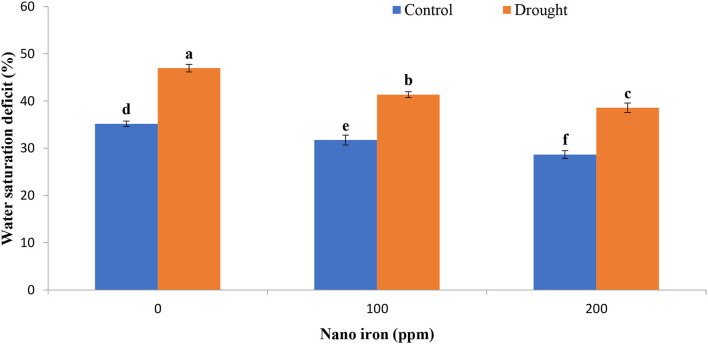
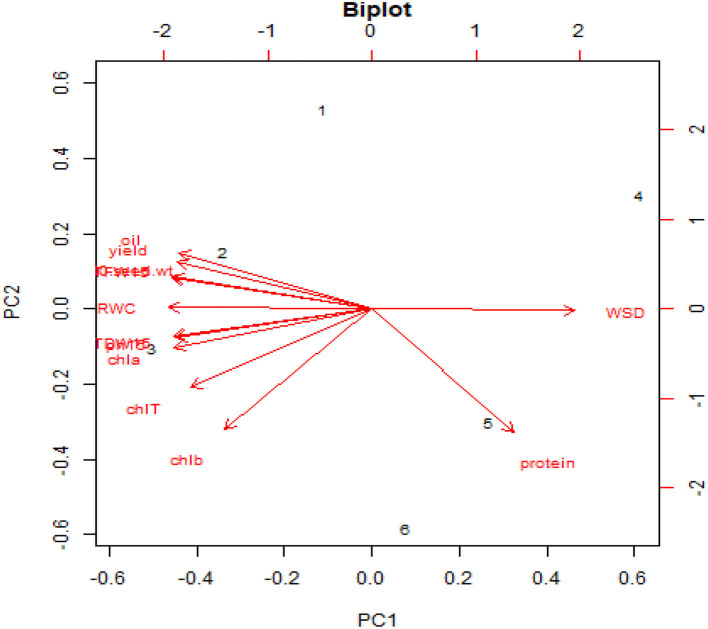
Drought is one of the most destructive abiotic stresses that impact the growth, physiology, yield, and nutritional quality of seeds of crop plants. In modern agriculture, the use of nanoparticles can be beneficial due to their large surface area and higher potentiality to enter into the plant leaf during foliar application. This study aims to evaluate the effects of foliar spray containing varying doses (0, 100, and 200 ppm) of the nano-iron (Fe3O4) on the growth, physiology, yield, and seed nutritional quality of soybean under drought (40% of field capacity, FC) and well-watered (80% of FC) conditions. Leaf water status, chlorophyll content of leaves, the height of the plant, fresh leaf weight, fresh stem weight, fresh petiole weight, total dry weight, seed yield, and protein and oil content in soybean seeds were found to be suppressed by the applied drought stress. Under both drought (40% of FC) and controlled well-watered (80% of FC) conditions, the foliar application of nano-iron substantially improved the growth, physiology, yield, and quality of soybean seeds. The nanoparticles at 200 ppm increased soybean seed yield by 40.12 and 32.60% in drought and well-watered conditions, respectively, compared to the untreated plants. Furthermore, nano-iron increased the oil content of soybean seeds by 10.14 and 7.87% under drought and well-watered conditions, respectively, compared to the untreated control. Our results indicate that the application of nano-iron improved drought tolerance, yield, and seed quality of soybean, so exogenous foliar sprays of 200 ppm Fe3O4 were more effective than the other treatments in enhancing drought tolerance and can be utilized to reduce losses caused by drought stress in soybean-growing areas.
Keywords: drought stress; foliar spray; nano Fe3O4 particles; seed oil content; seed protein content; seed yield.
Copyright © 2022 Dola, Mannan, Sarker, Mamun, Islam, Ercisli, Saleem, Ali, Pop and Marc.
Conflict of interest statement
The authors declare that the research was conducted in the absence of any commercial or financial relationships that could be construed as a potential conflict of interest.
Figures
References
-
- Abd El-Aziz N. G., Balbaa L. K. (2007). Influence of tyrosine and zinc on growth, flowering and chemical constituents of Salvia farinacea plants. J. Appl. Sci. Res. 3, 1479–89.
-
- Ahmad M., Ishaq M., Shah W. A., Adnan M., Fahad S., Saleem M. H., et al. (2022). Managing phosphorus availability from organic and inorganic sources for optimum wheat production in calcareous soils. Sustainability 14, 7669. 10.3390/su14137669 - DOI
-
- Ali B., Wang X., Saleem M. H., Azeem M. A., Afridi M. S., Nadeem M., et al. (2022). Bacillus mycoides PM35 reinforces photosynthetic efficiency, antioxidant defense, expression of stress-responsive genes, and ameliorates the effects of salinity stress in maize. Life. 12, 219. 10.3390/life12020219 - DOI - PMC - PubMed
-
- Basal O., Szabó A. (2020). Physiology, yield and quality of soybean as affected by drought stress. Asian J. Agric. Biol. 8, 247–252. 10.35495/ajab.2019.11.505 - DOI
-
- Benzon H. R. L., Rubenecia M. R. U., Ultra V. U., Jr., Lee S. C. (2015). Nano-fertilizer affects the growth, development and chemical properties of rice. Int. J. Agron. Agric. Res. 7, 105–117. 10.5539/jas.v7n4p20 - DOI
LinkOut - more resources
Full Text Sources
Other Literature Sources
