


Phycochemistry and bioactivity of cyanobacterial secondary metabolites
- PMID: 36161579
- PMCID: PMC9513011
- DOI: 10.1007/s11033-022-07911-2
Phycochemistry and bioactivity of cyanobacterial secondary metabolites
Abstract
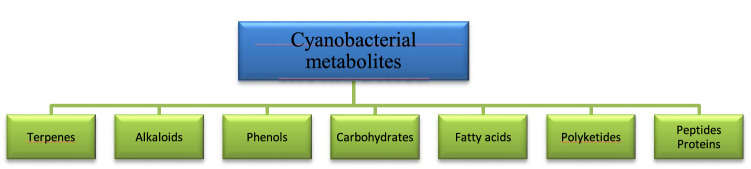
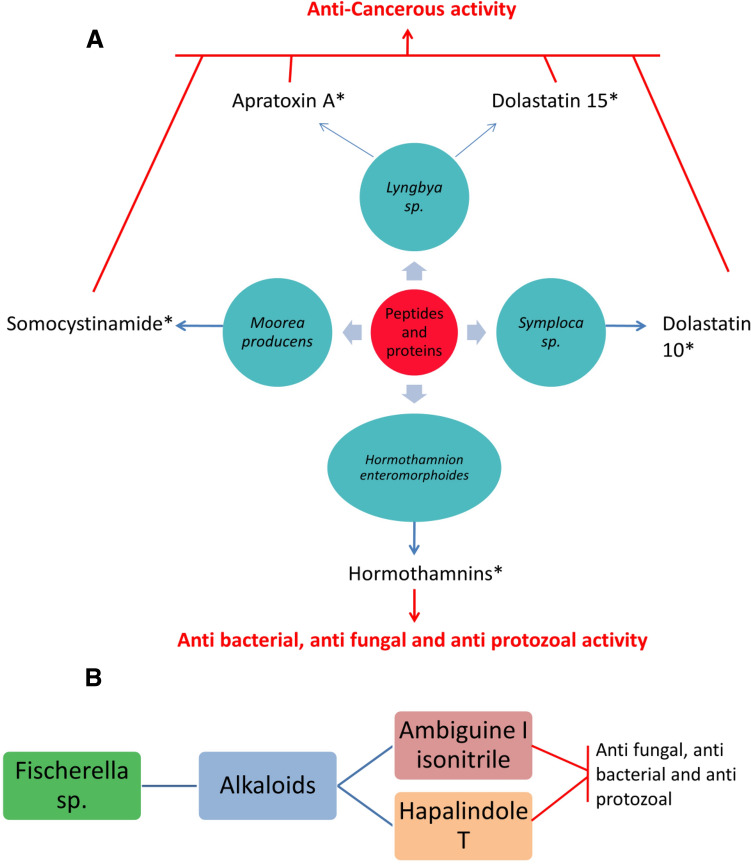
Microbes are a huge contributor to people's health around the world since they produce a lot of beneficial secondary metabolites. Cyanobacteria are photosynthetic prokaryotic bacteria cosmopolitan in nature. Adaptability of cyanobacteria to wide spectrum of environment can be contributed to the production of various secondary metabolites which are also therapeutic in nature. As a result, they are a good option for the development of medicinal molecules. These metabolites could be interesting COVID-19 therapeutic options because the majority of these compounds have demonstrated substantial pharmacological actions, such as neurotoxicity, cytotoxicity, and antiviral activity against HCMV, HSV-1, HHV-6, and HIV-1. They have been reported to produce a single metabolite active against wide spectrum of microbes like Fischerella ambigua produces ambigols active against bacteria, fungi and protozoa. Similarly, Moorea producens produces malygomides O and P, majusculamide C and somocystinamide which are active against bacteria, fungi and tumour cells, respectively. In addition to the above, Moorea sp. produce apratoxin A and dolastatin 15 possessing anti cancerous activity but unfortunately till date only brentuximab vedotin (trade name Adcetris), a medication derived from marine peptides, for the treatment of Hodgkin lymphoma and anaplastic large cell lymphoma has been approved by FDA. However, several publications have effectively described and categorised cyanobacterial medicines based on their biological action. In present review, an effort is made to categorize cyanobacterial metabolites on the basis of their phycochemistry. The goal of this review is to categorise cyanobacterial metabolites based on their chemical functional group, which has yet to be described.
Keywords: Antimicrobial; COVID-19; Cyanobacteria; Functional groups; Secondary metabolites.
© 2022. The Author(s), under exclusive licence to Springer Nature B.V.
Conflict of interest statement
The authors declare no competing financial interest.
Figures
References
Publication types
MeSH terms
LinkOut - more resources
Full Text Sources
Medical
Research Materials
