


Proton Pump Inhibitors in Allergy: Benefits and Risks
- PMID: 36162802
- PMCID: PMC9923889
- DOI: 10.1016/j.jaip.2022.09.022
Proton Pump Inhibitors in Allergy: Benefits and Risks
Abstract
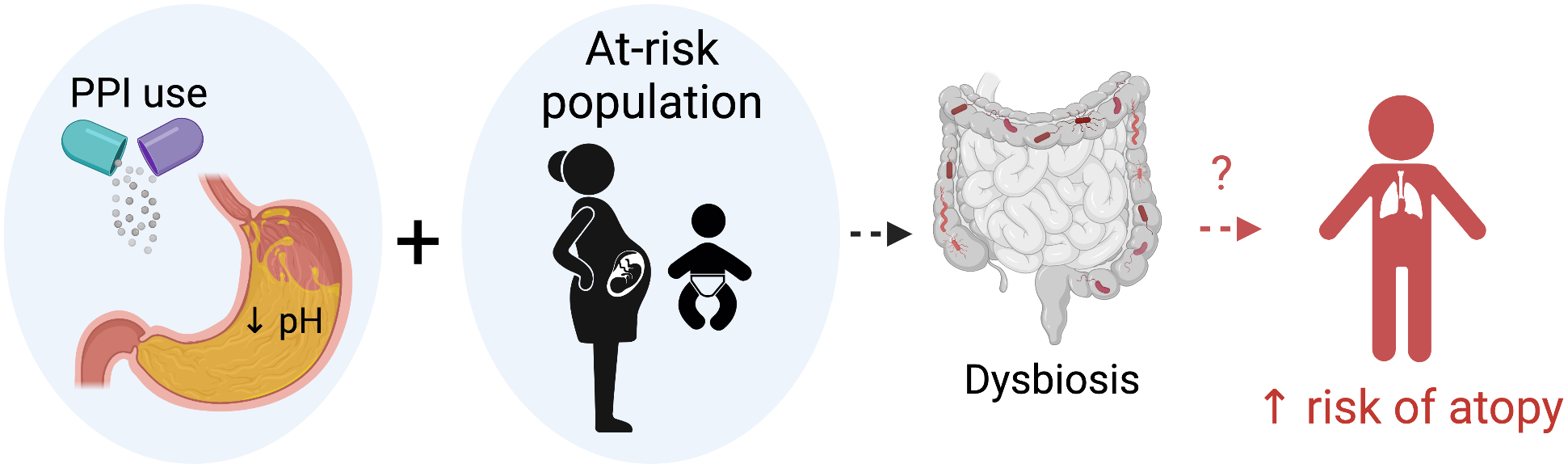
Proton pump inhibitors (PPIs) are widely prescribed and are indicated for the treatment of several gastrointestinal disorders. Allergists may prescribe PPIs as a result of the coincidence of gastroesophageal reflux disease with asthma or rhinitis, or when gastroesophageal reflux disease presents as chronic cough. Furthermore, long-term, high-dose PPI therapy is a recommended option for managing eosinophilic esophagitis, resulting in histologic remission in approximately 40% of patients. Here, we discuss current recommendations for PPI use, its deescalation, and its side effect profile. We review evidence supporting the epidemiologic link between the use of acid-suppressant medication and the subsequent development of allergic disorders.
Keywords: Adverse events; Asthma; Eosinophilic esophagitis; Hypersensitivity; Proton pump inhibitor.
Copyright © 2022 American Academy of Allergy, Asthma & Immunology. Published by Elsevier Inc. All rights reserved.
Figures
References
-
- Aihara T, Nakamura E, Amagase K, Tomita K, Fujishita T, Furutani K, et al. Pharmacological control of gastric acid secretion for the treatment of acid-related peptic disease: past, present, and future. Pharmacol Ther. 2003;98:109–27. - PubMed
-
- Quinonez RA, Garber MD, Schroeder AR, Alverson BK, Nickel W, Goldstein J, et al. Choosing wisely in pediatric hospital medicine: five opportunities for improved healthcare value. J Hosp Med. 2013;8:479–85. - PubMed
-
- Body C, Christie JA. Gastrointestinal Diseases in Pregnancy: Nausea, Vomiting, Hyperemesis Gravidarum, Gastroesophageal Reflux Disease, Constipation, and Diarrhea. Gastroenterol Clin North Am. 2016;45:267–83. - PubMed
-
- Freedberg DE, Kim LS, Yang YX. The Risks and Benefits of Long-term Use of Proton Pump Inhibitors: Expert Review and Best Practice Advice From the American Gastroenterological Association. Gastroenterology. 2017;152:706–15. - PubMed
