


Occurrence of SARS-CoV-2 reinfections at regular intervals in Ecuador
- PMID: 36164552
- PMCID: PMC9507970
- DOI: 10.3389/fcimb.2022.951383
Occurrence of SARS-CoV-2 reinfections at regular intervals in Ecuador
Abstract
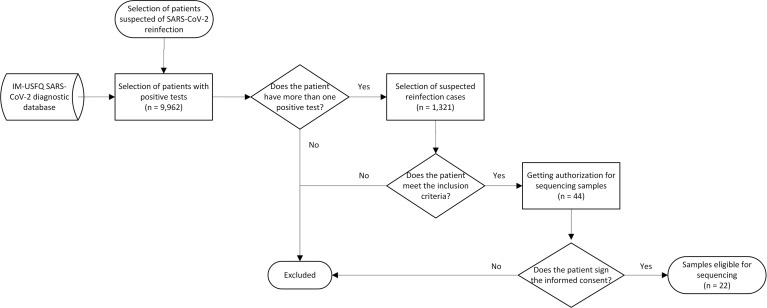
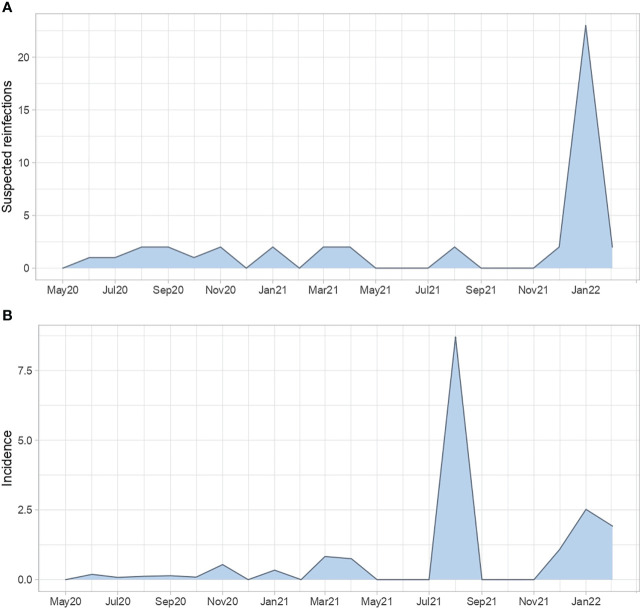
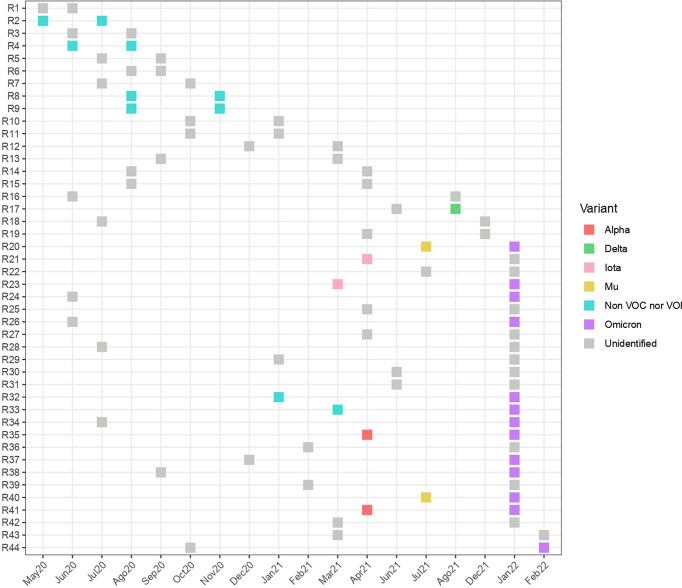
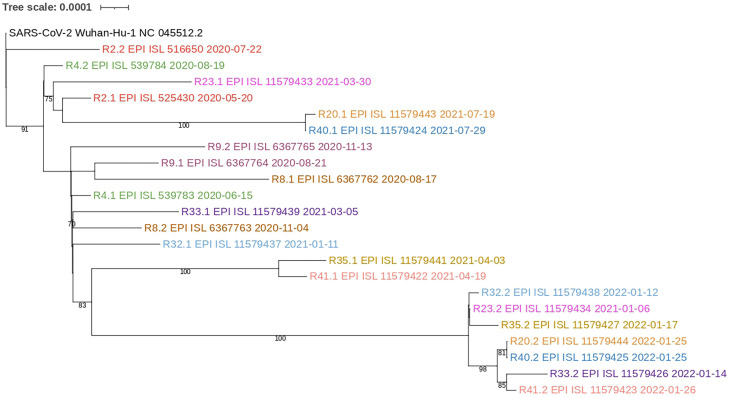
SARS-CoV-2 reinfection is defined as a new infection with a different virus variant in an individual who has already recovered from a previous episode of COVID-19. The first case of reinfection in the world was described in August 2020, since then, reinfections have increased over time and their incidence has fluctuated with specific SARS-CoV-2 variant waves. Initially, reinfections were estimated to represent less than 1% of total COVID-19 infections. With the advent of the Omicron variant, reinfections became more frequent, representing up to 10% of cases (based on data from developed countries). The frequency of reinfections in Latin America has been scarcely reported. The current study shows that in Ecuador, the frequency of reinfections has increased 10-fold following the introduction of Omicron, after 22 months of surveillance in a single center of COVID-19 diagnostics. Suspected reinfections were identified retrospectively from a database of RT-qPCR-positive patients. Cases were confirmed by sequencing viral genomes from the first and second infections using the ONT MinION platform. Monthly surveillance showed that the main incidence peaks of reinfections were reached within four to five months, coinciding with the increase of COVID-19 cases in the country, suggesting that the emergence of reinfections is related to higher exposure to the virus during outbreaks. This study performed the longest monitoring of SARS-CoV-2 reinfections, showing an occurrence at regular intervals of 4-5 months and confirming a greater propensity of Omicron to cause reinfections.
Keywords: COVID-19; SARS-CoV-2; genomic epidemiology; reinfection; sequencing.
Copyright © 2022 Guevara, Prado-Vivar, Márquez, Muñoz, Carvajal, Guadalupe, Becerra-Wong, Proaño, Bayas-Rea, Coloma, Grunauer, Trueba, Rojas-Silva, Barragán and Cárdenas.
Conflict of interest statement
The authors declare that the research was conducted in the absence of any commercial or financial relationships that could be construed as a potential conflict of interest.
Figures
References
-
- Abu-Raddad L. J., Chemaitelly H., Coyle P., Malek J. A., Ahmed A. A., Mohamoud Y. A., et al. (2021). SARS-CoV-2 SARS-CoV-2 antibody-positivity protects against reinfection for at least seven months with 95% efficacy. EClinicalMedicine 35:100861. doi: 10.1016/j.eclinm.2021.100861 - DOI - PMC - PubMed
-
- Bakker B. (2021) COVID-19 in Latin America a high toll on lives and livelihoods. Available at: http://elibrary.imf.org/view/journals/001/2021/168/001.2021.issue-168-en... (Accessed June 22, 2022).
-
- Barber R. M., Sorensen R. J. D., Pigott D. M., Bisignano C., Carter A., Amlag J. O., et al. (2022). Estimating global, regional, and national daily and cumulative infections with SARS-CoV-2 through Nov 14, 2021: a statistical analysis. Lancet 399, 2351–2380. doi: 10.1016/S0140-6736(22)00484-6 - DOI - PMC - PubMed
MeSH terms
Supplementary concepts
Grants and funding
LinkOut - more resources
Full Text Sources
Medical
Molecular Biology Databases
Miscellaneous
