


Bacterial AB toxins and host-microbe interactions
- PMID: 36167443
- PMCID: PMC12035773
- DOI: 10.1016/bs.ampbs.2022.06.002
Bacterial AB toxins and host-microbe interactions
Abstract
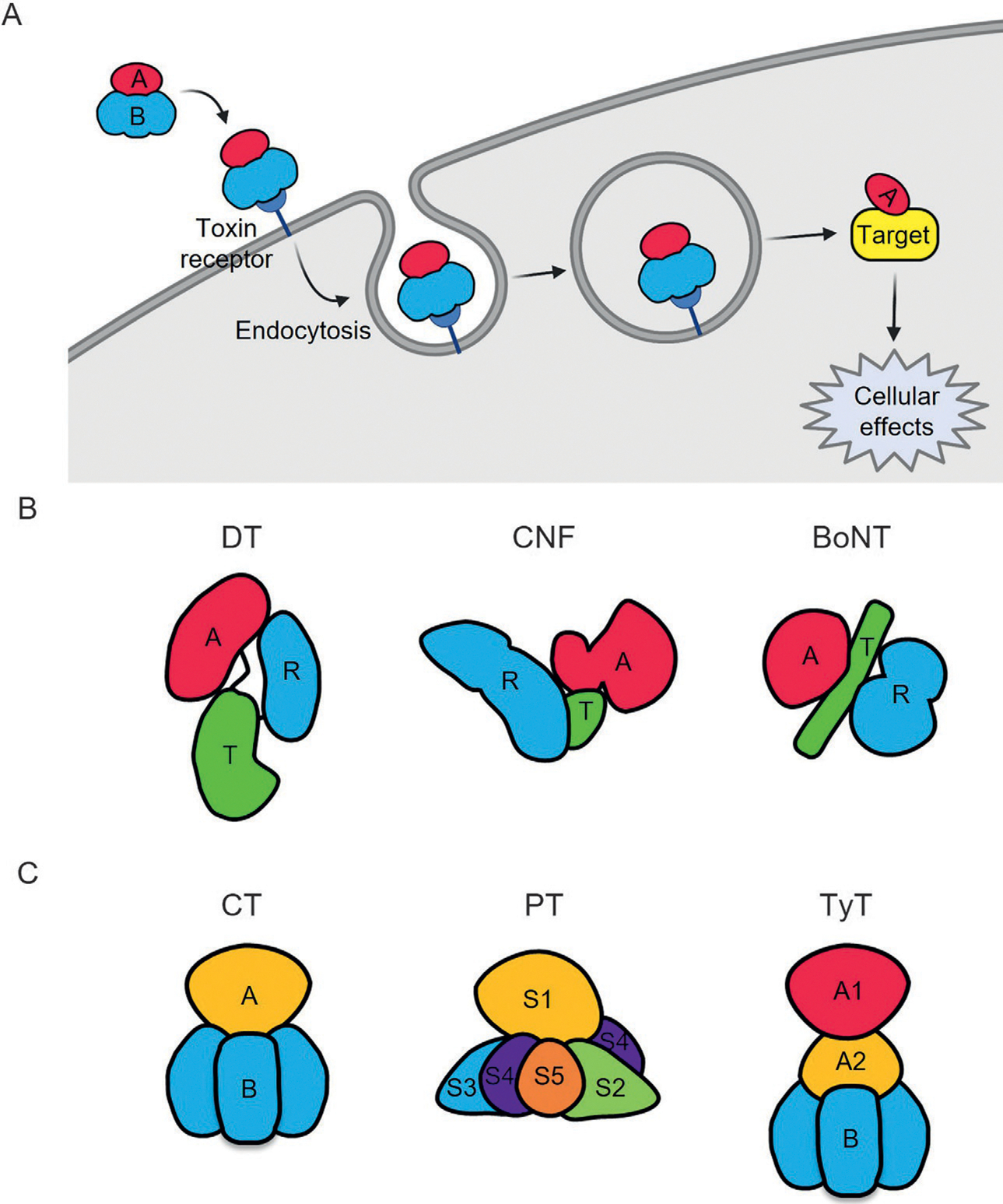
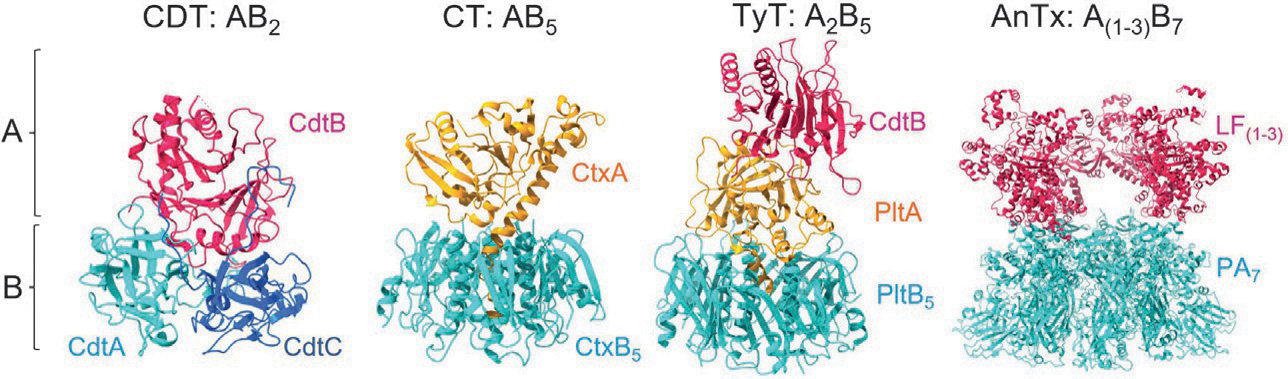
AB toxins are protein virulence factors secreted by many bacterial pathogens, contributing to the pathogenicity of the cognate bacteria. AB toxins consist of two functionally distinct components: the enzymatic "A" component for pathogenicity and the receptor-binding "B" component for toxin delivery. Consistently, unlike other virulence factors such as effectors, AB toxins do not require additional systems to deliver them to the target host cells. Target host cells are located in the infection site and/or located distantly from infected host cells. The first part of this review discusses the structural and functional features of single-peptide and multiprotein AB toxins in the context of host-microbe interactions, using several well-characterized examples. The second part of this review discusses toxin neutralization strategies, as well as applications of AB toxins relevant to developing intervention strategies against diseases.
Keywords: AB toxin; Adjuvant; Antibody; Bacteria; Host and microbe interaction; Pathogen; Pathogenicity; Structure and function; Toxin neutralization; Toxin synthesis, secretion, and delivery; Vaccine; Virulence.
Copyright © 2022 Elsevier Ltd All rights reserved.
Figures
References
-
- Aoki KR, & Guyer B (2001). Botulinum toxin type a and other botulinum toxin serotypes: A comparative review of biochemical and pharmacological actions. European Journal of Neurology, 8(Suppl 5), 21–29. - PubMed
Publication types
MeSH terms
Substances
Grants and funding
LinkOut - more resources
Full Text Sources
