


Computational study of the relative stability of some glass-ionomer cement-forming molecules
- PMID: 36169744
- PMCID: PMC9519700
- DOI: 10.1007/s00894-022-05211-x
Computational study of the relative stability of some glass-ionomer cement-forming molecules
Abstract
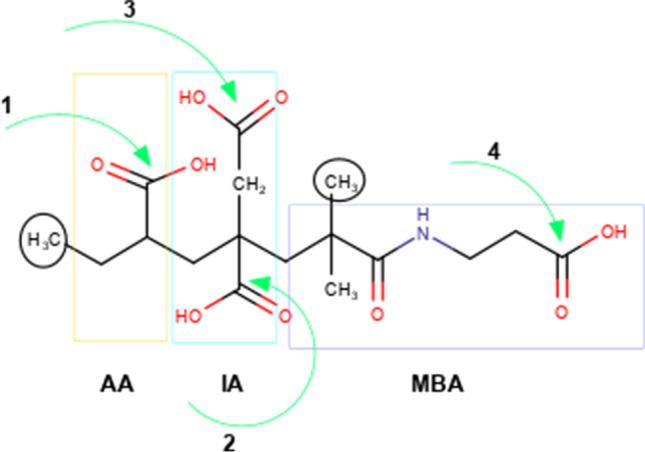
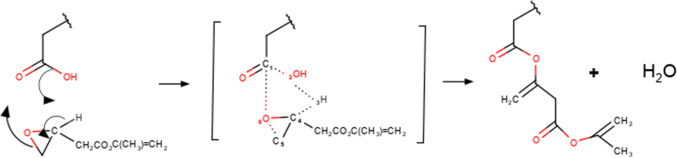
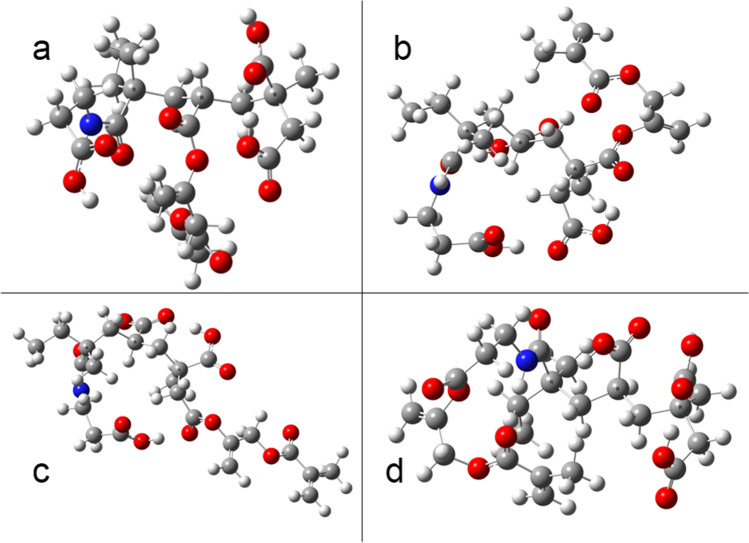
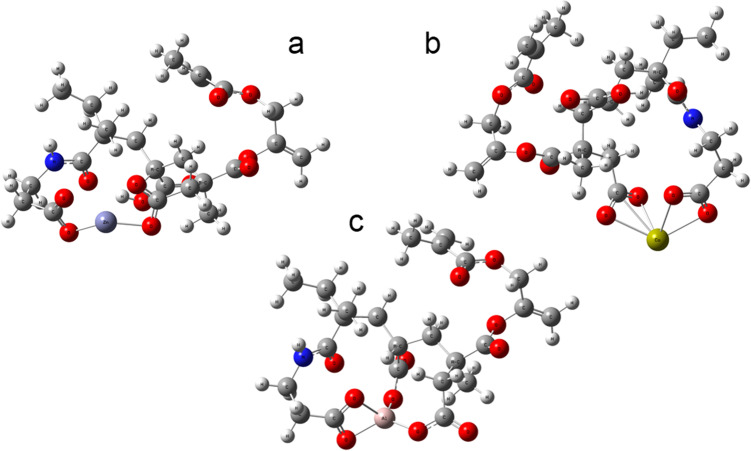
This work is part of a larger study whose main objective was to find a series of promising molecules to be used as glass-ionomer-type materials. The project was divided into 3 successive stages; the results of the first stage have been previously published and were used to continue the study. The molecules evaluated in the second stage were constructed by adding a glycidyl methacrylate molecule to the carboxylic groups of the polyacids selected in the previous stage. The modeling was done using the density functional theory for M06-2X/6-311G(d,p). The results indicate that the addition over the carboxylic groups of the fraction of the molecule, corresponding to itaconic acid, is thermodynamically favored. The final stage was modeled with the M06 functional and consisted of obtaining basic structures of glass-ionomer-type materials, by acid-base reaction between the molecules resulting from the second stage with individual ions of Ca (2 +), Zn (2 +), or Al (+ 3). It was concluded that aluminum atoms generate more compact structures that would correlate with more resistant materials.
Keywords: Dental cement; Glass-ionomer; Glycidyl methacrylate; M06; Polyacids.
© 2022. The Author(s).
Conflict of interest statement
The authors declare no competing interests.
Figures

References
-
- Mount GJ (2002) An atlas of glass-ionomer cements. A clinician´s guide. 3rd edn. Martin Dunitz, London
MeSH terms
Substances
LinkOut - more resources
Full Text Sources
