


A 5-year trend in the use of sodium-glucose co-transporter 2 inhibitors and other oral antidiabetic drugs in a Middle Eastern country
- PMID: 36169802
- PMCID: PMC9718883
- DOI: 10.1007/s11096-022-01464-x
A 5-year trend in the use of sodium-glucose co-transporter 2 inhibitors and other oral antidiabetic drugs in a Middle Eastern country
Abstract
Background: Sodium glucose co-transporter 2 inhibitors (SGLT2is) are a novel class of oral antidiabetic drugs. To date, there are no pharmacoepidemiologic studies investigating the pattern of use of SGLT2is compared to other oral antidiabetic drugs in the Middle East, including Qatar.
Aim: This study aimed to explore the trends in the use of SGLT2is compared to other oral antidiabetic drugs in Qatar from 2016 to 2020.
Method: This is a descriptive, retrospective cross-sectional study where information on all oral antidiabetic drugs dispensed as in- or out-patient prescriptions from 2016 to 2020 in Hamad Medical Corporation hospitals, Qatar were collected. Outcomes included the number and relative frequency of quarterly prescriptions of different oral antidiabetic drug classes [biguanides, sulfonylureas, dipeptidyl peptidase 4 inhibitors, thiazolidinediones, meglitinides, α-glucosidase inhibitors, and SGLT2is] prescribed from 2016 to 2020.
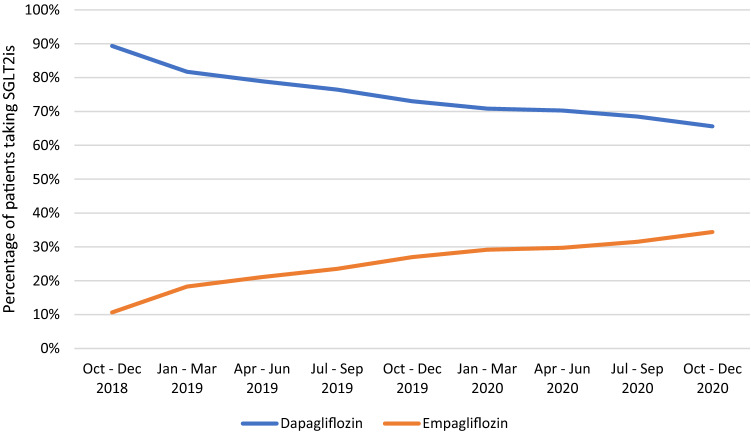
Results: SGLT2is prescriptions increased from 1045 (2.13%) in 2017 to 8375 (12.39%) in 2020, while sulfonylureas prescriptions declined from 10,436 (21.25%) to 9158 (13.55%) during the same period. Metformin use decreased from 23,926 (48.71%) in 2017 to 30,886 (45.70%) in 2020. The proportions of thiazolidinediones, meglitinides, α-glucosidase inhibitors prescriptions remained stable over the years. Among SGLT2is, empagliflozin prescriptions showed an increase from 537 (10.65%) to 2881 (34.40%) compared to dapagliflozin, which decreased by the end of 2018 from 4505 (89.35%) to 5494 (65.6%).
Conclusion: SGLT2is have largely replaced sulfonylureas in Qatar. The increasing trend in their use over the years is similar to that reported in other countries. The trend among SGLT2is suggests greater preference for empagliflozin over dapagliflozin.
Keywords: Diabetes mellitus; Hypoglycemic agents; Qatar; Sodium-glucose transporter 2 inhibitors; Trends; Type 2.
© 2022. The Author(s).
Conflict of interest statement
The authors declare no conflict of interest.
Figures



References
-
- Garber AJ, Abrahamson MJ, Barzilay JI, et al. Consensus statement by the American Association of Clinical Endocrinologists and American College of Endocrinology on the comprehensive type 2 diabetes management algorithm - 2019 executive summary. Endocr Pract. 2019;25:69–100. doi: 10.4158/CS-2018-0535. - DOI - PubMed
-
- Buse JB, Wexler DJ, Tsapas A, et al. Update to: management of hyperglycemia in type 2 diabetes, 2018. A consensus report by the American Diabetes Association (ADA) and the European Association for the study of diabetes (EASD) Diabetes Care. 2019;43:487–93. doi: 10.2337/dci19-0066. - DOI - PMC - PubMed
-
- National Institute for Health and Care Excellence. Type 2 diabetes in adults: management. NICE guideline 2015. https://www.nice.org.uk/guidance/ng28. Accessed 09.07.2021. - PubMed
MeSH terms
Substances
LinkOut - more resources
Full Text Sources
Medical
