


Impact of community and provider-driven social accountability interventions on contraceptive uptake in Ghana and Tanzania
- PMID: 36171614
- PMCID: PMC9516523
- DOI: 10.1186/s12939-022-01736-y
Impact of community and provider-driven social accountability interventions on contraceptive uptake in Ghana and Tanzania
Abstract
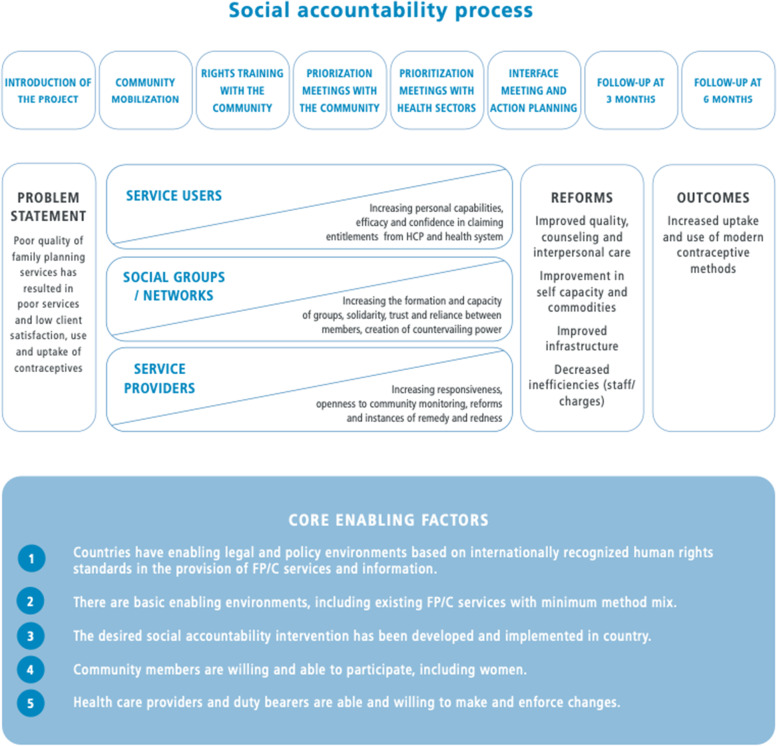
Background: Social accountability, which is defined as a collective process for holding duty bearers and service providers to account for their actions, has shown positive outcomes in addressing the interrelated barriers to quality sexual and reproductive health services. The Community and Provider driven Social Accountability Intervention (CaPSAI) Project contributes to the evidence on the effects of social accountability processes in the context of a family planning and contraceptive programme.
Methods: A quasi-experimental study utilizing an interrupted time series design with a control group (ITS-CG) was conducted to determine the actual number of new users of contraception amongst women 15-49 years old in eight intervention and eight control facilities per country in Ghana and Tanzania. A standardized facility audit questionnaire was used to collect facility data and completed every year in both intervention and control groups in each country from 2018-2020.
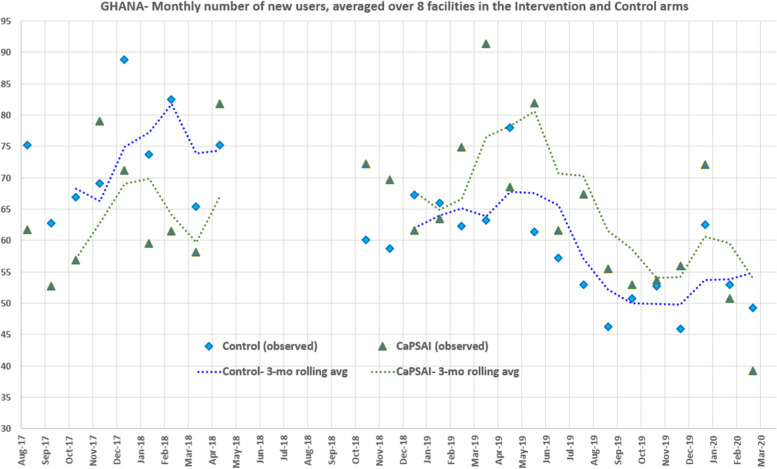
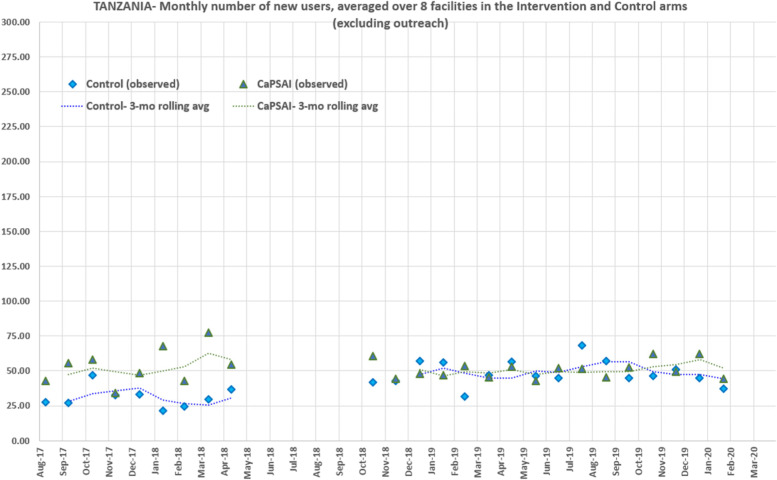
Results: In Ghana, the two-segmented Poisson Generalized Estimating Equation (GEE) model demonstrated no statistically significant difference at post-intervention, between the intervention and control facilities, in the level of uptake of contraceptives (excess level) (p-value = 0.07) or in the rate of change (excess rate) in uptake (p-value = 0.07) after adjusting for baseline differences. Similarly, in Tanzania, there was no statistical difference between intervention and control facilities, in the level of uptake of contraceptives (excess level) (p-value = 0.20), with the rate of change in uptake (p-value = 0.05) after adjusting for the baseline differences. There was no statistical difference in the level of or rate of change in uptake in the two groups in a sensitivity analysis excluding new users recruited in outreach activities in Tanzania.
Conclusions: The CAPSAI project intervention did not result in a statistically significant increase in uptake of contraceptives as measured by the number of or increase in new users. In evaluating the impact of the intervention on the intermediate outcomes such as self-efficacy among service users, trust and countervailing power among social groups/networks, and responsiveness of service providers, cases of change and process evaluation should be considered.
Trial registration: The CaPSAI Project has been registered at the Australian New Zealand Clinical Trials Registry (ACTRN12619000378123, 11/03/2019).
Keywords: Contraception/ family planning; Social accountability; Uptake of contraception.
© 2022. The Author(s).
Conflict of interest statement
The authors did not declare any competing interests.
Figures


References
-
- Sully E, Biddlecom A, Darroch JE, Riley T, Ashford LS, Lince-Deroche N, Firestein L, Murro R. Adding it up: investing in sexual and reproductive health 2019. New York: Guttmacher Institute; 2020. https://www.guttmacher.org/report/adding-it-upinvesting-in-reproductive-... .
-
- United Nations – Population division. Sustainable Development Goals. DG Indicator 3.7.1 on Contraceptive Use; 2015. https://www.un.org/development/desa/pd/sustainable-development-goals-0. Accessed on 5 July 2021.
-
- United Nations . World Fertility and Family Planning 2020: Highlights. New York: United Nations; 2020.
-
- Kantorová V, Wheldon MC, Dasgupta AN, Ueffing P, Castanheira HC. Contraceptive use and needs among adolescent women aged 15–19: Regional and global estimates and projections from 1990 to 2030 from a Bayesian hierarchical modelling study. PLoS ONE. 2021;16(3):e0247479. doi: 10.1371/journal.pone.0247479. - DOI - PMC - PubMed
Publication types
MeSH terms
Substances
Grants and funding
LinkOut - more resources
Full Text Sources
