


This is a preprint.
Evolution of antibody immunity following Omicron BA.1 breakthrough infection
- PMID: 36172124
- PMCID: PMC9516849
- DOI: 10.1101/2022.09.21.508922
Evolution of antibody immunity following Omicron BA.1 breakthrough infection
Update in
-
Evolution of antibody immunity following Omicron BA.1 breakthrough infection.Nat Commun. 2023 May 12;14(1):2751. doi: 10.1038/s41467-023-38345-4. Nat Commun. 2023. PMID: 37173311 Free PMC article.
Abstract
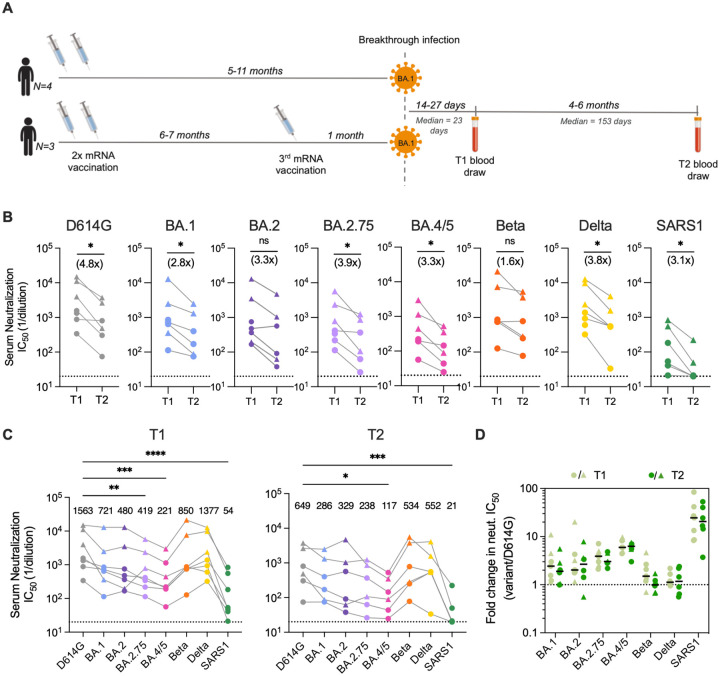
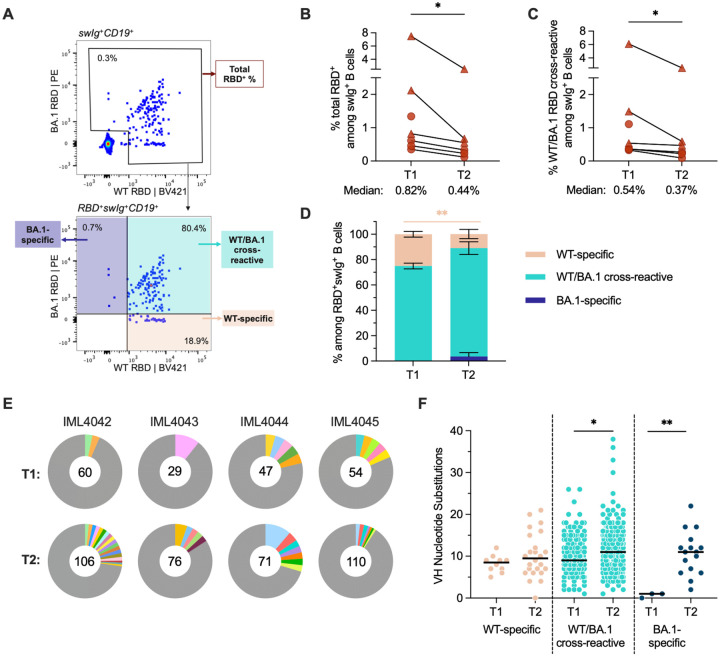
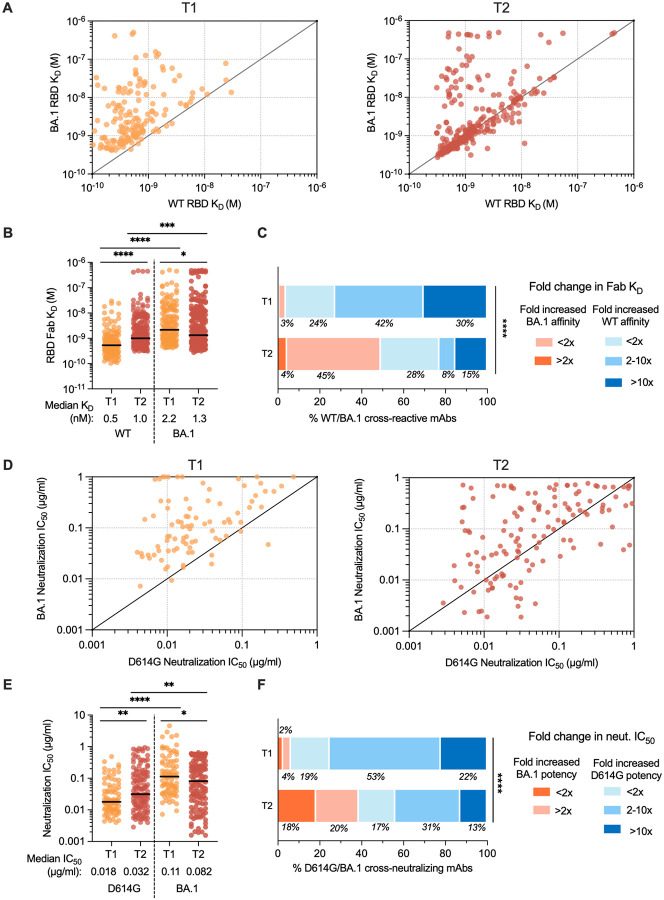
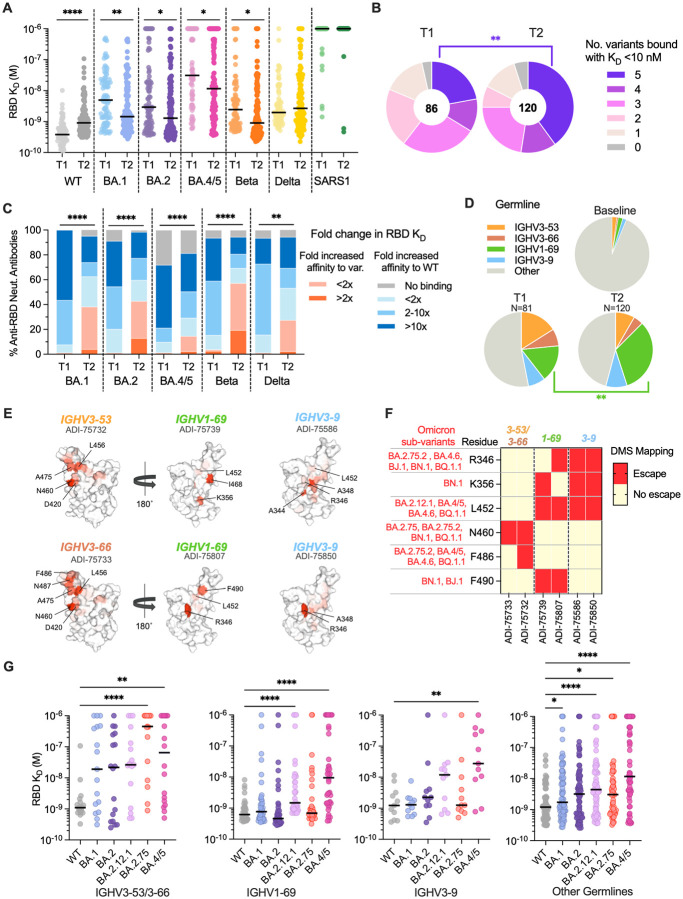
Understanding the evolution of antibody immunity following heterologous SAR-CoV-2 breakthrough infection will inform the development of next-generation vaccines. Here, we tracked SARS-CoV-2 receptor binding domain (RBD)-specific antibody responses up to six months following Omicron BA.1 breakthrough infection in mRNA-vaccinated individuals. Cross-reactive serum neutralizing antibody and memory B cell (MBC) responses declined by two- to four-fold through the study period. Breakthrough infection elicited minimal de novo Omicron-specific B cell responses but drove affinity maturation of pre-existing cross-reactive MBCs toward BA.1. Public clones dominated the neutralizing antibody response at both early and late time points, and their escape mutation profiles predicted newly emergent Omicron sublineages. The results demonstrate that heterologous SARS-CoV-2 variant exposure drives the evolution of B cell memory and suggest that convergent neutralizing antibody responses continue to shape viral evolution.
Conflict of interest statement
Figures
References
-
- WHO Coronavirus (COVID-19) Dashboard | WHO Coronavirus (COVID-19) Dashboard With Vaccination Data, (available at https://covid19.who.int/).
Publication types
Grants and funding
LinkOut - more resources
Full Text Sources
Miscellaneous
