A meta-analysis of extended ECG monitoring in detection of atrial fibrillation in patients with cryptogenic stroke
- PMID: 36175044
- PMCID: PMC9528717
- DOI: 10.1136/openhrt-2022-002081
A meta-analysis of extended ECG monitoring in detection of atrial fibrillation in patients with cryptogenic stroke
Abstract
Objective: The aim of this systematic review is to evaluate the various modalities available for extended ECG monitoring in the detection of atrial fibrillation (AF) following a cryptogenic stroke.
Methods: MEDLINE (Ovid), EMBASE (Ovid), Cochrane Central Register of Controlled Trials (CENTRAL) were searched from January 2011 to November 2021. All randomised controlled trials and prospective cohort studies including the use of extended ECG monitoring >24 hours with a minimum duration of AF of 30 s in patients with either cryptogenic strokes or transient ischaemic attacks were included. A random-effects model was used to pool effect estimates of AF detection rates from different ECG modalities.
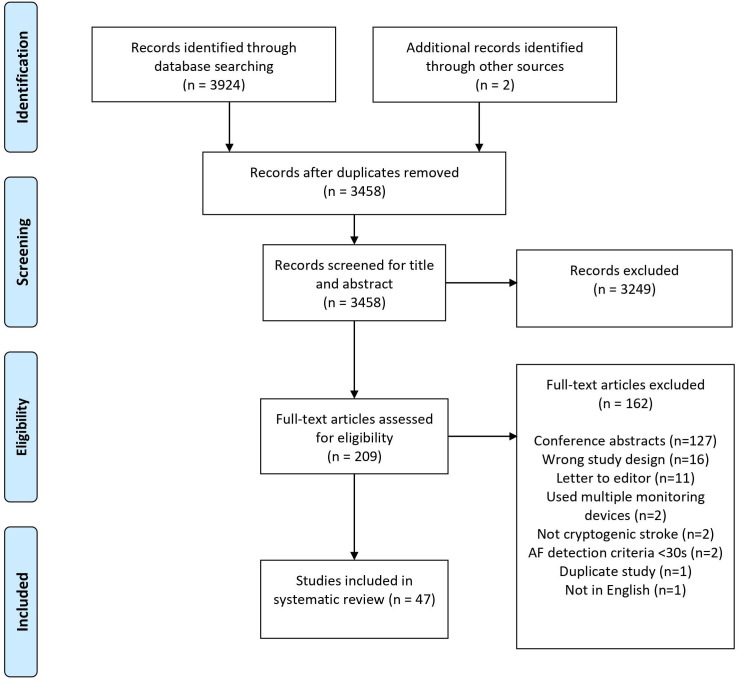
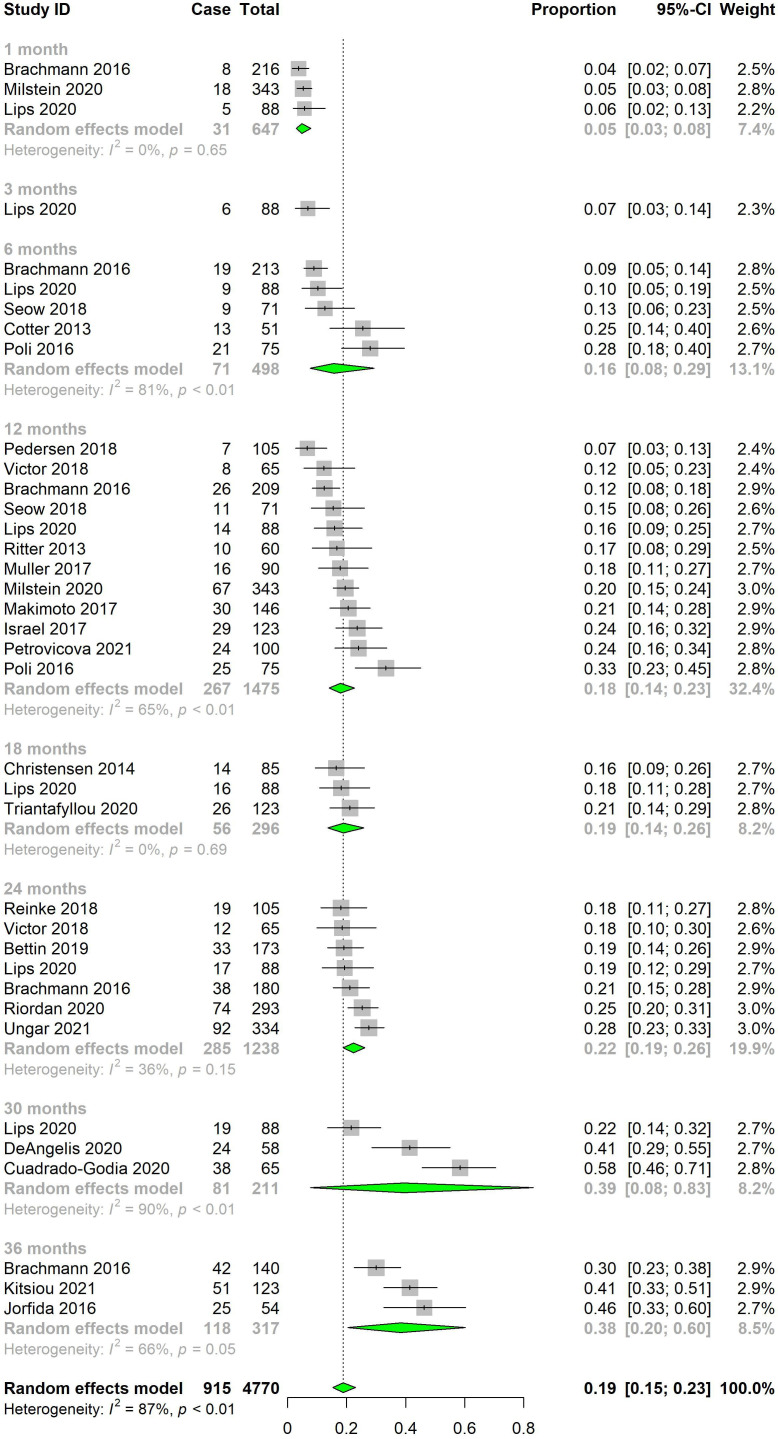
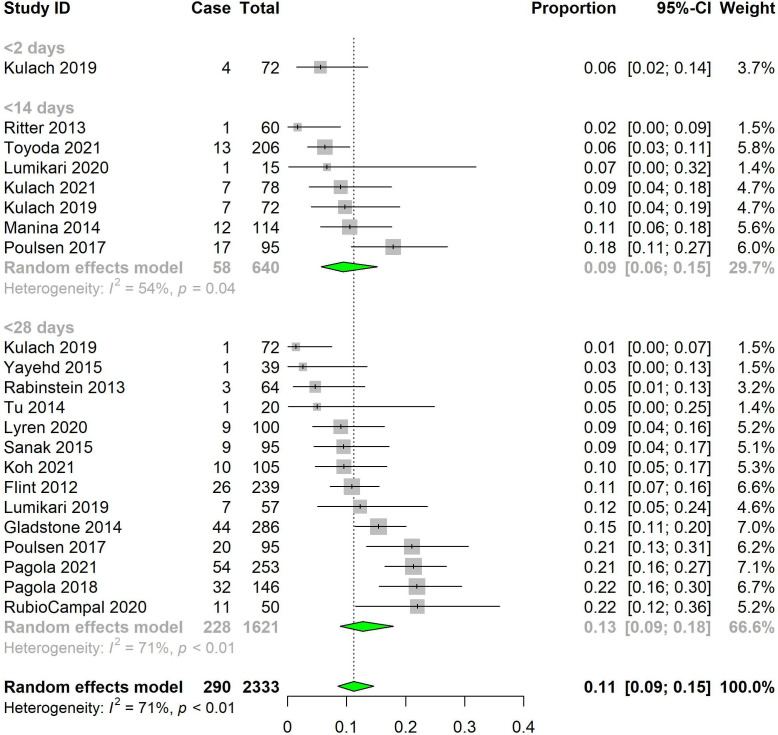
Results: 3924 studies were identified, of which 47 were included reporting on a pooled population of 6448 patients with cryptogenic stroke. The pooled AF rate for implantable loop recorders (ILRs) increased from 4.9% (3.0%-7.9%) at 1 month to 38.4% (20.4%-60.2%) at 36 months. Mobile cardiac outpatient telemetry (MCOT) had a significantly higher pooled AF detection rate of 12.8% (8.9%-17.9%) versus 4.9% (3.0%-7.9%) for ILR at 1 month (p<0.0001). Predictors for AF detection include duration of monitoring (p<0.0001) and age (p<0.0001) for ILRs, but only age for MCOTs (p<0.020).
Conclusion: MCOT has a higher rate of detection at 1 month and is less invasive. Beyond 1 month, compliance becomes a significant limitation for MCOT. MCOT may be a reasonable alternative AF screening tool for patients with cryptogenic stroke if ILR is not available.
Prospero registration number: CRD42022297782.
Keywords: atrial fibrillation; electrophysiology; stroke.
© Author(s) (or their employer(s)) 2022. Re-use permitted under CC BY-NC. No commercial re-use. See rights and permissions. Published by BMJ.
Conflict of interest statement
Competing interests: None declared.
Figures
References
Publication types
MeSH terms
LinkOut - more resources
Full Text Sources
Medical