


Using Veterans Affairs Corporate Data Warehouse to identify 30-day hospital readmissions
- PMID: 36176573
- PMCID: PMC9518959
- DOI: 10.1007/s10742-018-0178-3
Using Veterans Affairs Corporate Data Warehouse to identify 30-day hospital readmissions
Abstract
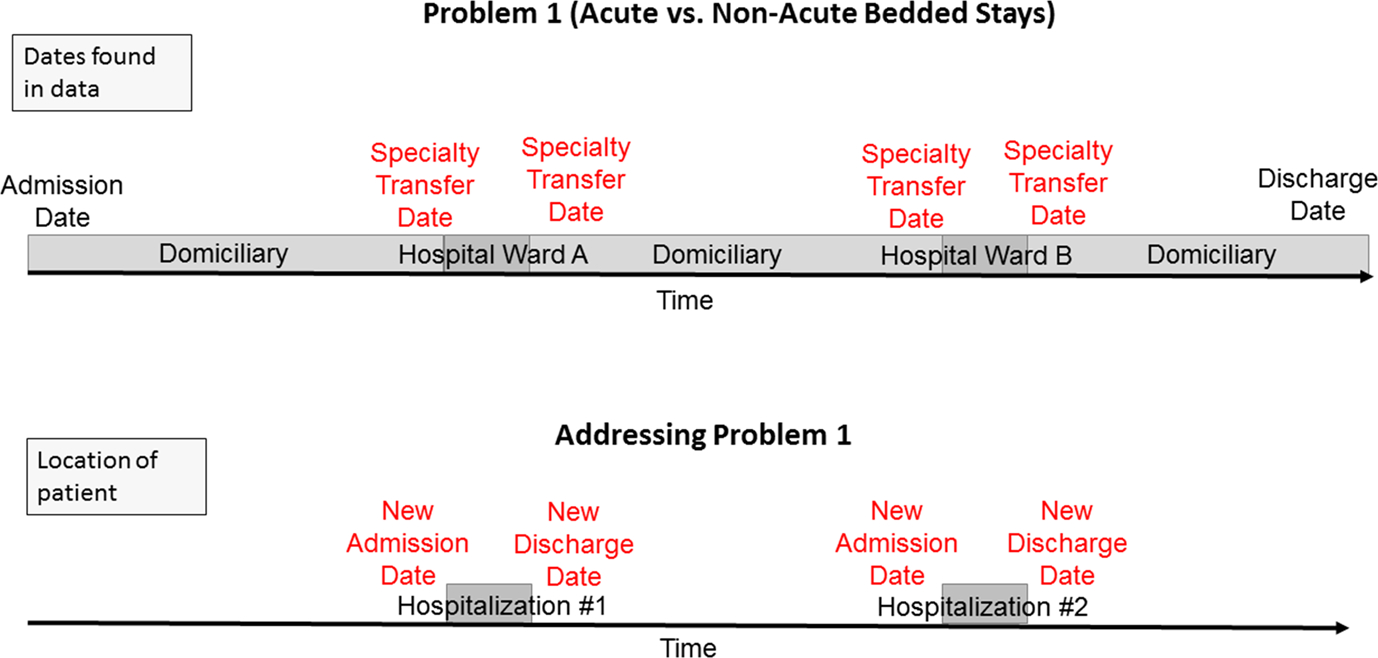
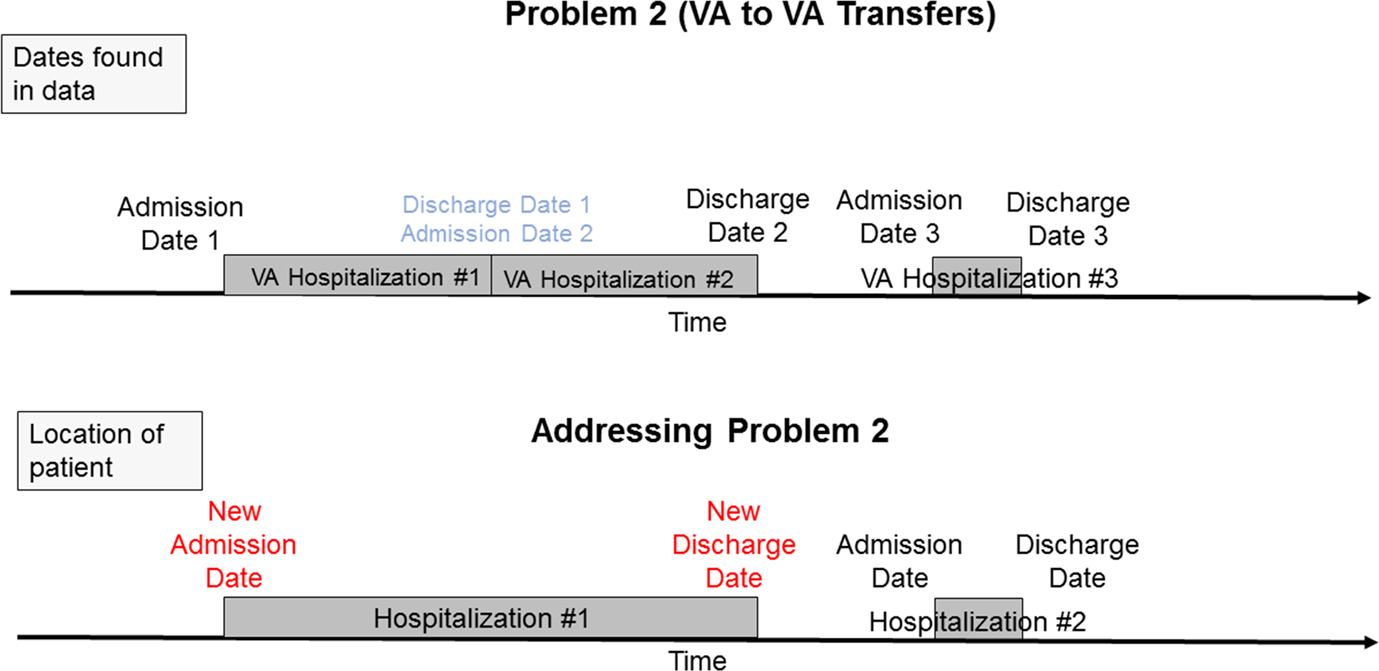
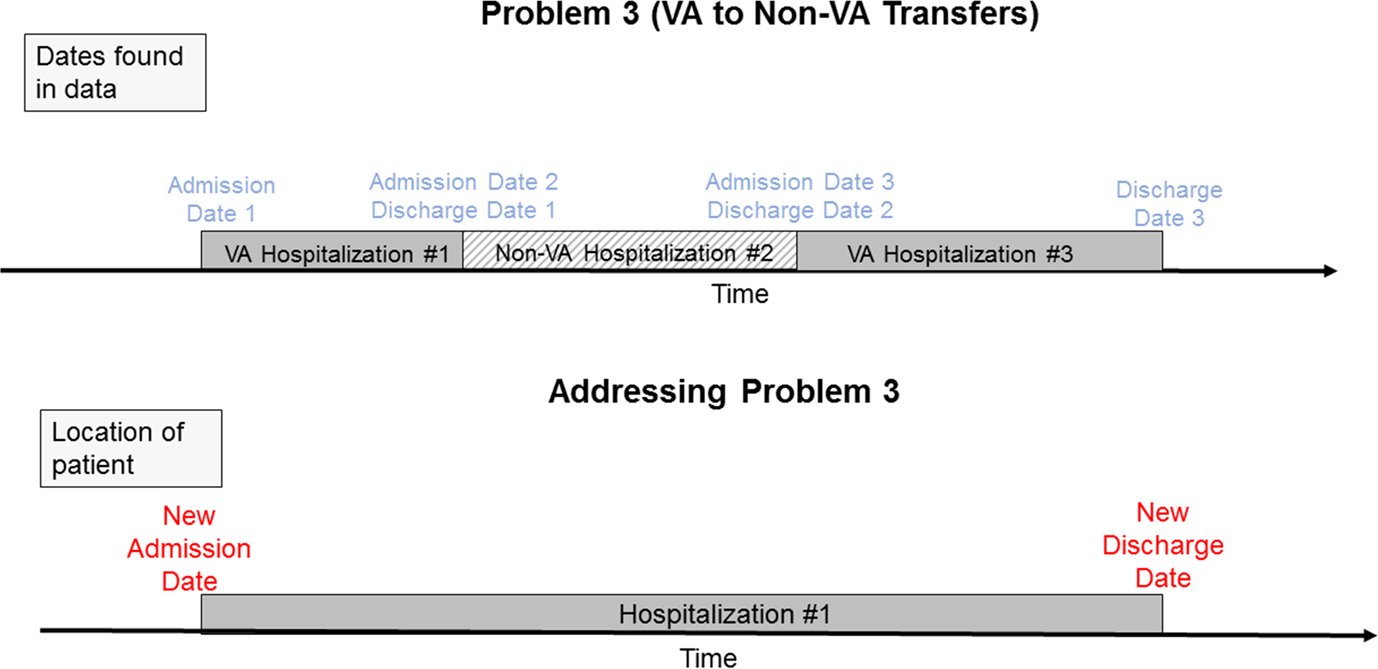
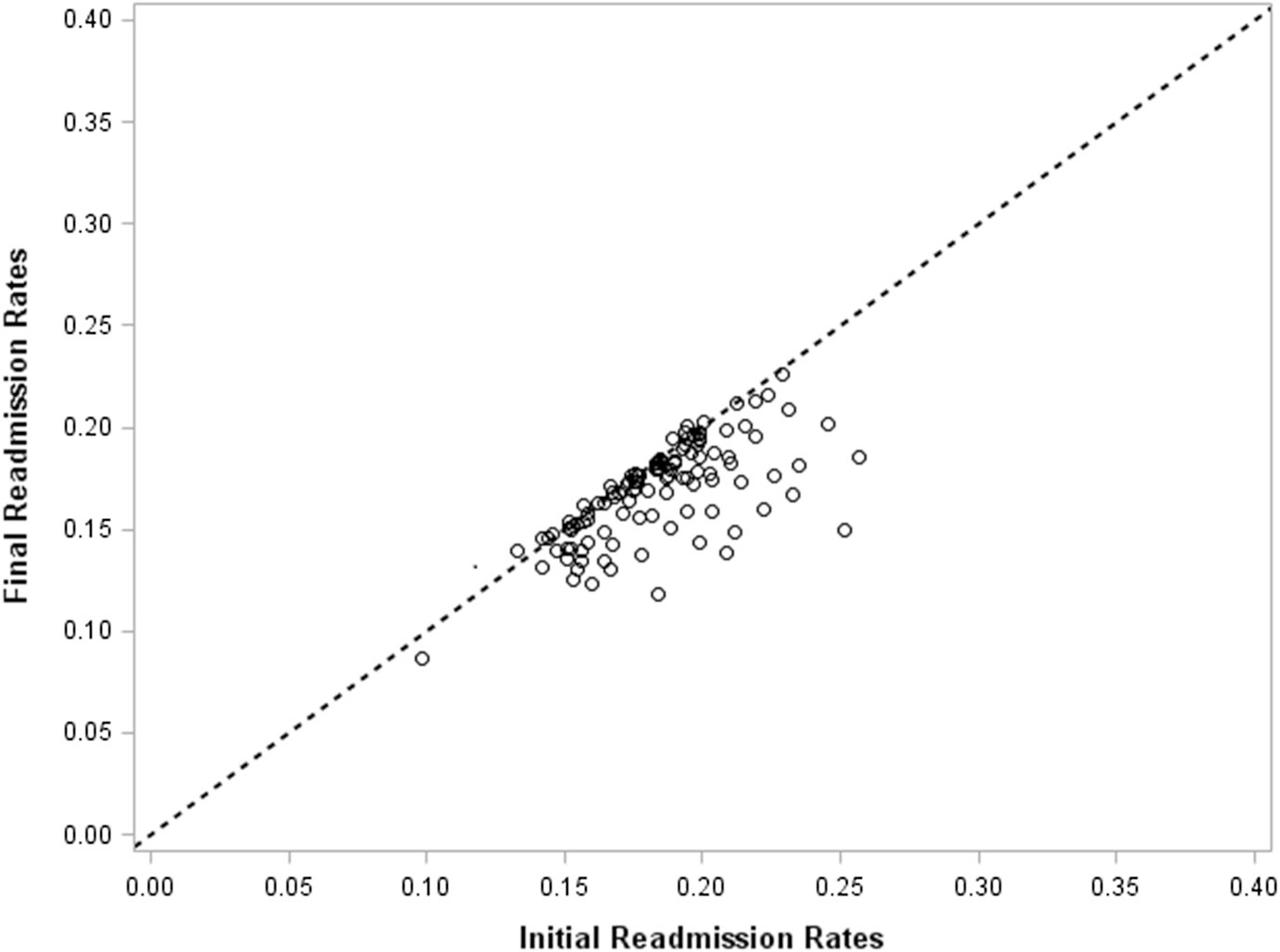
Hospital readmission is a key metric of hospital quality, such as for comparing Veterans Affairs (VA) hospitals to private sector hospitals. To calculate readmission rates, one must first identify individual hospitalizations. However, in the VA Corporate Data Warehouse (CDW), data are organized by "bedded stays," that is, any stay in a healthcare facility where a patient is provided a bed, not hospitalizations. Thus, CDW data poses several challenges to identifying hospitalizations including: (1) bedded stays include both non-acute inpatient stays (i.e. nursing home, mental health) and acute inpatient hospital care; (2) transfers between VA facilities appear as separate bedded stays; and (3) VA care may also be fragmented by non-VA care. Thus, we sought to develop a rigorous method to identify acute hospitalizations using the VA CDW. We examined all VA bedded stays with an admission date in 2009. Non-acute portions of a stay were dropped. VA to VA transfers were merged when consecutive discharge and admission dates were within one calendar day. Finally, hospitalizations that occurred in a non-VA facility were merged. The 30-day readmission rate was calculated at each step of the algorithm to demonstrate the impact. The total number of VA medical hospitalizations in 2009 with live discharges was 505,861. The 30-day readmission rate after adjusting for VA to VA transfers and incorporating non-VA care was 18.3% (95% confidence interval (CI): 18.2, 18.4%).
Keywords: Administrative data; Computing methodology; Outcome assessment (health care); Patient readmissions; United States Department of Veterans Affairs.
Conflict of interest statement
Compliance with ethical standards Conflict of interest The authors declare that they have no conflict of interest.
Figures
References
-
- Axon RN, Gebregziabher M, Everett CJ, Heidenreich P, Hunt KJ: Dual health care system use is associated with higher rates of hospitalization and hospital readmission among veterans with heart failure. Am. Heart J. 174, 157–163 (2016) - PubMed
-
- Center, VA Health Economics Research: Fee Basis Data: A Guide for Researchers. VA Palo Alto, Menlo Park: (2015)
-
- CMS.gov, Centers for Medicare & Medicaid Services. Readmissions reduction program (2016). https://www.cms.gov/medicare/medicare-fee-for-service-payment/acuteinpat.... Accessed 13 Apr 2017
-
- Denson JL, Jensen A, Saag HS, Wang B, Fang Y, Horwitz LI, Evans L, Sherman SE: Association between end-of-rotation resident transition in care and mortality among hospitalized patients. JAMA 316, 2204–2213 (2016) - PubMed
-
- Gonsoulin M: VIReC Factbook: Corporate Data Warehouse (CDW) Inpatient 2.1 Domain (Part I—Inpatient). U.S. Department of Veterans Affairs, Health Services Research & Development Service, VA Information Resource Center, Hines: (2016)
Grants and funding
LinkOut - more resources
Full Text Sources