


Postpartum depression: a developed and validated model predicting individual risk in new mothers
- PMID: 36180471
- PMCID: PMC9525696
- DOI: 10.1038/s41398-022-02190-8
Postpartum depression: a developed and validated model predicting individual risk in new mothers
Abstract
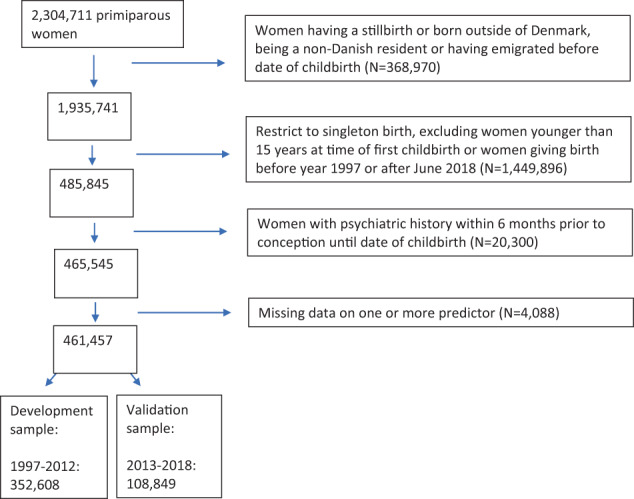
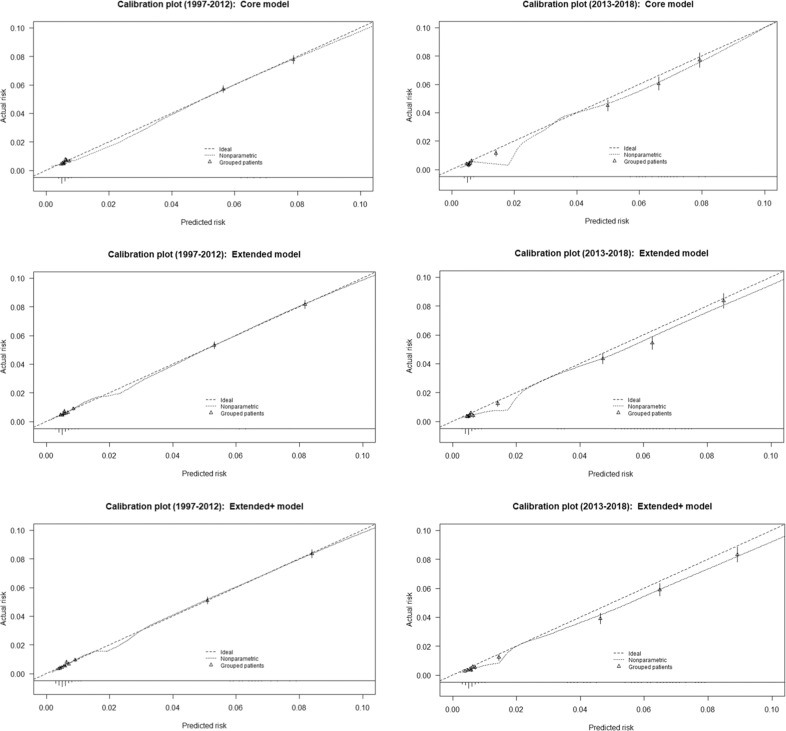
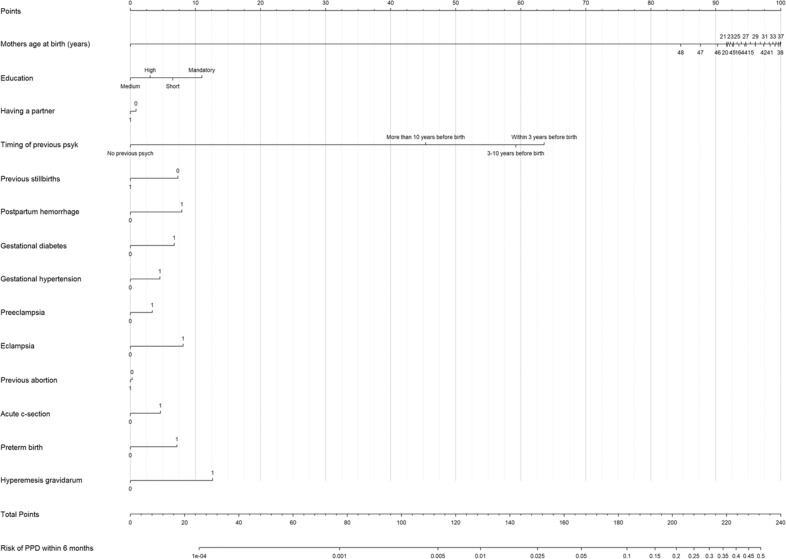
Postpartum depression (PPD) is a serious condition associated with potentially tragic outcomes, and in an ideal world PPDs should be prevented. Risk prediction models have been developed in psychiatry estimating an individual's probability of developing a specific condition, and recently a few models have also emerged within the field of PPD research, although none are implemented in clinical care. For the present study we aimed to develop and validate a prediction model to assess individualized risk of PPD and provide a tentative template for individualized risk calculation offering opportunities for additional external validation of this tool. Danish population registers served as our data sources and PPD was defined as recorded contact to a psychiatric treatment facility (ICD-10 code DF32-33) or redeemed antidepressant prescriptions (ATC code N06A), resulting in a sample of 6,402 PPD cases (development sample) and 2,379 (validation sample). Candidate predictors covered background information including cohabitating status, age, education, and previous psychiatric episodes in index mother (Core model), additional variables related to pregnancy and childbirth (Extended model), and further health information about the mother and her family (Extended+ model). Results indicated our recalibrated Extended model with 14 variables achieved highest performance with satisfying calibration and discrimination. Previous psychiatric history, maternal age, low education, and hyperemesis gravidarum were the most important predictors. Moving forward, external validation of the model represents the next step, while considering who will benefit from preventive PPD interventions, as well as considering potential consequences from false positive and negative test results, defined through different threshold values.
© 2022. The Author(s).
Conflict of interest statement
A.S. has earlier served as a consultant for Biogen and Ferring Pharmaceuticals. S.V. receives royalties from UpToDate Inc for authorship of materials related to depression and pregnancy. V.G.F. has served as a consultant for Sage Therapeutics and H. Lundbeck. The rest of the author group declare no competing interests.
Figures
References
-
- Johannsen BM, Larsen JT, Laursen TM, Ayre K, Howard LM, Meltzer-Brody S, et al. Self-harm in women with postpartum mental disorders. Psychol Med. 2019:50:1563–9. - PubMed
Publication types
MeSH terms
Substances
Grants and funding
LinkOut - more resources
Full Text Sources
Medical
Research Materials
