


Childhood constipation: Current status, challenges, and future perspectives
- PMID: 36185096
- PMCID: PMC9516492
- DOI: 10.5409/wjcp.v11.i5.385
Childhood constipation: Current status, challenges, and future perspectives
Abstract
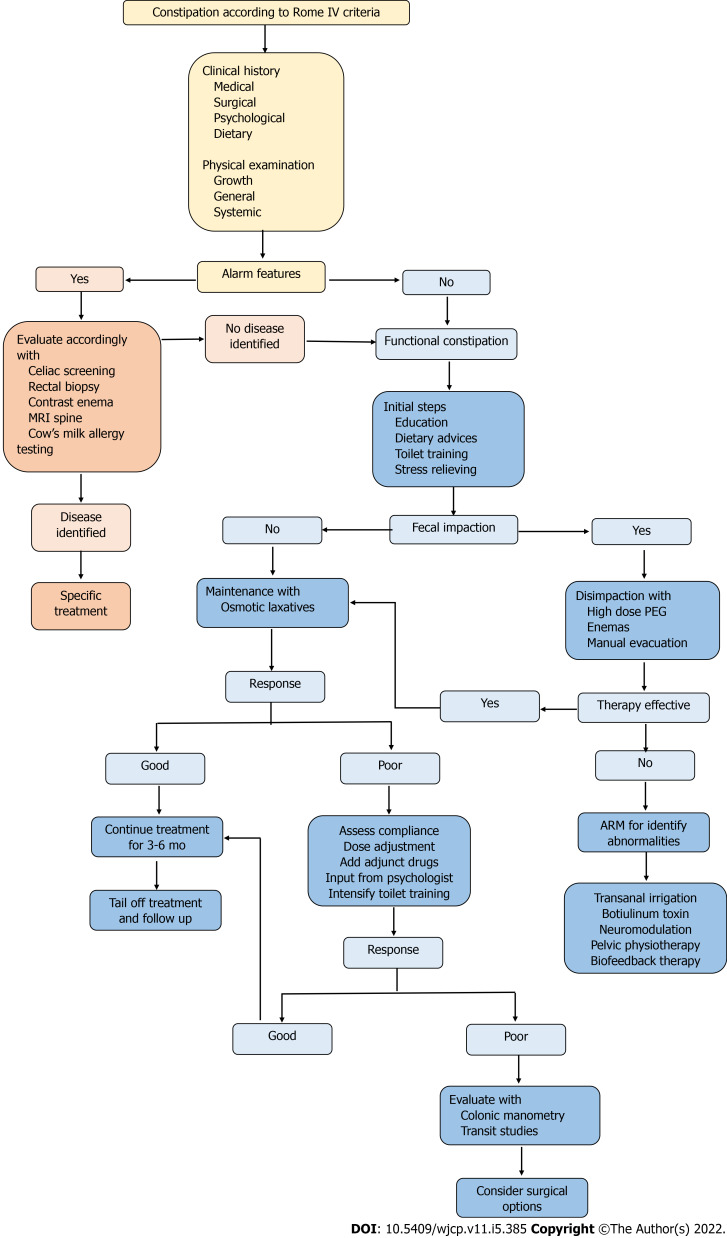
Constipation in children is a major health issue around the world, with a global prevalence of 9.5%. They present to clinicians with a myriad of clinical signs. The Rome IV symptom-based criteria are used to diagnose functional constipation. Functional constipation is also a huge financial burden for healthcare system and has a detrimental impact on health-related quality of life of children. There are various risk factors identified globally, including centrally connected factors such as child abuse, emotional and behavioral issues, and psychological stress. Constipation is also precipitated by a low-fiber diet, physical inactivity, and an altered intestinal microbiome. The main pathophysiological mechanism is stool withholding, while altered rectal function, anal sphincter, pelvic floor, and colonic dysfunction also play important roles. Clinical evaluation is critical in making a diagnosis, and most investigations are only required in refractory patients. In the treatment of childhood constipation, both nonpharmacological (education and de-mystification, dietary changes, toilet training, behavioral interventions, biofeedback, and pelvic floor physiotherapy), and pharmacological (osmotic and stimulant laxatives and novel drugs like prucalopride and lubiprostone) interventions are used. For children with refractory constipation, transanal irrigation, botulinum toxin, neuromodulation, and surgical treatments are reserved. While frequent use of probiotics is still in the experimental stage, healthy dietary habits, living a healthy lifestyle and limiting exposure to stressful events, are all beneficial preventive measures.
Keywords: Children; Constipation; Functional gastrointestinal disorders; Psychological stress; Surgical interventions; Treatment.
©The Author(s) 2022. Published by Baishideng Publishing Group Inc. All rights reserved.
Conflict of interest statement
Conflict-of-interest statement: All the authors report no relevant conflicts of interest for this article.
Figures
References
-
- Koppen IJN, Vriesman MH, Saps M, Rajindrajith S, Shi X, van Etten-Jamaludin FS, Di Lorenzo C, Benninga MA, Tabbers MM. Prevalence of Functional Defecation Disorders in Children: A Systematic Review and Meta-Analysis. J Pediatr. 2018;198:121–130.e6. - PubMed
-
- Vriesman MH, Rajindrajith S, Koppen IJN, van Etten-Jamaludin FS, van Dijk M, Devanarayana NM, Tabbers MM, Benninga MA. Quality of Life in Children with Functional Constipation: A Systematic Review and Meta-Analysis. J Pediatr. 2019;214:141–150. - PubMed
-
- Ansari H, Ansari Z, Lim T, Hutson JM, Southwell BR. Factors relating to hospitalisation and economic burden of paediatric constipation in the state of Victoria, Australia, 2002-2009. J Paediatr Child Health. 2014;50:993–999. - PubMed
-
- Chogle A, Dhroove G, Sztainberg M, Di Lorenzo C, Saps M. How reliable are the Rome III criteria for the assessment of functional gastrointestinal disorders in children? Am J Gastroenterol. 2010;105:2697–2701. - PubMed
Publication types
LinkOut - more resources
Full Text Sources
