


Human risk assessment of ash soil after 2020 wildfires in Pantanal biome (Brazil)
- PMID: 36187166
- PMCID: PMC9516519
- DOI: 10.1007/s11869-022-01248-2
Human risk assessment of ash soil after 2020 wildfires in Pantanal biome (Brazil)
Abstract
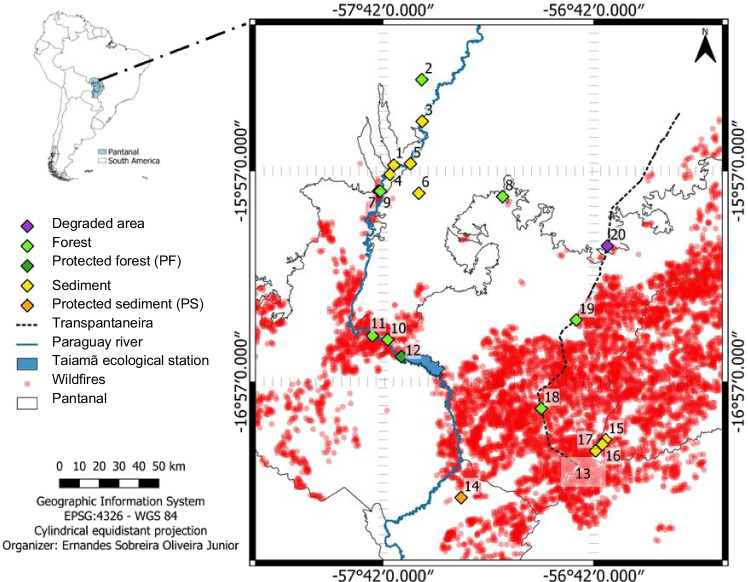
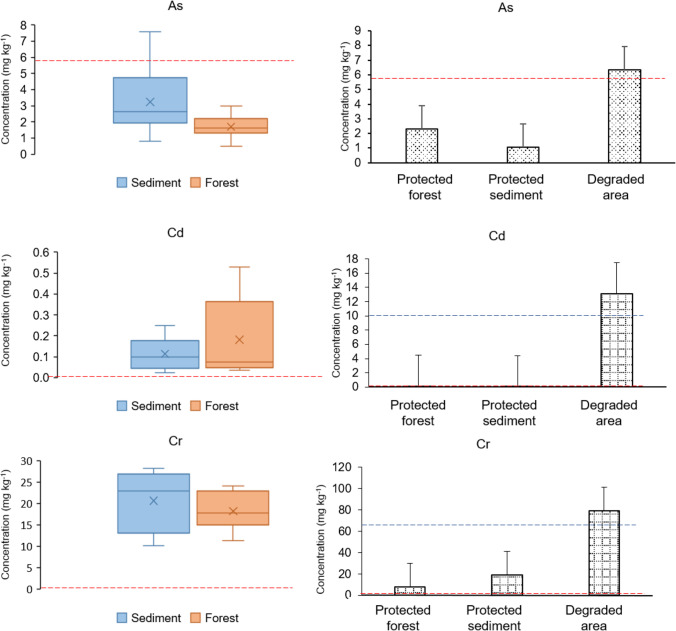
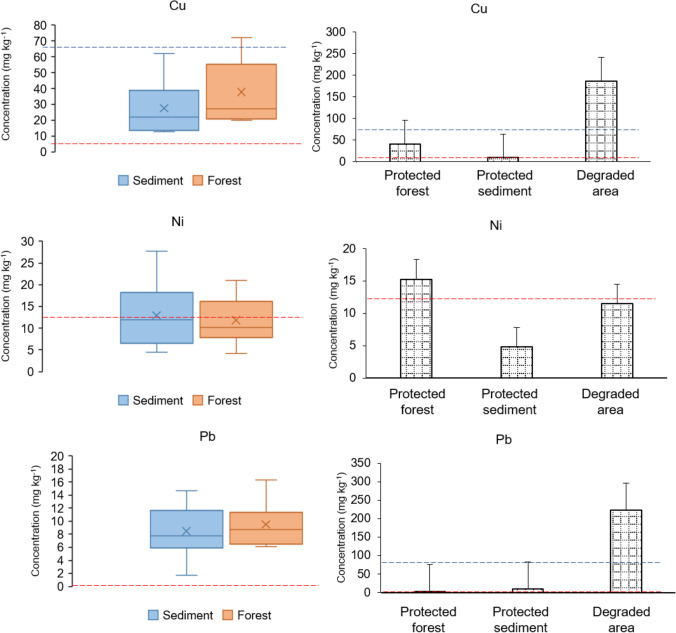
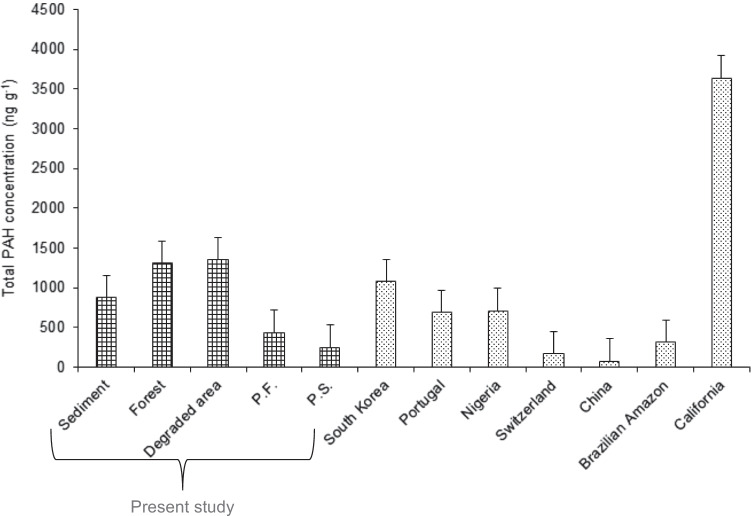
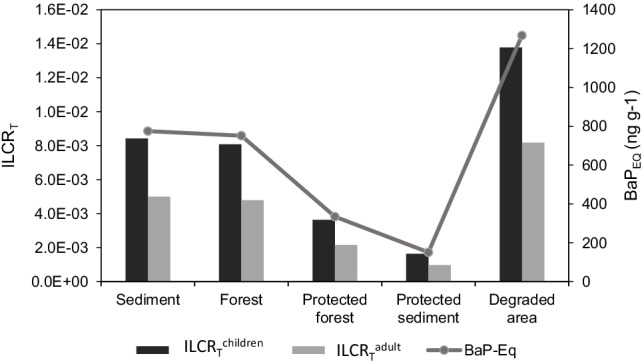
Wildfires have increased in the last years and, when caused by intentional illegal burnings, are frequently run out of control. Wildfire has been pointed out as an important source of polycyclic aromatic hydrocarbons (PAHs) and trace elements (TEs) - such as, As, Ni, and Pb - to environmental compartments, and thus may pose a risk to human health and to the ecosystem. In 2020, the Brazilian biome, Pantanal, faced the largest losses by wildfires in the last 22 years. Ashes from the topsoil layer in Pantanal were collected after these wildfires at 20 sites divided into the sediment, forest, PF, PS, and degraded sites. Toxicity and associated risks for human health were also evaluated. The areas highly impacted by wildfires and by artisanal gold mining activities showed higher concentrations for TEs and PAHs than the protected areas. Pb varied from 8 ± 4 to 224 ± 81 mg kg-1, and total PAH concentration ranged between 880 ± 314 and 1350 ± 70 ng g-1, at sites impacted by anthropogenic activities. Moreover, health risk assessments for TE and PAH indicated a potentially great risk for children and adults, via ingestion, inhalation, and dermal pathway. The carcinogenic risks exceeded reference values, for both TE and PAH, suggesting harmful conditions, especially for vulnerable groups, such as children and the elderly.
Supplementary information: The online version contains supplementary material available at 10.1007/s11869-022-01248-2.
Keywords: Pantanal; Polycyclic aromatic hydrocarbons; Risk assessment; Trace elements; Wildfire.
© The Author(s), under exclusive licence to Springer Nature B.V. 2022, Springer Nature or its licensor holds exclusive rights to this article under a publishing agreement with the author(s) or other rightsholder(s); author self-archiving of the accepted manuscript version of this article is solely governed by the terms of such publishing agreement and applicable law.
Conflict of interest statement
Conflict of interestThe authors declare no competing interests.
Figures
References
-
- Abdel-Shafy HI, Mansour MSMM (2016) A review on polycyclic aromatic hydrocarbons: source, environmental impact, effect on human health and remediation. Egyptian Journal of Petroleum 25:107–123. 10.1016/j.ejpe.2015.03.011
-
- Alam MdJ, Yuan D, Jiang YJ, Sun Y, Li Y, Xu X (2014) Sources and transports of polycyclic aromatic hydrocarbons in the Nanshan underground river, China. Environ Earth Sci 71: 1967–1976. 10.1007/s12665-013-2847-4
-
- Alcasena F, Ager A, Le Page Y, Bessa P, Loureiro C, Oliveira T. Assessing wildfire exposure to communities and protected areas in Portugal. Fire. 2021;4:82. doi: 10.3390/fire4040082. - DOI
LinkOut - more resources
Full Text Sources
Research Materials
Miscellaneous