


Validation of reduced S-gene target performance and failure for rapid surveillance of SARS-CoV-2 variants
- PMID: 36190984
- PMCID: PMC9529109
- DOI: 10.1371/journal.pone.0275150
Validation of reduced S-gene target performance and failure for rapid surveillance of SARS-CoV-2 variants
Abstract
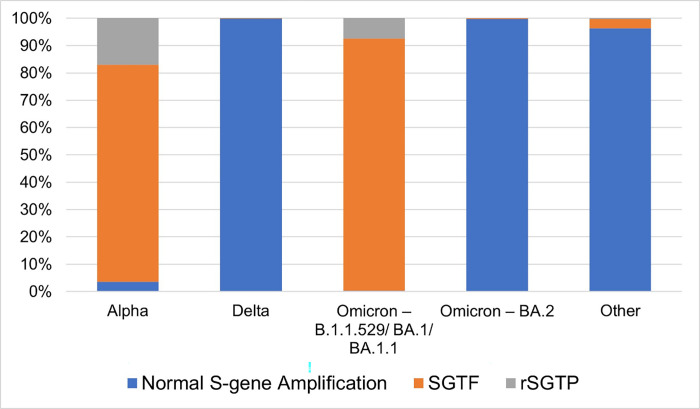
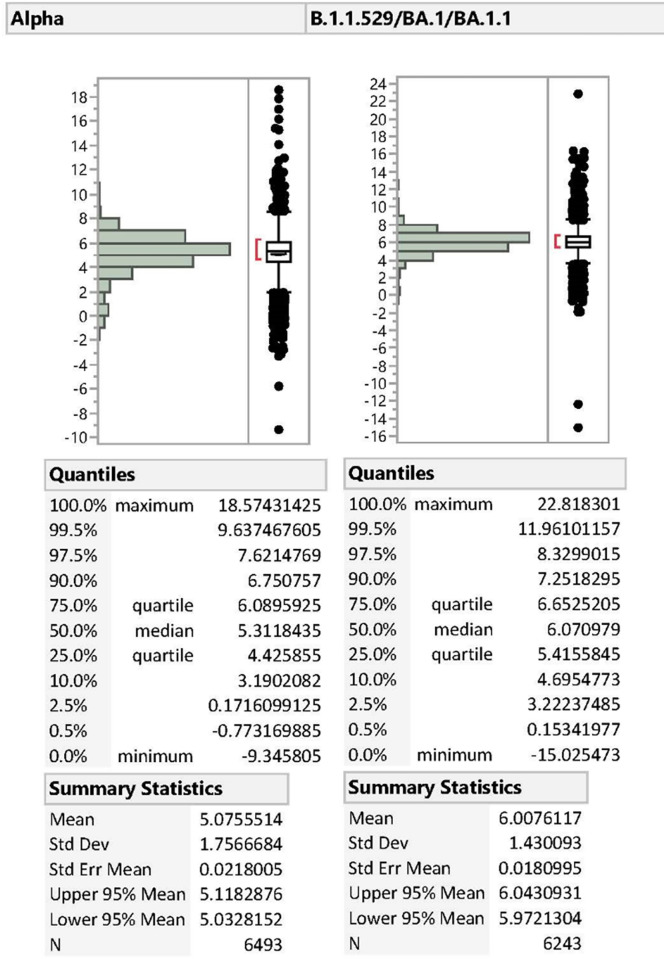
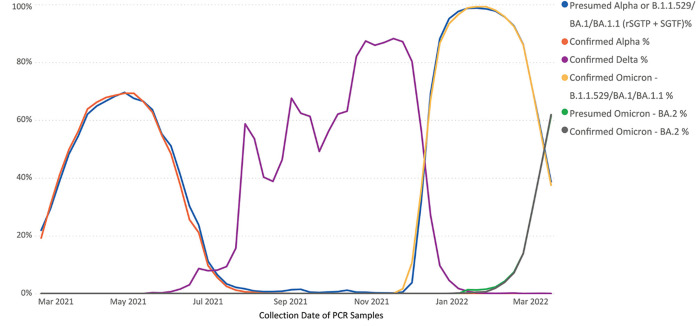
SARS-CoV-2, the virus that causes COVID-19, has many variants capable of rapid transmission causing serious illness. Timely surveillance of new variants is essential for an effective public health response. Ensuring availability and access to diagnostic and molecular testing is key to this type of surveillance. This study utilized reverse transcription polymerase chain reaction (RT-PCR) and whole genome sequencing results from COVID-19-positive patient samples obtained through a collaboration between Aegis Sciences Corporation and Walgreens Pharmacy that has conducted more than 8.5 million COVID-19 tests at ~5,200 locations across the United States and Puerto Rico. Viral evolution of SARS-CoV-2 can lead to mutations in the S-gene that cause reduced or failed S-gene amplification in diagnostic PCR tests. These anomalies, labeled reduced S-gene target performance (rSGTP) and S-gene target failure (SGTF), are characteristic of variants carrying the del69-70 mutation, such as Alpha and Omicron (B.1.1.529, BA.1, and BA.1.1) lineages. This observation has been validated by whole genome sequencing and can provide presumptive lineage data following completion of diagnostic PCR testing in 24-48 hours from collection. Active surveillance of trends in PCR and sequencing results is key to the identification of changes in viral transmission and emerging variants. This study shows that rSGTP and SGTF can be utilized for near real-time tracking and surveillance of SARS-CoV-2 variants, and is superior to the use of SGTF alone due to the significant proportion of Alpha and Omicron (B.1.1.529, BA.1, and BA.1.1) lineages known to carry the del69-70 mutation and observed to have S-gene amplification. Adopting new tools and techniques to both diagnose acute infections and expedite identification of emerging variants is critical to supporting public health.
Conflict of interest statement
The authors have declared that no competing interests exist.
Figures
References
-
- SARS-CoV-2 lineages. Pango Lineages Website. https://cov-lineages.org/lineage_list.html. Accessed April 8, 2022.
-
- Tracking SARS-CoV-2 Variants. World Health Organization Website. https://www.who.int/en/activities/tracking-SARS-CoV-2-variants. Accessed April 8, 2022.
-
- SARS-CoV-2 Variant Classifications and Definitions. Centers for Disease Control and Prevention Website. https://www.cdc.gov/coronavirus/2019-ncov/variants/variant-classificatio... Accessed April 8, 2022.
-
- Centers for Disease Control and Prevention. Science Brief: Omicron (B.1.1.529) Variant. Updated: December 1, 2021. [cited 2021 Dec 26]. Available from: https://www.cdc.gov/coronavirus/2019-ncov/science/science-briefs/scienti.... - PubMed
MeSH terms
Substances
Supplementary concepts
LinkOut - more resources
Full Text Sources
Medical
Miscellaneous
