


Subjective and psychophysical olfactory and gustatory dysfunction among COVID-19 outpatients; short- and long-term results
- PMID: 36191024
- PMCID: PMC9529127
- DOI: 10.1371/journal.pone.0275518
Subjective and psychophysical olfactory and gustatory dysfunction among COVID-19 outpatients; short- and long-term results
Erratum in
-
Correction: Subjective and psychophysical olfactory and gustatory dysfunction among COVID-19 outpatients; short- and long-term results.PLoS One. 2025 Aug 4;20(8):e0329646. doi: 10.1371/journal.pone.0329646. eCollection 2025. PLoS One. 2025. PMID: 40758616 Free PMC article.
Abstract
Background: Olfactory and gustatory dysfunctions are early symptoms of SARS-CoV-2 infection. Between 20-80% of infected individuals report subjective altered sense of smell and/or taste during infection. Up to 2/3 of previously infected experience persistent olfactory and/or gustatory dysfunction after 6 months. The aim of this study was to examine subjective and psychophysical olfactory and gustatory function in non-hospitalized individuals with acute COVID-19 up to 6 months after infection.
Methods: Individuals aged 18-80-years with a positive SARS-CoV-2 PCR test no older than 10 days, were eligible. Only individuals able to visit the outpatient examination facilities were included. Gustatory function was tested with the Burgharts Taste Strips and olfactory function was examined with the Brief Smell Identifications test (Danish version). Subjective symptoms were examined through an online questionnaire at inclusion, day 30, 90 and 180 after inclusion.
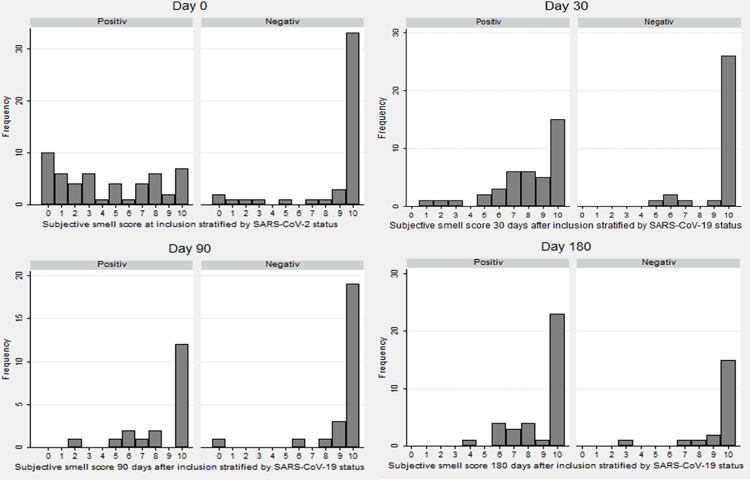
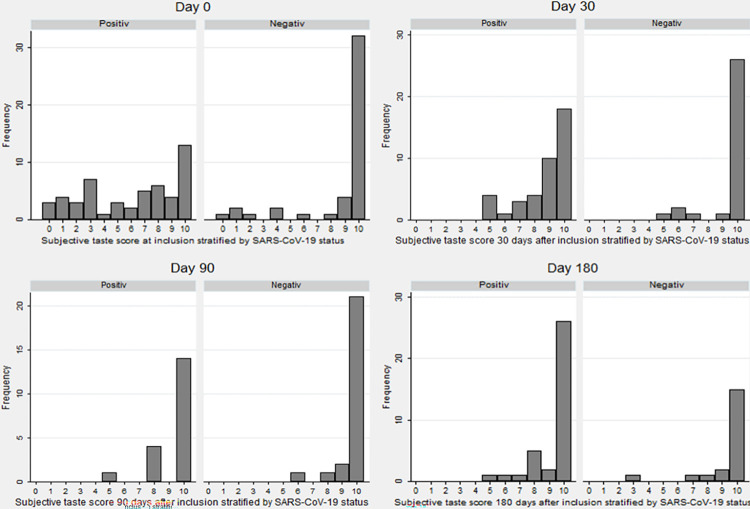
Results: Fifty-eight SARS-CoV-2 positive and 56 negative controls were included. 58.6% (34/58) of SARS-CoV-2 positive individuals vs. 8.9% (5/56) of negative controls reported subjective olfactory dysfunction at inclusion. For gustatory dysfunction, 46.5% (27/58) of positive individuals reported impairment compared to 8.9% (5/56) of negative controls. In psychophysical tests, 75.9% (46/58) had olfactory dysfunction and 43.1% (25/58) had gustatory dysfunction among the SARS-CoV-2 positive individuals at inclusion. Compared to negative controls, SARS-CoV-2 infected had significantly reduced olfaction and gustation. Previously infected individuals continued to report lower subjective sense of smell 30 days after inclusion, whereafter the difference between the groups diminished. However, after 180 days, 20.7% (12/58) positive individuals still reported reduced sense of smell and taste.
Conclusion: Olfactory and gustatory dysfunctions are prevalent symptoms of SARS-CoV-2 infection, but there is inconsistency between subjective reporting and psychophysical test assessment of especially olfaction. Most individuals regain normal function after 30 days, but approximately 20% report persistent olfactory and gustatory dysfunction 6 months after infection.
Conflict of interest statement
The authors have declared that no competing interests exist.
Figures
References
-
- Lechien JR, Chiesa-Estomba CM, De Siati DR, Horoi M, Le Bon SD, Rodriguez A, et al. Olfactory and gustatory dysfunctions as a clinical presentation of mild-to-moderate forms of the coronavirus disease (COVID-19): a multicenter European study. Eur Arch Oto-Rhino-Laryngol Off J Eur Fed Oto-Rhino-Laryngol Soc EUFOS Affil Ger Soc Oto-Rhino-Laryngol—Head Neck Surg 2020;277:2251–61. doi: 10.1007/s00405-020-05965-1 - DOI - PMC - PubMed
Publication types
MeSH terms
LinkOut - more resources
Full Text Sources
Medical
Miscellaneous
