


Contact tracing using real-time location system (RTLS): a simulation exercise in a tertiary hospital in Singapore
- PMID: 36192104
- PMCID: PMC9535253
- DOI: 10.1136/bmjopen-2021-057522
Contact tracing using real-time location system (RTLS): a simulation exercise in a tertiary hospital in Singapore
Abstract
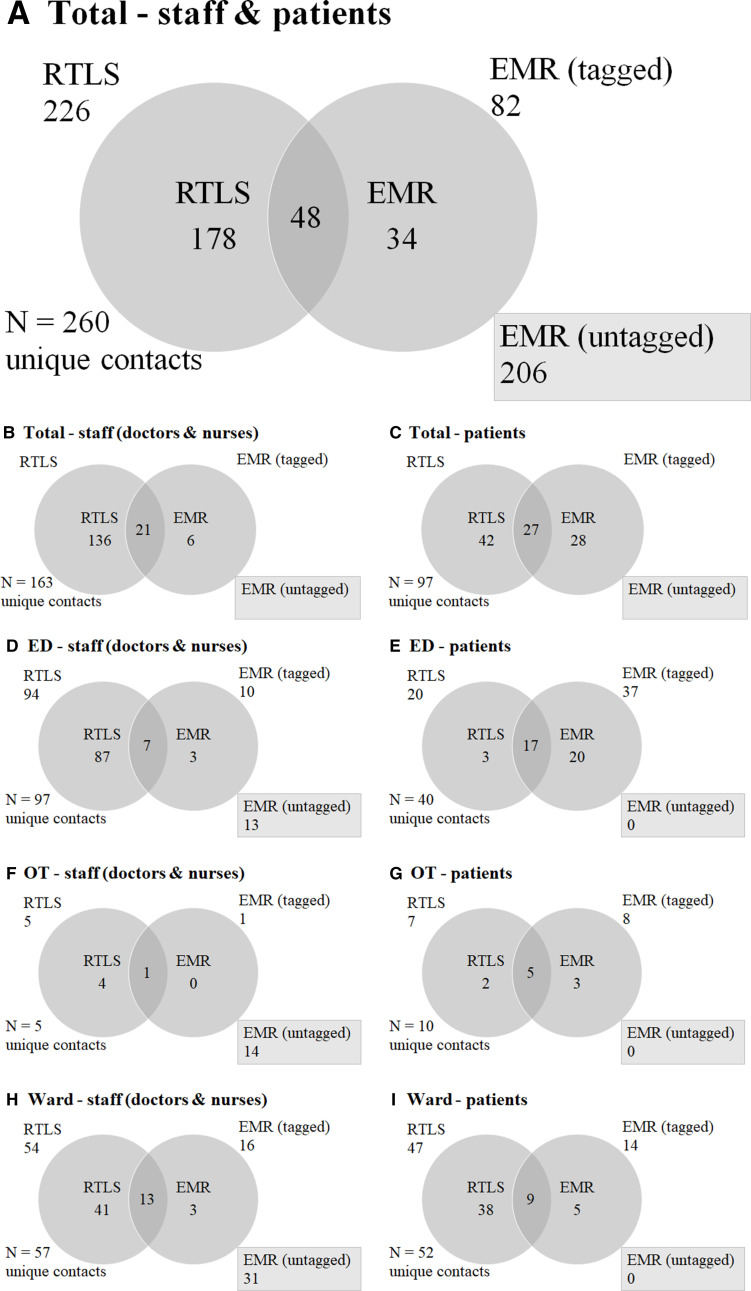
Objective: We aim to assess the effectiveness of contact tracing using real-time location system (RTLS) compared with the conventional (electronic medical records (EMRs)) method via an emerging infectious disease (EID) outbreak simulation exercise. The aims of the study are: (1) to compare the time taken to perform contact tracing and list of contacts identified for RTLS versus EMR; (2) to compare manpower and manpower-hours required to perform contact tracing for RTLS versus EMR; and (3) to extrapolate the cost incurred by RTLS versus EMR.
Design: Prospective case study.
Setting: Sengkang General Hospital, a 1000-bedded public tertiary hospital in Singapore.
Participants: 1000 out of 4000 staff wore staff tags in this study.
Interventions: A simulation exercise to determine and compare the list of contacts, time taken, manpower and manpower-hours required between RTLS and conventional methods of contact tracing. Cost of both methods were compared.
Primary and secondary outcome measures: List of contacts, time taken, manpower required, manpower-hours required and cost incurred.
Results: RTLS identified almost three times the number of contacts compared with conventional methods, while achieving that with a 96.2% reduction in time taken, 97.6% reduction in manpower required and 97.5% reduction in manpower-hours required. However, RTLS incurred significant equipment cost and might take many contact tracing episodes before providing economic benefit.
Conclusion: Although costly, RTLS is effective in contact tracing. RLTS might not be ready at present time to replace conventional methods, but with further refinement, RTLS has the potential to be the gold standard in contact tracing methods of the future, particularly in the current pandemic.
Keywords: COVID-19; EPIDEMIOLOGY; HEALTH ECONOMICS; Health informatics; Health policy; Infection control.
© Author(s) (or their employer(s)) 2022. Re-use permitted under CC BY-NC. No commercial re-use. See rights and permissions. Published by BMJ.
Conflict of interest statement
Competing interests: None declared.
Figures
References
-
- Tay J, Ng YF, Cutter JL, et al. . Influenza A (H1N1-2009) pandemic in Singapore--public health control measures implemented and lessons learnt. Ann Acad Med Singap 2010;39:313–12. - PubMed
MeSH terms
LinkOut - more resources
Full Text Sources
