


Implementation of individualised polygenic risk score analysis: a test case of a family of four
- PMID: 36192731
- PMCID: PMC9531350
- DOI: 10.1186/s12920-022-01331-8
Implementation of individualised polygenic risk score analysis: a test case of a family of four
Abstract
Background: Polygenic risk scores (PRS) have been widely applied in research studies, showing how population groups can be stratified into risk categories for many common conditions. As healthcare systems consider applying PRS to keep their populations healthy, little work has been carried out demonstrating their implementation at an individual level.
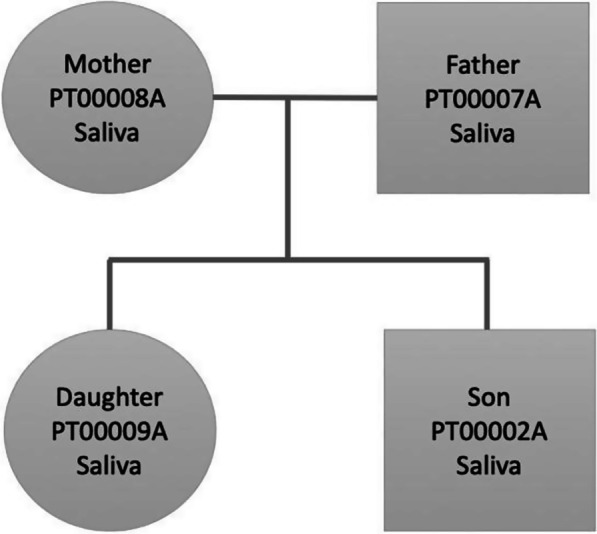
Case presentation: We performed a systematic curation of PRS sources from established data repositories, selecting 15 phenotypes, comprising an excess of 37 million SNPs related to cancer, cardiovascular, metabolic and autoimmune diseases. We tested selected phenotypes using whole genome sequencing data for a family of four related individuals. Individual risk scores were given percentile values based upon reference distributions among 1000 Genomes Iberians, Europeans, or all samples. Over 96 billion allele effects were calculated in order to obtain the PRS for each of the individuals analysed here.
Conclusions: Our results highlight the need for further standardisation in the way PRS are developed and shared, the importance of individual risk assessment rather than the assumption of inherited averages, and the challenges currently posed when translating PRS into risk metrics.
Keywords: Disease prevention; Genetic risk; Phenotypes; Polygenic risk scores.
© 2022. The Author(s).
Conflict of interest statement
At the time of this writing, MC, KM, AM and EL are associated with Cambridge Precision Medicine Limited.
Figures
References
-
- Department of Health and Social Care. Genome UK: the future of healthcare. 2020. https://www.gov.uk/government/publications/genome-uk-the-future-of-healt.... Accessed 7 Apr 2021.
Publication types
MeSH terms
LinkOut - more resources
Full Text Sources
Research Materials
