


Digital Technologies and the Role of Health Care Professionals: Scoping Review Exploring Nurses' Skills in the Digital Era and in the Light of the COVID-19 Pandemic
- PMID: 36194466
- PMCID: PMC9579937
- DOI: 10.2196/37631
Digital Technologies and the Role of Health Care Professionals: Scoping Review Exploring Nurses' Skills in the Digital Era and in the Light of the COVID-19 Pandemic
Abstract
Background: The nursing role significantly changed following reforms in the nurse training process. Nowadays, nurses are increasingly trained to promote and improve the quality of clinical practice and to provide support in the assistance of patients and communities. Opportunities and threats are emerging as a consequence of the introduction of new disruptive technologies in public health, which requires the health care staff to develop new digital skills.
Objective: The aim of this paper is to review and define the role of nurses and the skills they are asked to master in terms of new methodological approaches and digital knowledge in a continuously evolving health care scenario that relies increasingly more on technology and digital solutions.
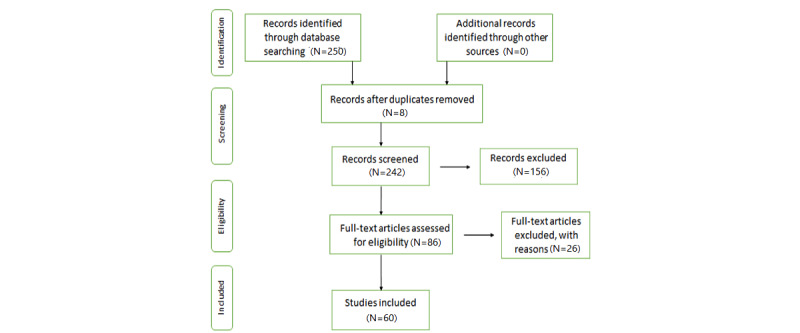
Methods: This scoping review was conducted using a thematic summary of previous studies. Authors collected publications through a cross-database search (PubMed, Web of Science, Google Scholar) related to new telemedicine approaches impacting the nurses' role, considering the time span of 2011-2021 and therefore including experiences and publications related to the first phase of the COVID-19 pandemic.
Results: The assessment was completed between April and July 2021. After a cross-database search, authors reviewed a selection of 60 studies. The results obtained were organized into 5 emerging macro areas: (1) leadership (nurses are expected to show leadership capabilities when introducing new technologies in health care practices, considering their pivotal role in coordinating various professional figures and the patient), (2) soft skills (new communication skills, adaptiveness, and problem solving are needed to adapt the interaction to the level of digital skills and digital knowledge of the patient), (3) training (specific subjects need to be added to nursing training to boost the adoption of new communication and technological skills, enabling health care professionals to largely and effectively use new digital tools), (4) remote management of COVID-19 or chronic patients during the pandemic (a role that has proved to be fundamental is the community and family nurse and health care systems are adopting novel assistance models to support patients at home and to enable decentralization of services from hospitals to the territory), and (5) management of interpersonal relationships with patients through telemedicine (a person-centered approach with an open and sensitive attitude seems to be even more important in the framework of telemedicine where a face-to-face session is not possible and therefore nonverbal indicators are more problematic to be noticed).
Conclusions: Further advancing nurses' readiness in adopting telemedicine requires an integrated approach, including combination of technical knowledge, management abilities, soft skills, and communication skills. This scoping review provides a wide-ranging and general-albeit valuable-starting point to identify these core competences and better understand their implications in terms of present and future health care professionals' roles.
Keywords: COVID-19; communication and technological skills; digital health; digital knowledge; health care; leadership; new technological approaches; nursing; nursing training; online health; role of the nurse in telemedicine; telehealth; telemedicine; telenursing.
©Valentina Isidori, Francesco Diamanti, Lorenzo Gios, Giulia Malfatti, Francesca Perini, Andrea Nicolini, Jessica Longhini, Stefano Forti, Federica Fraschini, Giancarlo Bizzarri, Stefano Brancorsini, Alessandro Gaudino. Originally published in JMIR Nursing (https://nursing.jmir.org), 04.10.2022.
Conflict of interest statement
Conflicts of Interest: None declared.
Figures
References
Publication types
LinkOut - more resources
Full Text Sources
Miscellaneous
