


Confirmation of preeclampsia-like syndrome induced by severe COVID-19: an observational study
- PMID: 36195282
- PMCID: PMC9526511
- DOI: 10.1016/j.ajogmf.2022.100760
Confirmation of preeclampsia-like syndrome induced by severe COVID-19: an observational study
Abstract
Background: Since the outbreak of the COVID-19 pandemic, some studies have reported an increased preeclampsia incidence in pregnant women with SARS-CoV-2 infection. Several explanations for this association have been proposed, including a preeclampsia-like syndrome induced by severe COVID-19. This syndrome was described in a small case series and has not been confirmed in larger studies, and its effect on perinatal outcomes has not been studied.
Objective: This study aimed to confirm the preeclampsia-like syndrome because of COVID-19 and to investigate its implications on pregnancy outcomes and prognosis.
Study design: This was a prospective, observational study conducted in a tertiary referral hospital. The inclusion criteria were pregnant women admitted to the intensive care unit for severe pneumonia because of COVID-19. They were classified into 3 groups based on clinical and laboratory findings: preeclampsia, preeclampsia-like syndrome, and women without preeclampsia features. The 3 cohorts were analyzed and compared at 3 different times: before, during, and after severe pneumonia. The main outcomes were incidence of adverse perinatal outcomes and signs and symptoms of PE, such as hypertension, proteinuria, thrombocytopenia, elevated liver enzymes, and increased angiogenic factors (soluble fms-like tyrosine kinase 1-to-placental growth factor ratio).
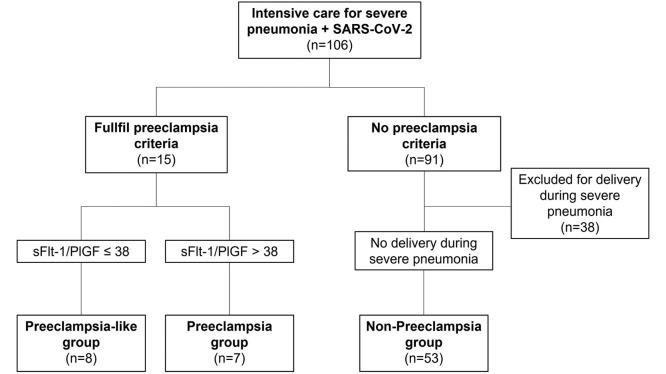
Results: A total of 106 women were admitted to the intensive care unit because of severe pneumonia, and 68 women were included in the study. Of those, 53 (50.0%) did not meet the diagnostic criteria for preeclampsia and remained pregnant after pneumonia (non-preeclampsia); 7 (6.6%) met the diagnostic criteria for preeclampsia, had abnormal (>38) soluble fms-like tyrosine kinase 1-to-placental growth factor ratio (preeclampsia), and delivered during severe pneumonia, and 8 (7.5%) met the diagnostic criteria for preeclampsia, had normal (≤38) soluble fms-like tyrosine kinase 1-to-placental growth factor ratio (preeclampsia like), and did not deliver during pneumonia. Despite not having delivered, most preeclampsia-related features improved after severe pneumonia in women with preeclampsia-like syndrome. Women with preeclampsia had significantly poorer outcomes than women with preeclampsia-like syndrome or without preeclampsia.
Conclusion: More than 50% of women with severe COVID-19 and diagnostic criteria for preeclampsia may not be preeclampsia but a preeclampsia-like syndrome, which may affect up to 7.5% of women with severe COVID-19. Preeclampsia-like syndrome might have similar perinatal outcomes to those of normotensive women with severe pneumonia because of COVID-19. For these reasons, preeclampsia-like syndrome should be excluded by using soluble fms-like tyrosine kinase 1-to-placental growth factor ratio in future research and before making clinical decisions.
Keywords: COVID-19; SARS-CoV-2; angiogenic factors; preeclampsia; preeclampsia-like syndrome; pregnancy; soluble fms-like tyrosine kinase-1–to–placental growth factor ratio.
Copyright © 2022 The Author(s). Published by Elsevier Inc. All rights reserved.
Figures
References
Publication types
MeSH terms
Substances
LinkOut - more resources
Full Text Sources
Medical
Miscellaneous
