


A survey of hospice day services in the United Kingdom & Republic of Ireland : how did hospices offer social support to palliative care patients, pre-pandemic?
- PMID: 36195870
- PMCID: PMC9532229
- DOI: 10.1186/s12904-022-01061-9
A survey of hospice day services in the United Kingdom & Republic of Ireland : how did hospices offer social support to palliative care patients, pre-pandemic?
Abstract
Introduction: Social support is described by patients and other stakeholders to be a valuable component of palliative day care. Less is known about the range of hospice services that have been used in practice that facilitate social support. An online survey aimed to gain an overview of all hospice day services that facilitated social support for adults outside of their own homes.
Methods: An online survey was distributed via email to people involved in managing hospice day services. Questions were asked on hospice characteristics, including staff and volunteer roles. Respondents were asked to identify services they felt offered social support to patients. Data collection took place between August 2017 and May 2018.
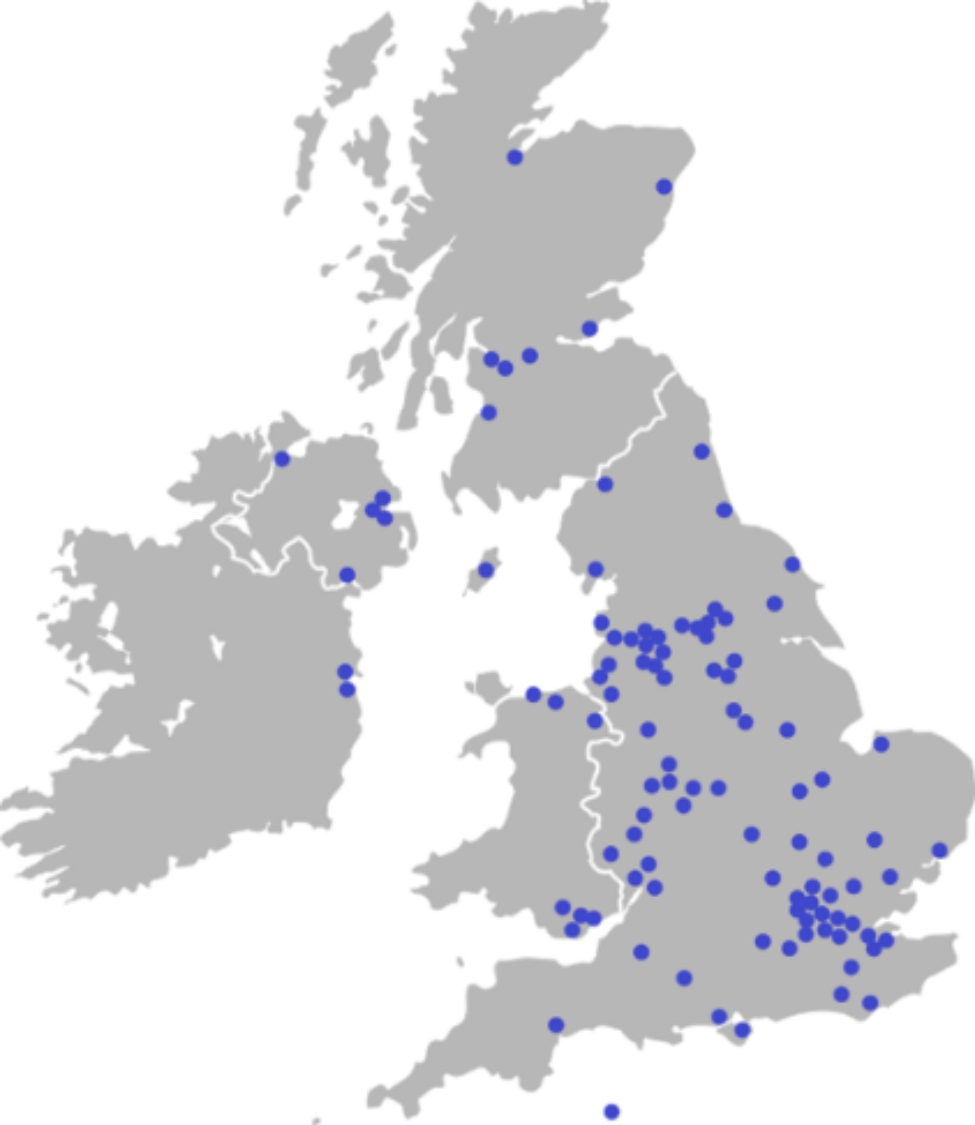
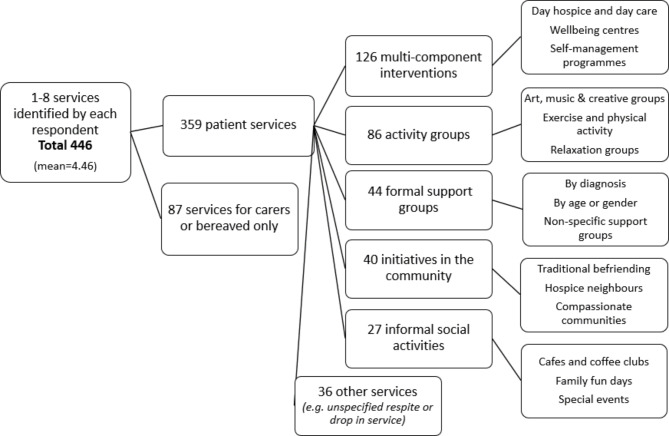
Results: Responses were received from 103 hospices in the UK and ROI (response rate 49.5%). Results provide an overview of hospice day and outpatient services that offer social support to patients. These are: multi-component interventions, activity groups, formal support groups, befriending, and informal social activities. Multi-component interventions, such as palliative day care, were the most commonly reported. Their stated aims tend to focus on clinical aspects, but many survey respondents considered these multicomponent interventions to be the 'most social' service at their hospice. The survey also identified a huge variety of activity groups, as well as formal therapeutic support groups. Informal 'social-only' activities were present, but less common. Over a third of all the services were described as 'drop in'. Most responding hospices did not routinely use patient reported outcome measures in their 'most social' services.
Conclusions: The survey documents hospice activity in facilitating social support to be diverse and evolving. At the time of data collection, many hospices offered multiple different services by which a patient might obtain social support outside of their own home and in the presence of other patients.
Keywords: hospice day services; palliative care; social support.
© 2022. The Author(s).
Conflict of interest statement
The authors have no conflicts of interest to declare.
Figures
References
-
- House JS, Khan RL. Measures and concepts of social support. Social Support and Health. 1985. 83–108.
-
- Holt-Lunstad J. Why social relationships are important for physical health: A systems approach to understanding and modifying risk and protection. Annual review of psychology. 2018 Jan 4;69:437–58. - PubMed
Publication types
MeSH terms
Grants and funding
LinkOut - more resources
Full Text Sources
Medical
