


Psychological resilience in older adults with type 2 diabetes from the Look AHEAD Trial
- PMID: 36196673
- PMCID: PMC9944500
- DOI: 10.1111/jgs.17986
Psychological resilience in older adults with type 2 diabetes from the Look AHEAD Trial
Abstract
Background: There is growing interest in identifying factors associated with healthy aging. This cross-sectional study evaluated associations of psychological resilience with factors associated with aging in older adults with type 2 diabetes mellitus (T2DM).
Methods: Participants were 3199 adults (72.2 ± 6.2 years of age, 61% female, 61% White, body mass index [BMI] = 34.2 ± 8.2 kg/m2 ) with T2DM enrolled in Look AHEAD (a multi-site randomized clinical trial comparing an intensive lifestyle intervention for weight loss to diabetes education and support). Participants were followed observationally after the 10-year intervention was discontinued. The following items were assessed approximately 14.4 years post-randomization in a cross-sectional analysis: Brief Resilience Scale; overnight hospitalizations in past year; physical functioning measured objectively (gait speed, grip strength) and via self-report (Pepper Assessment Tool for Disability; physical quality of life [QOL; SF-36]); a measure of phenotypic frailty based on having ≥3 of unintentional weight loss, low energy, slow gait, reduced grip strength, and physical inactivity. Depressive symptoms (PHQ-9) and mental QOL (SF-36) were also measured. Logistic/linear/multinomial regression was used to evaluate the association of variables with resilience adjusted for age, race/ethnicity, and gender.
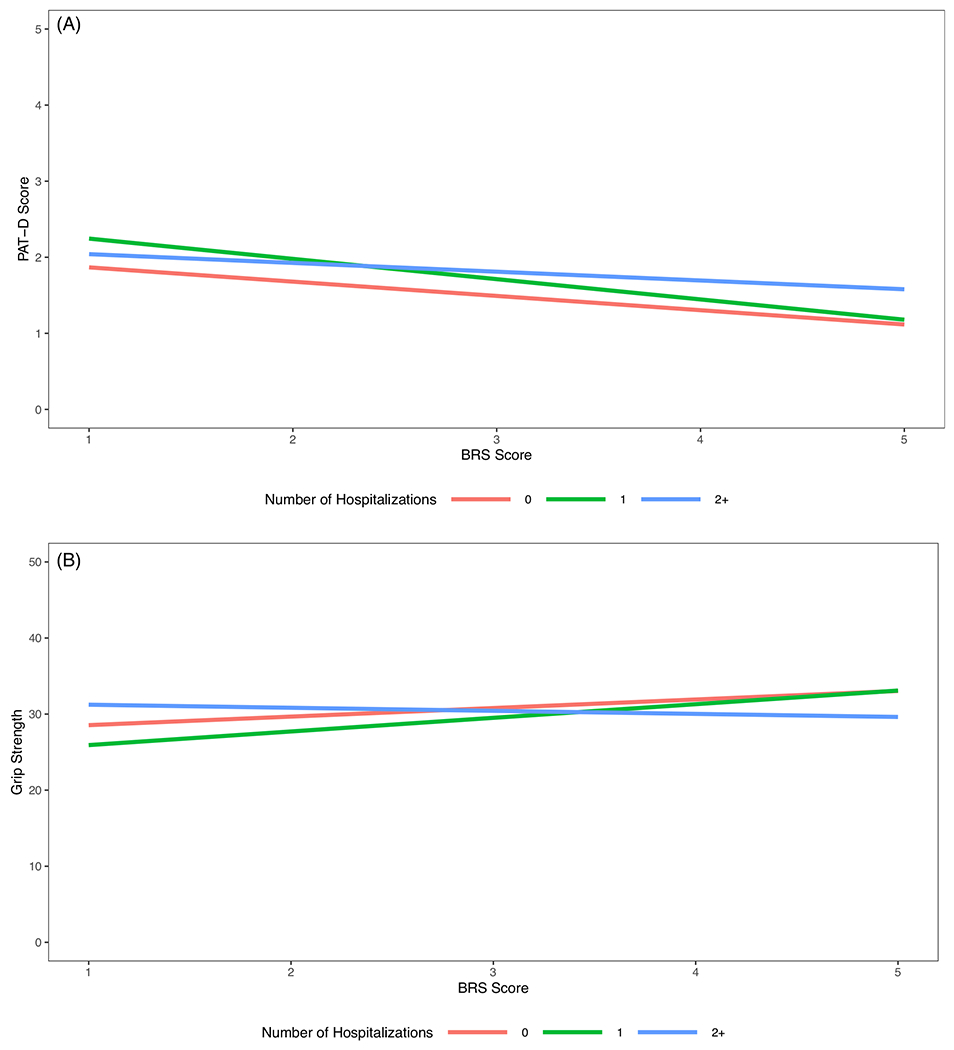
Results: Greater psychological resilience was associated with lower BMI, fewer hospitalizations, better physical functioning (i.e., lower self-reported disability, better physical QOL, faster gait speed, greater grip strength, lower likelihood of frailty), fewer depressive symptoms, and greater mental QOL (all p < 0.05). Psychological resilience moderated the relationship of number of hospitalizations in the past year with self-reported disability and grip strength.
Conclusions: Psychological resilience is associated with better physical function and QOL among older adults. Results should be interpreted cautiously given cross-sectional nature of analyses. Exploring the clinical benefits of resilience is consistent with efforts to shift the narrative on aging beyond "loss and decline" to highlight opportunities to facilitate healthy aging.
Keywords: aging; disability; frailty; healthy aging; quality of life.
© 2022 The American Geriatrics Society.
Figures
References
-
- US Department of Health and Human Services. A Profile of Older Americans: 2010. http://www.aoa.gov/aoaroot/aging_statistics/Profile/2010/docs/2010profil.... Accessed November 17, 2011.
-
- Dent E, Kowal P, Hoogendijk EO. Frailty measurement in research and clinical practice: a review. Eur J Intern Med. 2016;31:3–10. - PubMed
-
- Lekan DA. Aging, frailty, and resilience. J Psychosoc Nurs Ment Health Serv. 2018;56(7):2–4. - PubMed
-
- Liu JJ, Ein N, Gervasio J, et al. Comprehensive meta-analysis of resilience interventions. Clin Psychol Rev. 2020;82:101919. - PubMed
Publication types
MeSH terms
Grants and funding
LinkOut - more resources
Full Text Sources
Medical
Miscellaneous
