Review
. 2022 Oct 28;42(10):BSR20220314.
doi: 10.1042/BSR20220314.

New mechanisms for bacterial degradation of sulfoquinovose

Affiliations
Review

New mechanisms for bacterial degradation of sulfoquinovose

Yifeng Wei et al. Biosci Rep. .

Abstract

Sulfoquinovose (SQ, 6-deoxy-6-sulfo-D-glucose) is a sulfo-sugar with a ubiquitous distribution in the environment due to its production by plants and other photosynthetic organisms. Bacteria play an important role in degradation of SQ and recycling of its constituent sulfur and carbon. Since its discovery in 1963, SQ was noted to have a structural resemblance to glucose-6-phosphate and proposed to be degraded through a pathway analogous to glycolysis, termed sulfoglycolysis. Studies in recent years have uncovered an unexpectedly diverse array of sulfoglycolytic pathways in different bacteria, including one analogous to the Embden-Meyerhof-Parnas pathway (sulfo-EMP), one analogous to the Entner-Doudoroff pathway (sulfo-ED), and two involving sulfo-sugar cleavage by a transaldolase (sulfo-TAL) and transketolase (sulfo-TK), respectively, analogous to reactions in the pentose phosphate (PP) pathway. In addition, a non-sulfoglycolytic SQ degradation pathway was also reported, involving oxygenolytic C-S cleavage catalyzed by a homolog of alkanesulfonate monooxygenase (sulfo-ASMO). Here, we review the discovery of these new mechanisms of SQ degradation and lessons learnt in the study of new catabolic enzymes and pathways in bacteria.

Keywords: C-S cleavage; adolase; glycyl radical enzyme; mutarotase; sulfoglycolysis; sulfoquinovose.


Conflict of interest statement

The authors declare that there are no competing interests associated with the manuscript.

Figures
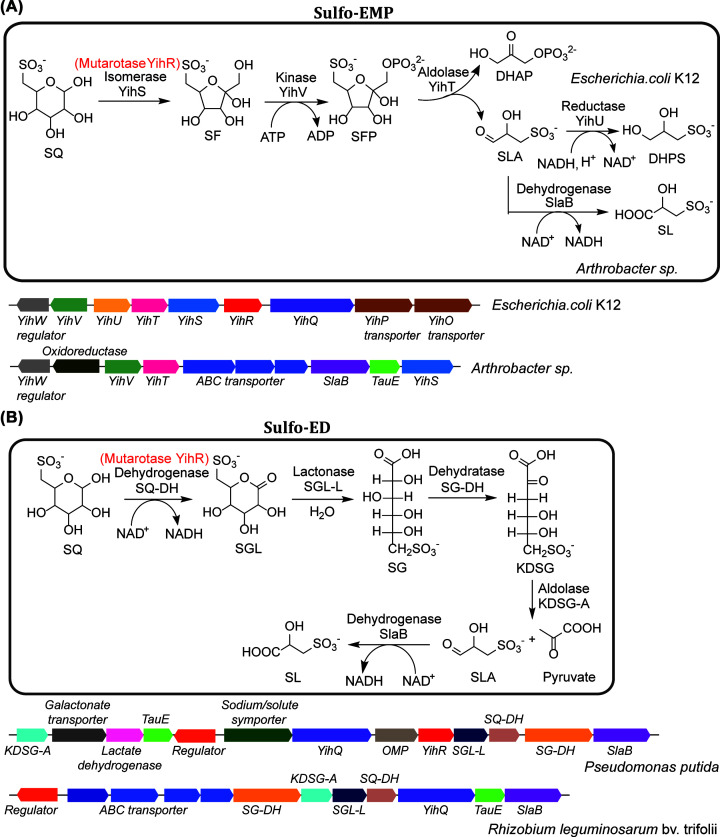
Figure 1
Figure 1. Sulfo-EMP and Sulfo-ED pathways
(A) Sulfo-EMP pathway with representative gene clusters. (B) Sulfo-ED pathway with representative gene clusters. Both pathways contain YihR, a mutarotase labeled in red.
Figure 2
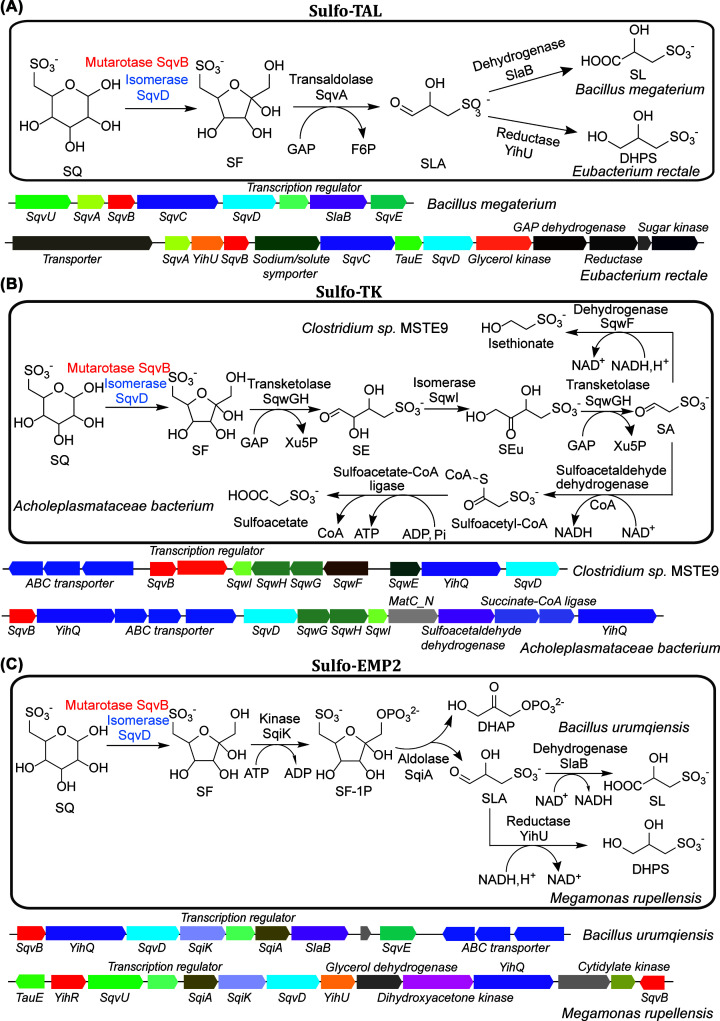
Figure 2. Sulfo-TAL, Sulfo-TK and Sulfo-EMP2 pathways
(A) Sulfo-TAL pathway with representative gene clusters. (B) Sulfo-TK pathway with representative gene clusters. (C) Sulfo-EMP2 pathway with representative gene clusters. These three pathways share SqvB, a putative mutarotase labeled in red and an isomerase SqvD labeled in blue.
Figure 3
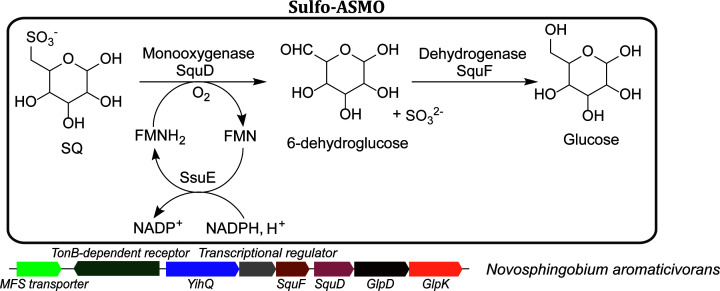
Figure 3. Sulfo-ASMO pathway with a representative gene cluster
In the first step of sulfo-ASMO pathway, oxygenolytic C-S cleavage of SQ catalyzed by the flavin-dependent SQ monooxygenase SquD produces sulfite and 6-dehydroglucose. Many of the sulfo-ASMO gene clusters also encode a SsuE homolog that catalyzes the NAD(P)H-dependent regeneration of the reduced flavin cofactor for SquD. For those that lack SsuE, other flavin reductases may be involved (e.g. in N. aromaticivorans). In the second step, 6-dehydroglucose is reduced to glucose by the NAD(P)H-dependent glucose-6-dehydrogenase SquF, allowing the complete utilization of SQ carbons.
Figure 4
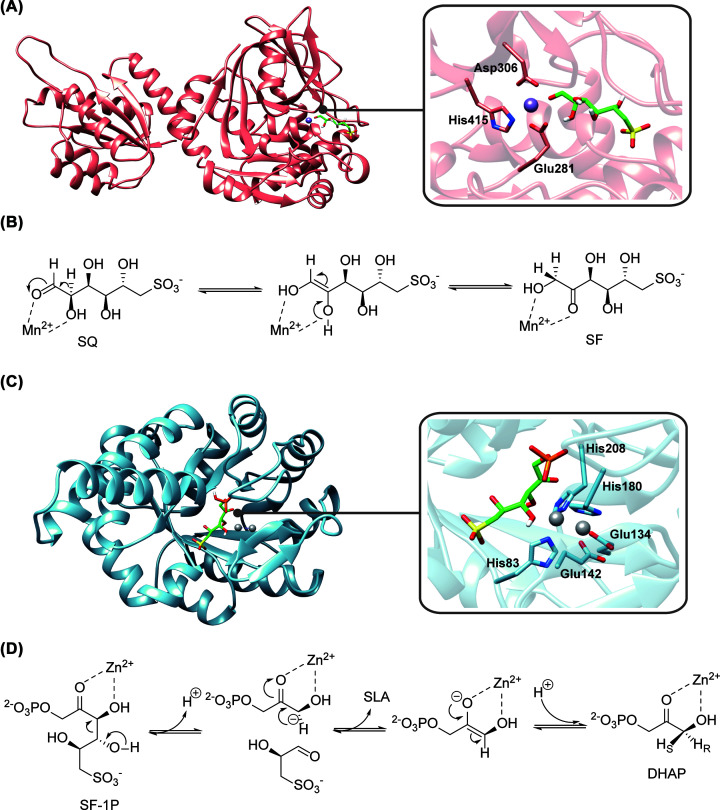
Figure 4. Structural models and proposed catalytic schemes for two key enzymes in the sulfo-EMP2 pathway
(A) Structural model of SqvD (left) and the zoom-in view of the active site (right), showing conserved Mn2+-binding residues. (B) Proposed catalytic scheme for SqvD involving an ene-diol intermediate. (C) Structural model of SqiA (left) and the zoom-in view of the active site (right), showing conserved Zn2+-binding residues. The mobile Zn2+ cofactor occupies two mutually exclusive sites. (D) Proposed catalytic scheme for SqiA. Both models were constructed using AlphaFold2 [29] in ColabFold [30]. The putative Mn2+ site of SqvD and two putative Zn2+ sites of SqiA were estimated by alignment with the crystal structures of E. coli FucI (PDB: 1FUI) [28] and Helicobacter pylori class II fructose-1,6-biphosphate adolase (5UCK) [33], respectively.
Figure 5
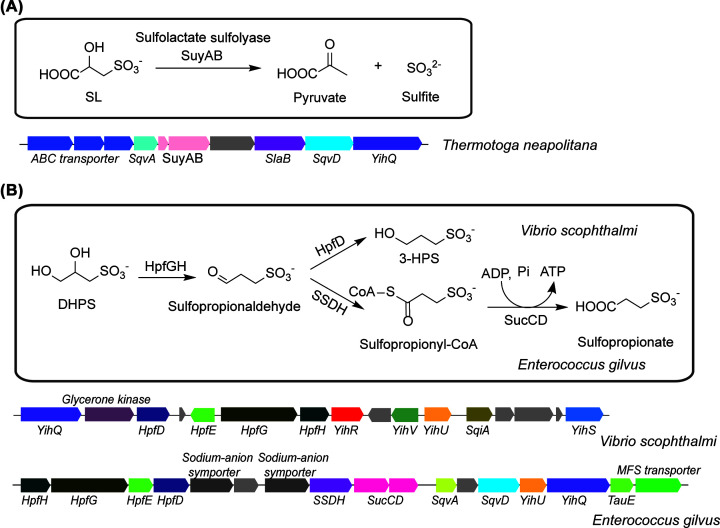
Figure 5. Extended sulfoglycolysis pathways
(A) Extended sulfoglycolysis pathway showing the fate of SL with a representative gene cluster. (B) Extended sulfoglycolysis pathway showing the fate of DHPS with representative gene clusters.

References

    1. Roy A.B., Hewlins M.J., Ellis A.J., Harwood J.L. and White G.F. (2003) Glycolytic breakdown of sulfoquinovose in bacteria: a missing link in the sulfur cycle. Appl. Environ. Microbiol. 69, 6434–6441 10.1128/AEM.69.11.6434-6441.2003 - DOI - PMC - PubMed
    1. Goddard-Borger E.D. and Williams S.J. (2017) Sulfoquinovose in the biosphere: occurrence, metabolism and functions. Biochem. J. 474, 827–849 10.1042/BCJ20160508 - DOI - PubMed
    1. Moran M.A. and Durham B.P. (2019) Sulfur metabolites in the pelagic ocean. Nat. Rev. Microbiol. 17, 665–678 10.1038/s41579-019-0250-1 - DOI - PubMed
    1. Burrichter A., Denger K., Franchini P., Huhn T., Müller N., Spiteller D.et al. (2018) Anaerobic degradation of the plant sugar sulfoquinovose concomitant with H2S production: Escherichia coli K-12 and Desulfovibrio sp. strain DF1 as co-culture model. Front. Microbiol. 9, 2792 10.3389/fmicb.2018.02792 - DOI - PMC - PubMed
    1. Hanson B.T., Kits K.D., Löffler J., Burrichter A.G., Fiedler A., Denger K.et al. (2021) Sulfoquinovose is a select nutrient of prominent bacteria and a source of hydrogen sulfide in the human gut. ISME J. 15, 2779–2791 10.1038/s41396-021-00968-0 - DOI - PMC - PubMed

Publication types

LinkOut - more resources