


Predicting the number of citations of polycystic kidney disease with 100 top-cited articles since 2010: Bibliometric analysis
- PMID: 36197211
- PMCID: PMC9509201
- DOI: 10.1097/MD.0000000000030632
Predicting the number of citations of polycystic kidney disease with 100 top-cited articles since 2010: Bibliometric analysis
Abstract
Background: Polycystic kidney disease (PKD) is a genetic disorder in which the renal tubules become structurally abnormal, resulting in the development and growth of multiple cysts within the kidneys. Numerous studies on PKD have been published in the literature. However, no such articles used medical subject headings (MeSH terms) to predict the number of article citations. This study aimed to predict the number of article citations using 100 top-cited PKD articles (T100PKDs) and dissect the characteristics of influential authors and affiliated counties since 2010.
Methods: We searched the PubMed Central® (PMC) database and downloaded 100PKDs from 2010. Citation analysis was performed to compare the dominant countries and authors using social network analysis (SNA). MeSh terms were analyzed by referring to their citations in articles and used to predict the number of article citations using its correlation coefficients (CC) to examine the prediction effect.
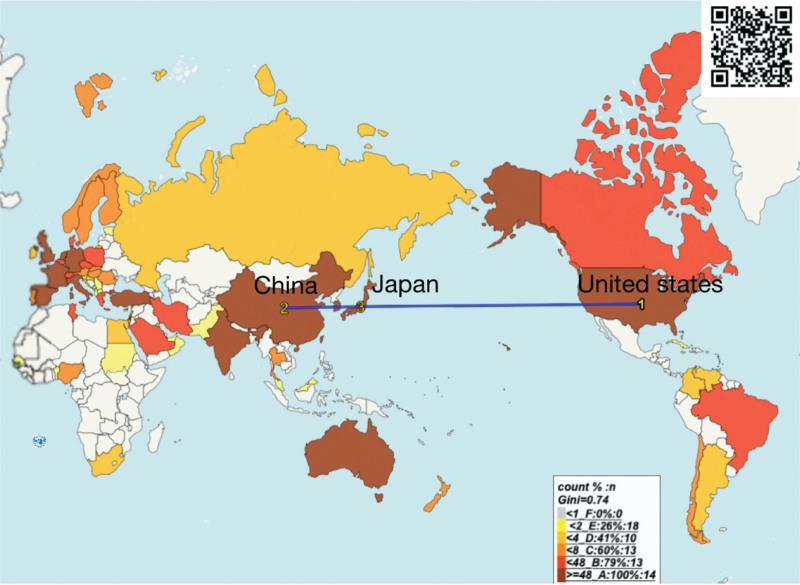
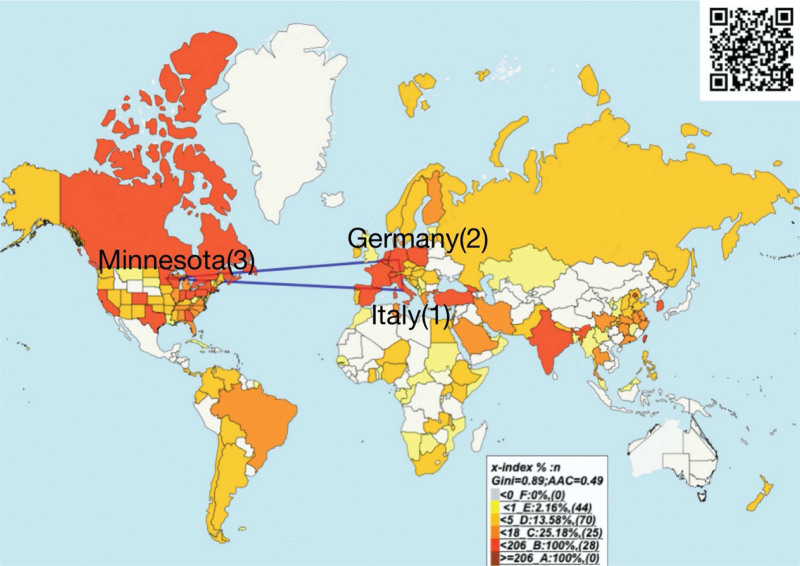
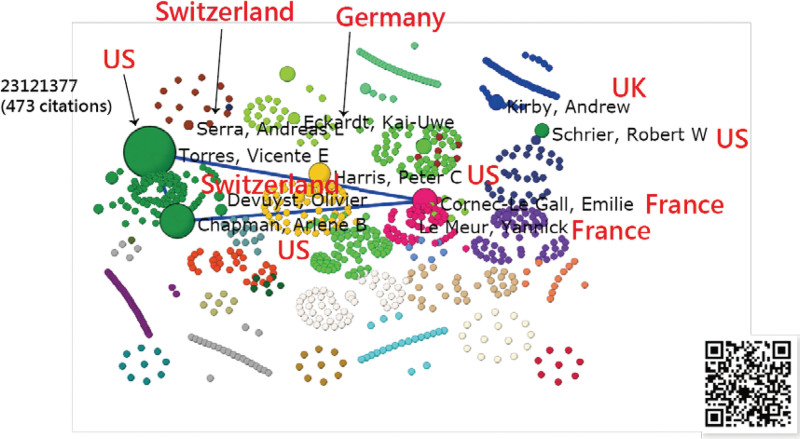
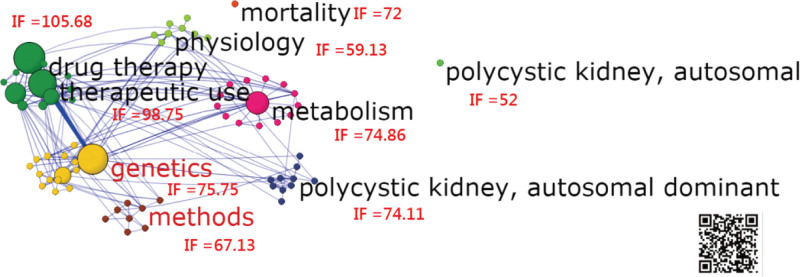
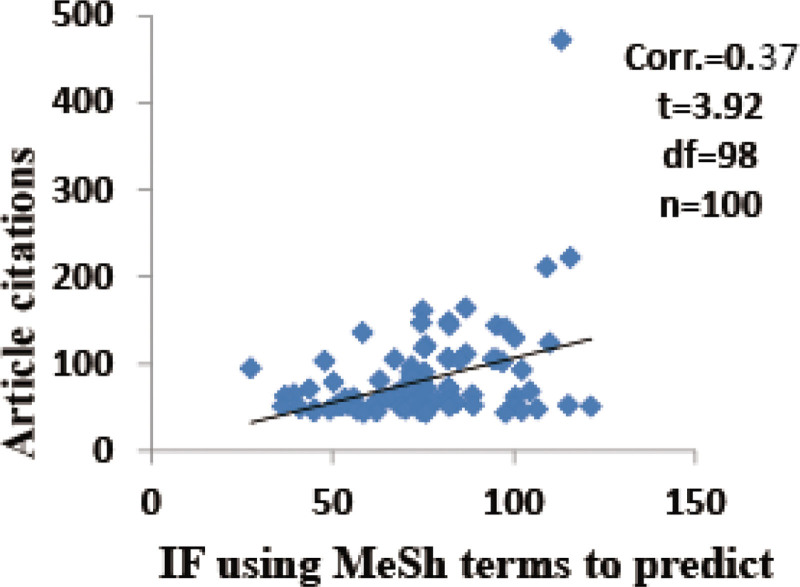
Results: We observed that the top 3 countries and journals in 100PKDs were the US (65%), Netherlands (7%), France (5%), J Am Soc Nephrol (21%), Clin J Am Soc Nephrol (8%), and N Engl J Med (6%); the most cited article (PMID = 23121377 with 473 citations) was authored by Vicente Torres from the US in 2012; and the most influential MeSH terms were drug therapy (3087.2), genetics (2997.83), and therapeutic use (2760.7). MeSH terms were evident in the prediction power of the number of article citations (CC = 0.37; t = 3.92; P < .01, n = 100).
Conclusions: A breakthrough was made by developing a method using MeSH terms to predict the number of article citations based on 100PKDs. MeSH terms are evident in predicting article citations that can be applied to future research, not limited to PKD, as we did in this study.
Copyright © 2022 the Author(s). Published by Wolters Kluwer Health, Inc.
Conflict of interest statement
The authors have no funding and conflicts of interest to disclose.
Figures
References
-
- Frances Ashe-Goins, Akhtar Ashfaq, Vinod Bansal, et al. Polycystic kidney disease. American kidney Fund. 2020. https://www.kidneyfund.org/kidney-disease/other-kidney-conditions/polycy....
-
- Walz G, Budde K, Mannaa M, et al. Everolimus in patients with autosomal dominant polycystic kidney disease [published correction appears in N Engl J Med. 2010 Nov 11;363(20):1977] [published correction appears in N Engl J Med. 2010 Sep 16;363(12):1190]. N Engl J Med. 2010;363:830–40. - PubMed
-
- Colbert GB, Elrggal ME, Gaur L, et al. Update and review of adult polycystic kidney disease. Dis Mon. 2020;66:100887. - PubMed
MeSH terms
LinkOut - more resources
Full Text Sources
Research Materials
