


Late isocaloric eating increases hunger, decreases energy expenditure, and modifies metabolic pathways in adults with overweight and obesity
- PMID: 36198293
- PMCID: PMC10184753
- DOI: 10.1016/j.cmet.2022.09.007
Late isocaloric eating increases hunger, decreases energy expenditure, and modifies metabolic pathways in adults with overweight and obesity
Abstract
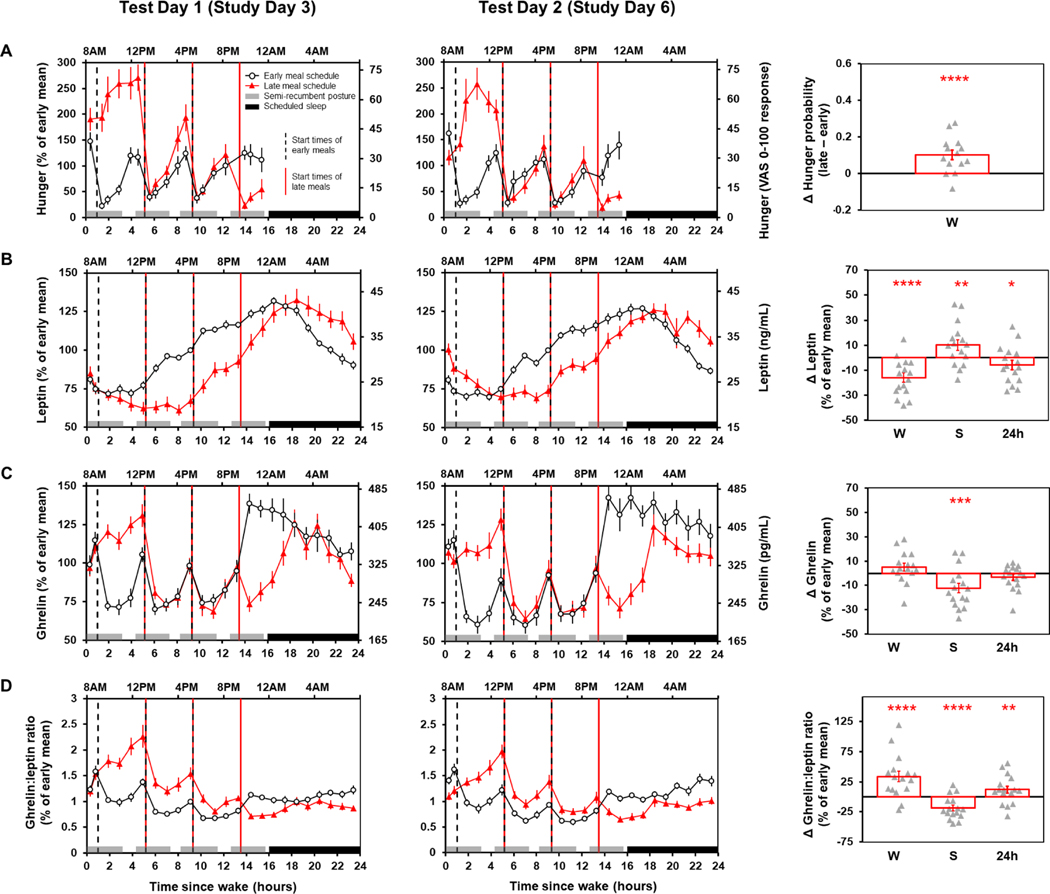
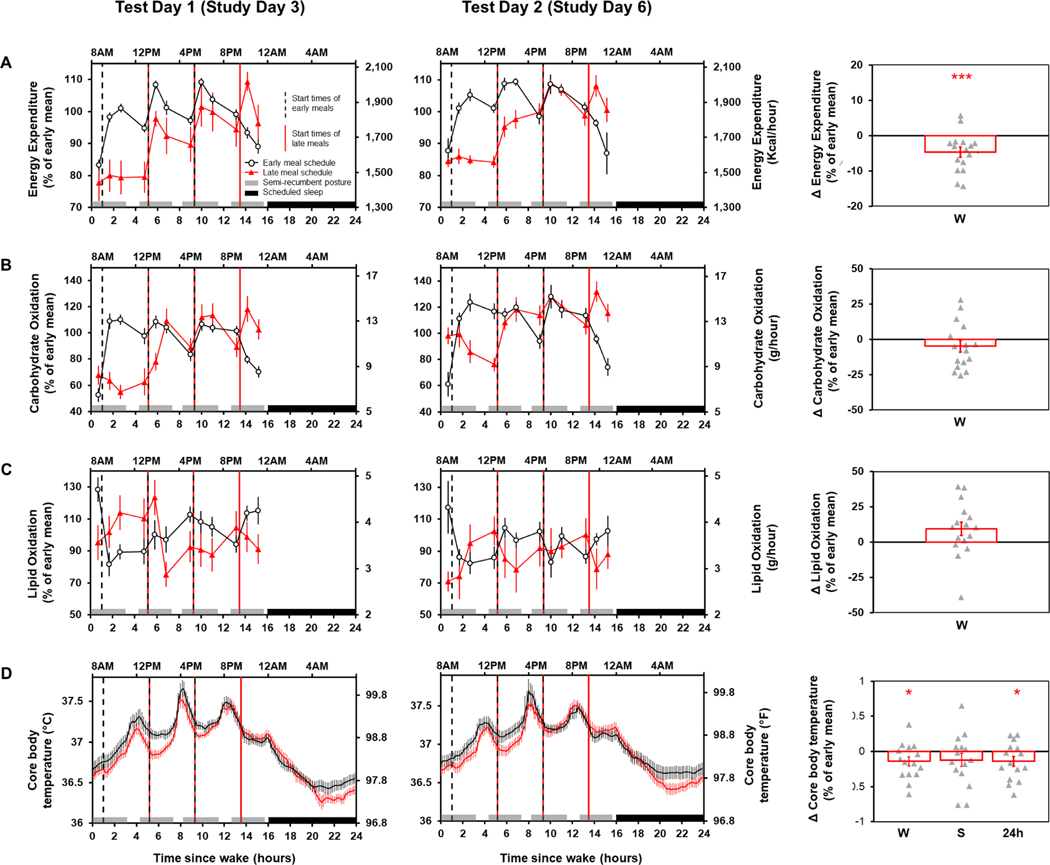
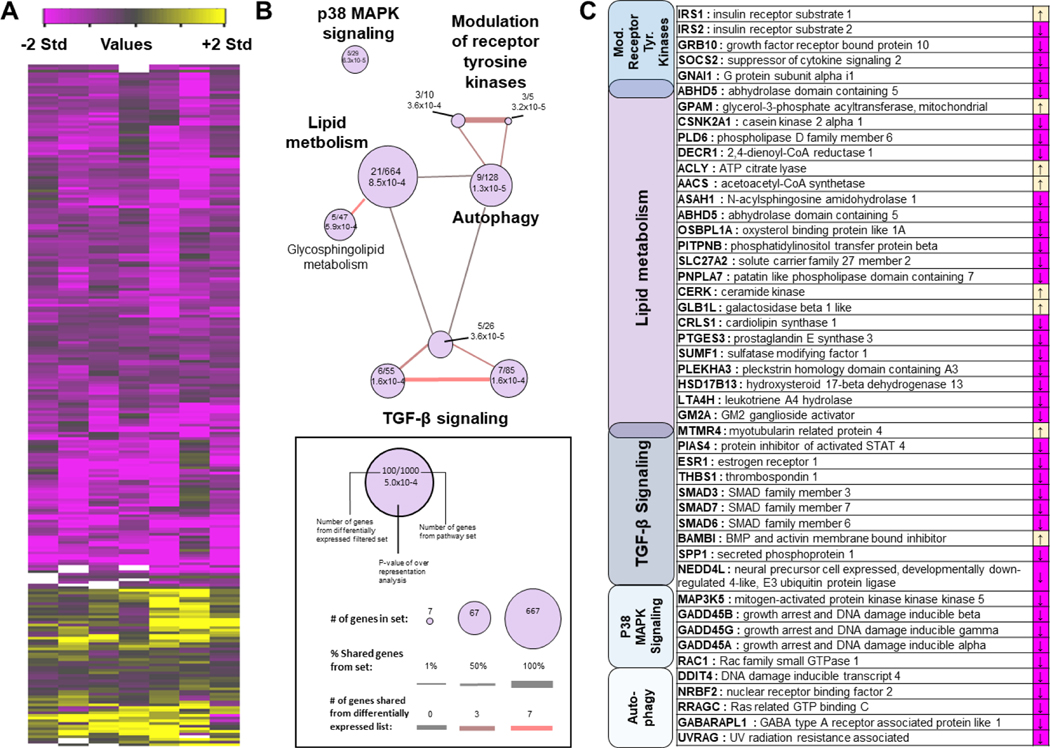
Late eating has been linked to obesity risk. It is unclear whether this is caused by changes in hunger and appetite, energy expenditure, or both, and whether molecular pathways in adipose tissues are involved. Therefore, we conducted a randomized, controlled, crossover trial (ClinicalTrials.gov NCT02298790) to determine the effects of late versus early eating while rigorously controlling for nutrient intake, physical activity, sleep, and light exposure. Late eating increased hunger (p < 0.0001) and altered appetite-regulating hormones, increasing waketime and 24-h ghrelin:leptin ratio (p < 0.0001 and p = 0.006, respectively). Furthermore, late eating decreased waketime energy expenditure (p = 0.002) and 24-h core body temperature (p = 0.019). Adipose tissue gene expression analyses showed that late eating altered pathways involved in lipid metabolism, e.g., p38 MAPK signaling, TGF-β signaling, modulation of receptor tyrosine kinases, and autophagy, in a direction consistent with decreased lipolysis/increased adipogenesis. These findings show converging mechanisms by which late eating may result in positive energy balance and increased obesity risk.
Keywords: adipose; early eating; energy expenditure; energy intake; gene expression; ghrelin; hunger; late eating; leptin; meal timing.
Copyright © 2022 Elsevier Inc. All rights reserved.
Conflict of interest statement
Declaration of interests During the execution of this project, F.A.J.L.S. received lecture fees from Bayer HealthCare, Sentara HealthCare, Philips, Vanda Pharmaceuticals, and Pfizer Pharmaceuticals; received consulting fees from the University of Alabama at Birmingham; and served on the Board of Directors for the Sleep Research Society. F.A.J.L.S.'s interests were reviewed and managed by Brigham and Women’s Hospital and Partners HealthCare in accordance with their conflict of interest policies. None of these are related to the current work. N.V. has been compensated for consulting services provided to the Novartis Institutes of Biomedical Research, also unrelated to the current work.
Figures
References
-
- Adamska-Patruno E, Ostrowska L, Goscik J, Pietraszewska B, Kretowski A, and Gorska M. (2018). The relationship between the leptin/ghrelin ratio and meals with various macronutrient contents in men with different nutritional status: a randomized crossover study. Nutrition journal 17, 118. - PMC - PubMed
-
- Afaghi A, O’Connor H, and Chow CM (2007). High-glycemic-index carbohydrate meals shorten sleep onset. The American journal of clinical nutrition 85, 426–430. - PubMed
Publication types
MeSH terms
Substances
Associated data
Grants and funding
LinkOut - more resources
Full Text Sources
Medical
