


Polycystic Liver Disease: Pathophysiology, Diagnosis and Treatment
- PMID: 36200122
- PMCID: PMC9528914
- DOI: 10.2147/HMER.S377530
Polycystic Liver Disease: Pathophysiology, Diagnosis and Treatment
Abstract
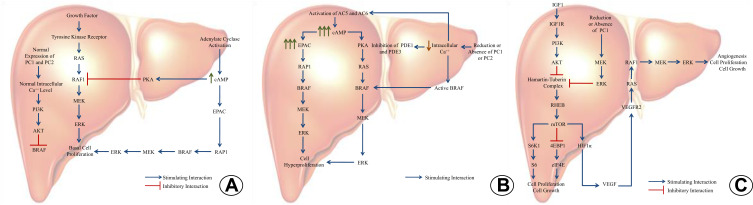
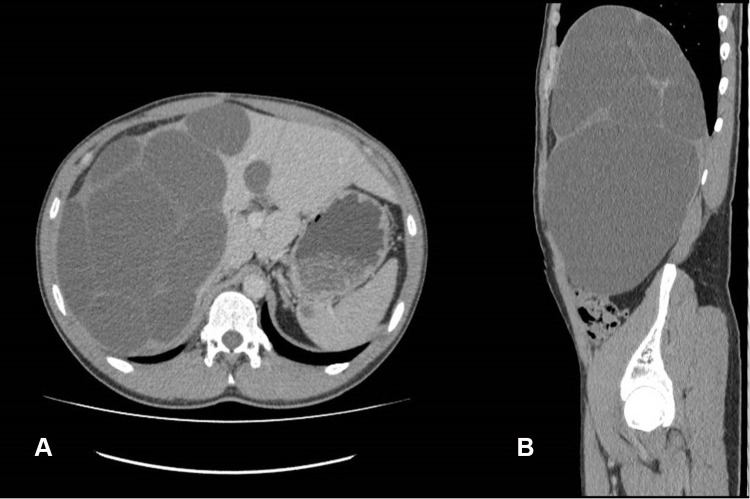
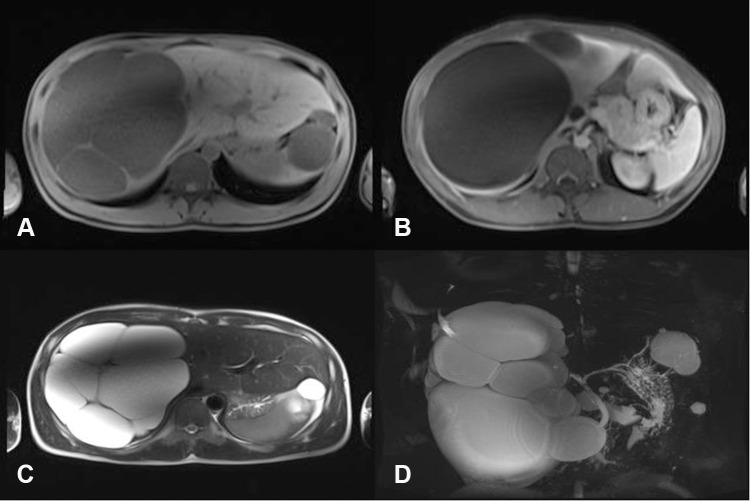
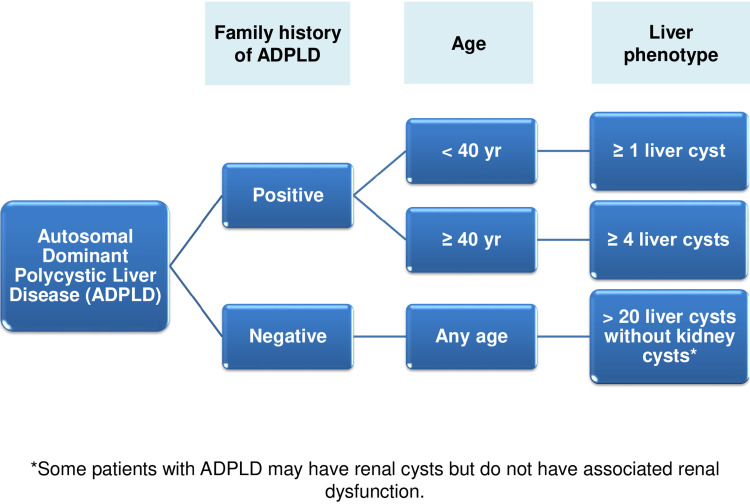
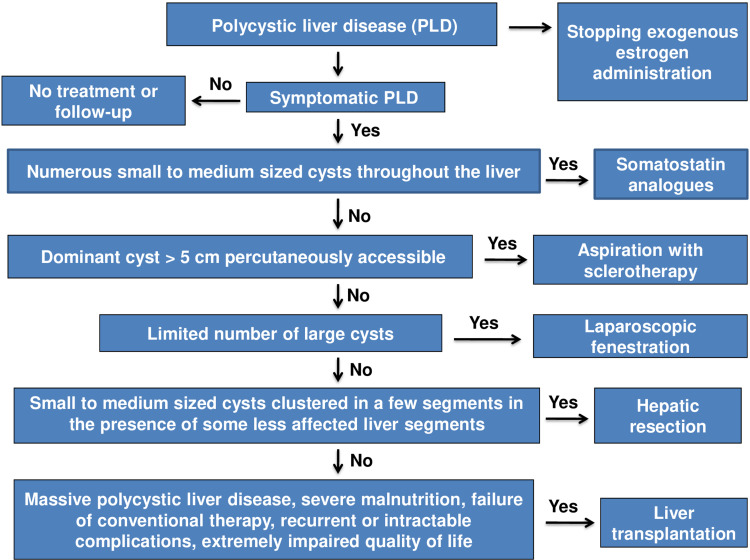
Polycystic liver disease (PLD) is a clinical condition characterized by the presence of more than 10 cysts in the liver. It is a rare disease Of genetic etiology that presents as an isolated disease or assoc\iated with polycystic kidney disease. Ductal plate malformation, ciliary dysfunction, and changes in cell signaling are the main factors involved in its pathogenesis. Most patients with PLD are asymptomatic, but in 2-5% of cases the disease has disabling symptoms and a significant reduction in quality of life. The diagnosis is based on family history of hepatic and/or renal polycystic disease, clinical manifestations, patient age, and polycystic liver phenotype shown on imaging examinations. PLD treatment has evolved considerably in the last decades. Somatostatin analogues hold promise in controlling disease progression, but liver transplantation remains a unique curative treatment modality.
Keywords: hepatomegaly; liver; liver cysts; polycystic liver disease; therapeutics.
© 2022 Norcia et al.
Conflict of interest statement
The authors have no conflicts of interest to declare regarding the present work.
Figures
References
-
- Harris PC, Torres VE. Polycystic kidney disease, autossomal dominant. In: Adam MP, Ardinger HH, Pagon RA, et al, editors. GeneReviews [Internet]. Seattle: University of Washington; 2002:1–44. - PubMed
-
- Sweeney WE, Avner ED. Polycystic kidney disease, autossomal recessive. In: Adam MP, Ardinger HH, Pagon RA, et al, editors. GeneReviews [Internet]. Seattle: University of Washington; 2001:1–26. - PubMed
-
- Chandok N. Polycystic liver disease: a clinical review. Ann Hepatol. 2012;11(6):819–826. - PubMed
-
- Gevers TJG, Drenth JPH. Diagnosis and management of polycystic liver disease. Nat Rev Gastroenterol Hepatol. 2013;10(2):101–108. - PubMed
Publication types
LinkOut - more resources
Full Text Sources
