


Existing guidance on reporting of consensus methodology: a systematic review to inform ACCORD guideline development
- PMID: 36201247
- PMCID: PMC9462098
- DOI: 10.1136/bmjopen-2022-065154
Existing guidance on reporting of consensus methodology: a systematic review to inform ACCORD guideline development
Abstract
Objective: To identify evidence on the reporting quality of consensus methodology and to select potential checklist items for the ACcurate COnsensus Reporting Document (ACCORD) project to develop a consensus reporting guideline.
Design: Systematic review.
Data sources: Embase, MEDLINE, Web of Science, PubMed, Cochrane Library, Emcare, Academic Search Premier and PsycINFO from inception until 7 January 2022.
Eligibility criteria: Studies, reviews and published guidance addressing the reporting quality of consensus methodology for improvement of health outcomes in biomedicine or clinical practice. Reports of studies using or describing consensus methods but not commenting on their reporting quality were excluded. No language restrictions were applied.
Data extraction and synthesis: Screening and data extraction of eligible studies were carried out independently by two authors. Reporting quality items addressed by the studies were synthesised narratively.
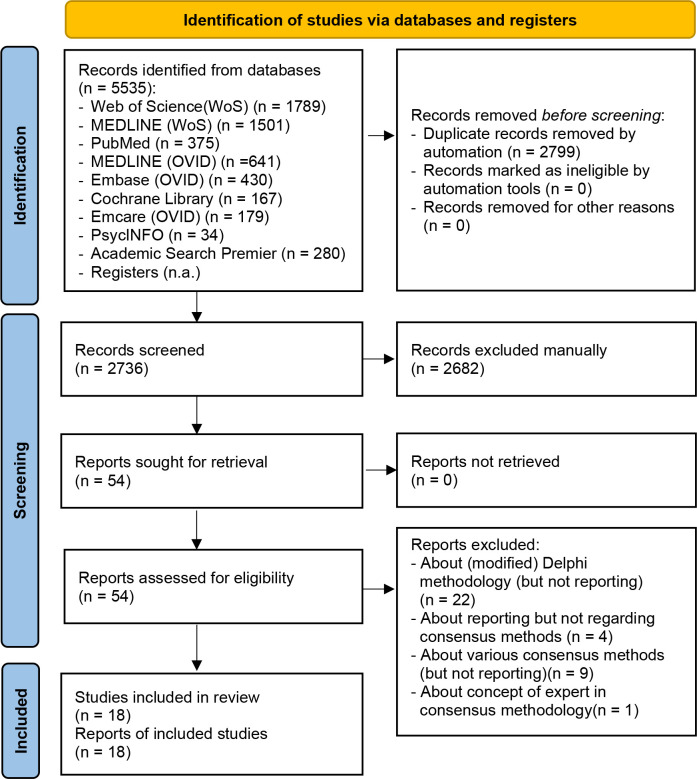
Results: Eighteen studies were included: five systematic reviews, four narrative reviews, three research papers, three conference abstracts, two research guidance papers and one protocol. The majority of studies indicated that the quality of reporting of consensus methodology could be improved. Commonly addressed items were: consensus panel composition; definition of consensus and the threshold for achieving consensus. Items least addressed were: public patient involvement (PPI); the role of the steering committee, chair, cochair; conflict of interest of panellists and funding. Data extracted from included studies revealed additional items that were not captured in the data extraction form such as justification of deviation from the protocol or incentives to encourage panellist response.
Conclusion: The results of this systematic review confirmed the need for a reporting checklist for consensus methodology and provided a range of potential checklist items to report. The next step in the ACCORD project builds on this systematic review and focuses on reaching consensus on these items to develop the reporting guideline.
Protocol registration: https://osf.io/2rzm9.
Keywords: Health policy; Protocols & guidelines; STATISTICS & RESEARCH METHODS.
© Author(s) (or their employer(s)) 2022. Re-use permitted under CC BY. Published by BMJ.
Conflict of interest statement
Competing interests: PL is a member of the UK EQUATOR Centre, an organisation that promotes the use of reporting guidelines, many of which are developed using consensus methods, and she is personally involved in the development of other reporting guidelines. ELH has worked with Ogilvy Health UK on consensus projects. WTG is a former employee of Ipsen and is now employed by Bristol Myers Squib. AP is an editor at the BMJ and is a senior research scientist at Stanford University, where she is responsible for advising and seeking funding on Delphi and other research studies. EJvZ and ZF have no conflict of interest.
Figures
References
-
- Dalkey N, Helmer O. An experimental application of the Delphi method to the use of experts. Manage Sci 1963;9:458–67. 10.1287/mnsc.9.3.458 - DOI
Publication types
MeSH terms
Grants and funding
LinkOut - more resources
Full Text Sources
