


A GC-MC analysis of chemical compounds and identification of the antibacterial characteristics of the essential oil of two species exclusive to Iranian habitats: New chemotypes
- PMID: 36201544
- PMCID: PMC9536594
- DOI: 10.1371/journal.pone.0273987
A GC-MC analysis of chemical compounds and identification of the antibacterial characteristics of the essential oil of two species exclusive to Iranian habitats: New chemotypes
Abstract
Background: The diversity found in the chemical compounds of a single species in different regions results in different biologic characteristics which can be considered as a strong source for identifying new chemotypes. Hymenocrater incanus Bunge and Dracocephalum kotschyi Boiss. are exclusive species of the Lamiaceae family which grow in the western and central habitats of Iran. This study was designed and carried out to determine the yield, identify the chemical compounds, and evaluate the antimicrobial characteristics of the essential oil (EO) of these two species in Iran for the first time.
Methods: The flowering twigs of the species D. kotschyi and H. incanus were collected from the villages of Totmach and Kamu in Isfahan province respectively, in May 2019. The EO of these plants was extracted and separated using the water distillation method, utilizing the Clevenger device. The EO compounds were analyzed using a gas chromatograph coupled with a mass spectrometer (GC-MS). The evaluation of antimicrobial characteristics was carried out by determining the growth inhibition zone implementing the Agar method, the minimum inhibition concentration (MIC), and the minimum bactericidal/fungicidal concentration (MFC/MBC) utilizing liquid dilution culture.
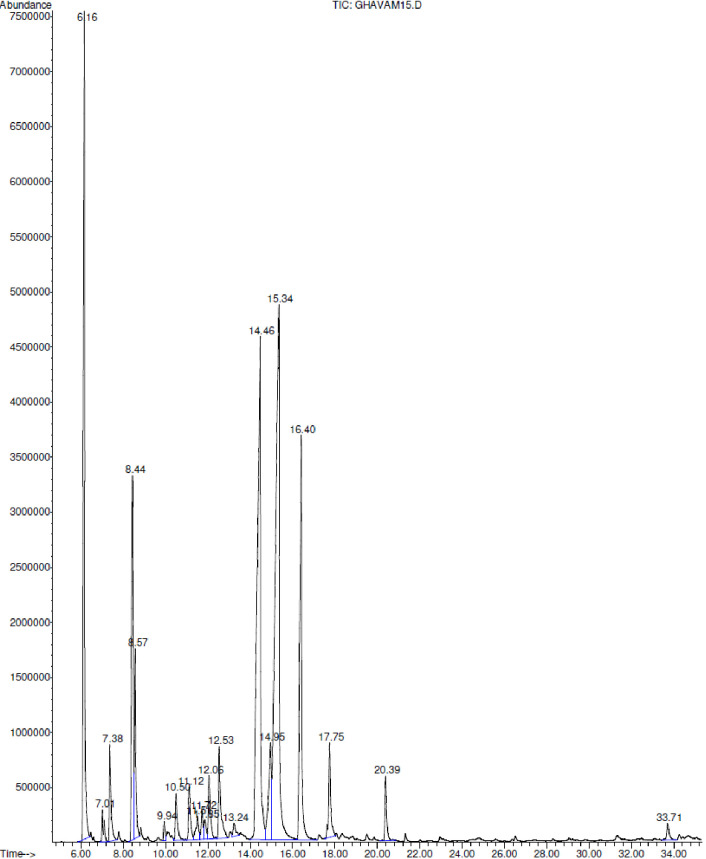
Results: The results indicated that the highest yield belonged to the EO of D. kotschyi at %2.6 (w/w). In this EO there were citral (%25.44), neral (%20.87), α-pinene (%14.48), trans-geranic acid methyl ester (%9.74), and D-limonene (%6.87). Moreover, H. incanus had the dominant compounds (-)-Spathulenol (%12.61), caryophyllene (%10.00), linolenic acid (%8.54), 1,8-cineole (%5.95), palmitic acid (%5.35), and α-cadinol (%5.17). The largest diameter of growth inhibition zone belonged to the H. incanus EO against the Gram-positive bacteria S. pyogenes (~17.67mm). The strongest inhibition activities in the form of growth inhibition diameter exhibited by the D. kotschyi EO were against the Gram-negative bacteria S. paratyphi-A serotype (~ 12 mm), K. pneumoniae, and Sh. dysenteriae (~ 11 mm) which was significant compared to the Gram-positive rifampin (~ 8 mm).
Conclusions: It can be seen that these species are new chemotypes with special and novel chemical compounds which can potentially be used to manufacture natural antibiotics against some bacterial strains.
Conflict of interest statement
The authors have declared that no competing interests exist.
Figures

References
-
- Azizian Shermeh O., Taherizadeh M., Valizadeh M., & Zaboli A. (2018). Investigation of antioxidant and antimicrobial activities and phytochemical Compounds of essential oil and different extracts of Cymbopogon olivieri (Boiss.) Bor. from Sistan and Baluchestan province. Journal of Sabzevar University of Medical Sciences, 25(2), 279–292.
-
- Nascimento G. G. F., Locatelli J., Freitas P. C., & Silva G. L. (2000). Antibacterial activity of plant extracts and phytochemicals on antibiotic-resistant bacteria. Brazilian Journal of Microbiology, 31, 247–256.
-
- Sadeghi E., Dargahi A., Mohammadi A., Asadi F., & Sahraee S. (2015). Antimicrobial effect of essential oils: a systematic review. Food Hygiene, 5(2 (18)), 1–26.
-
- Herro E., & Jacob S. E. (2010). Mentha piperita (peppermint). Dermatitis, 21(6), 327–329. - PubMed
MeSH terms
Substances
Supplementary concepts
LinkOut - more resources
Full Text Sources
Molecular Biology Databases
Miscellaneous
