


Economic analysis of a single institutional review board data exchange standard in multisite clinical studies
- PMID: 36202199
- PMCID: PMC10015373
- DOI: 10.1016/j.cct.2022.106953
Economic analysis of a single institutional review board data exchange standard in multisite clinical studies
Abstract
Background: Single Institutional Review Boards (sIRB) are not achieving the benefits envisioned by the National Institutes of Health. The recently published Health Level Seven (HL7®) Fast Healthcare Interoperability Resources (FHIR®) data exchange standard seeks to improve sIRB operational efficiency.
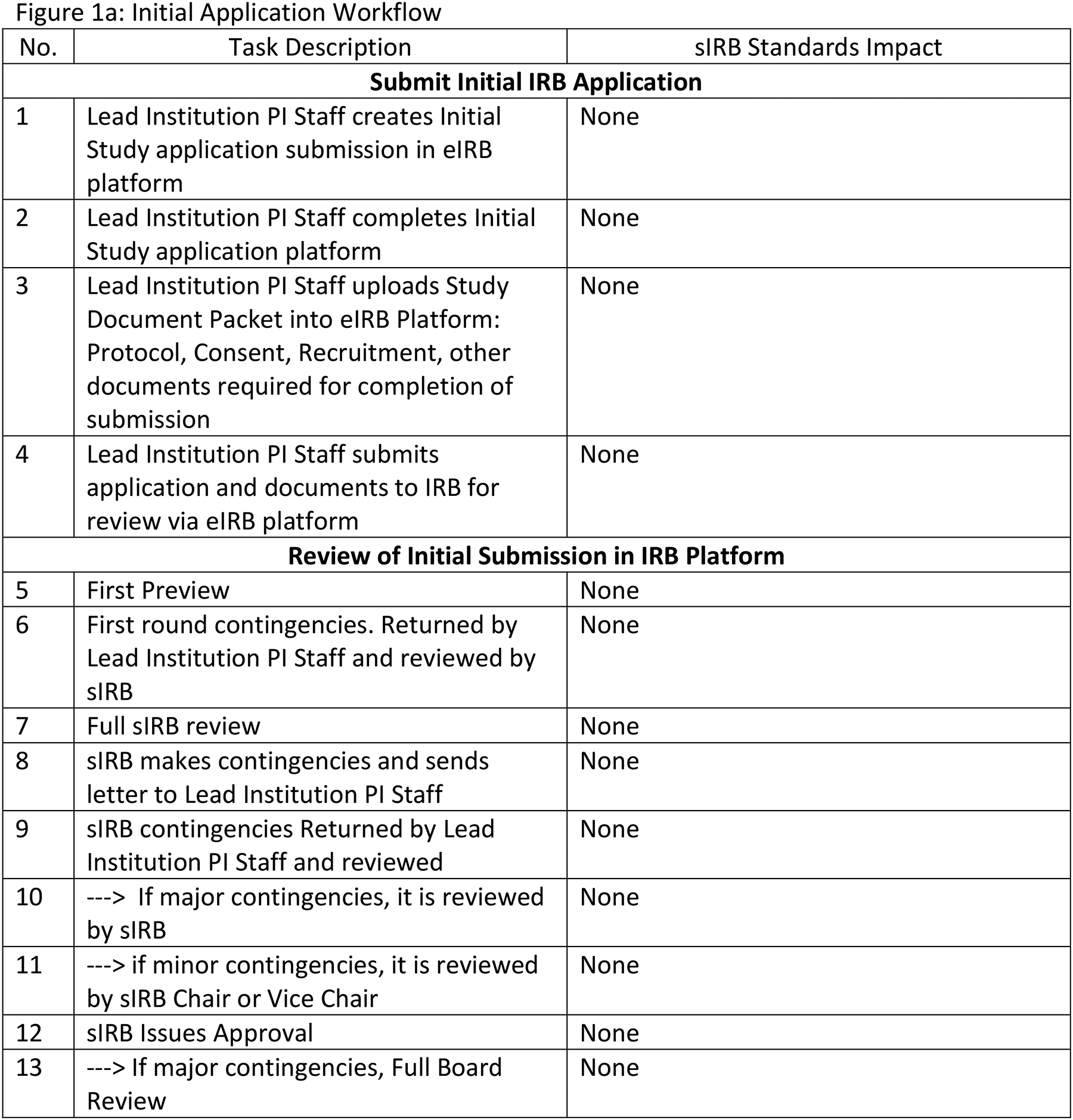
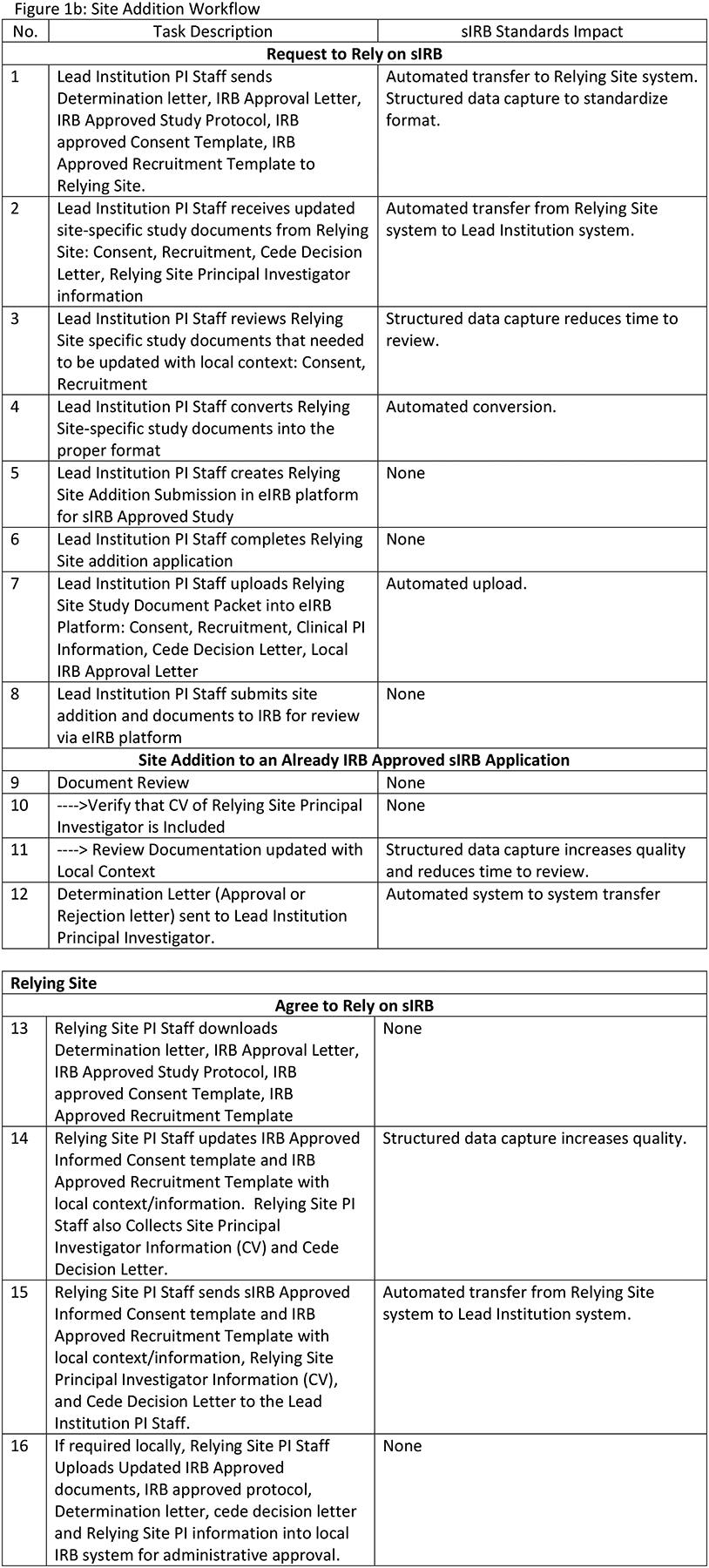
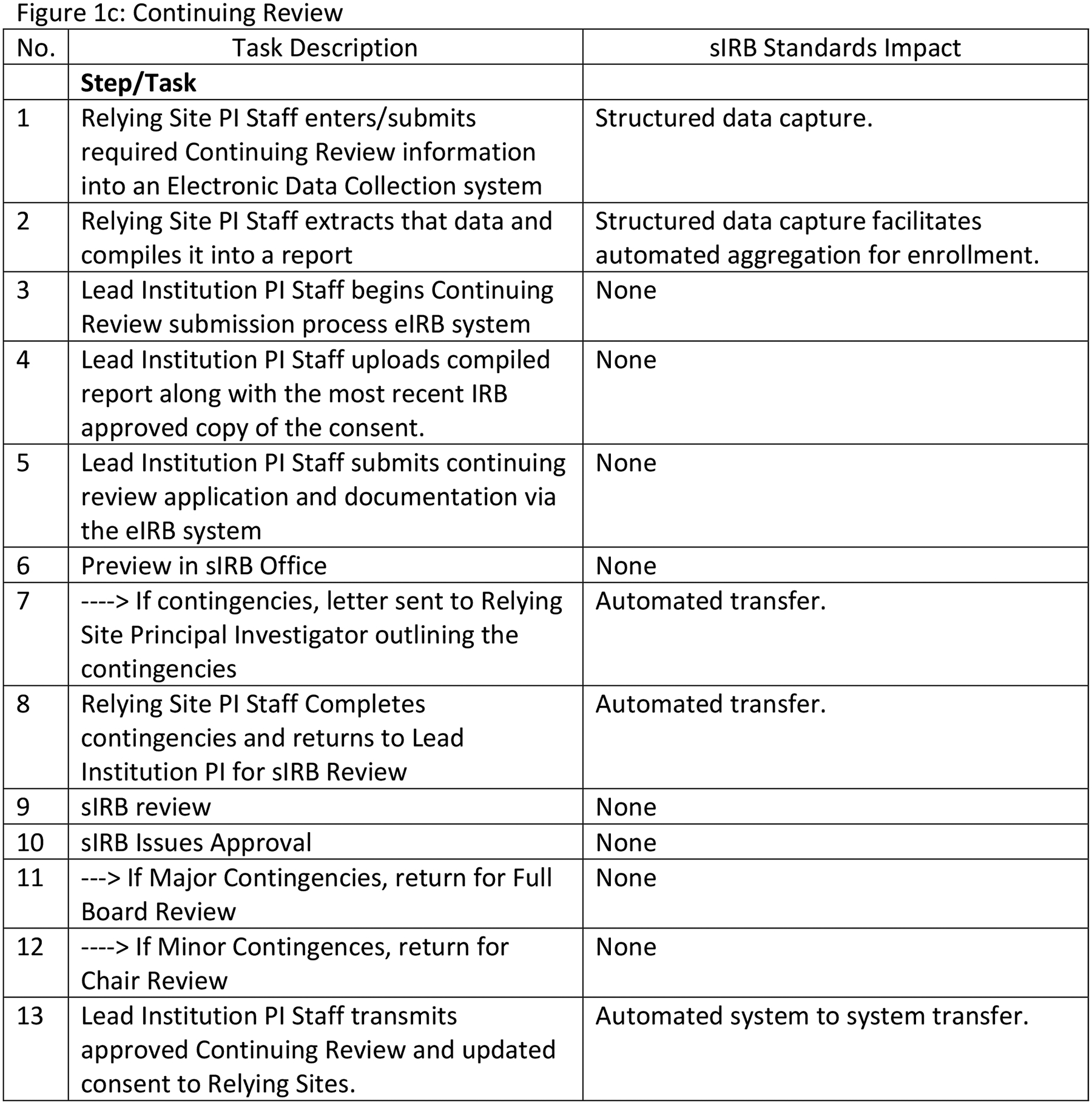
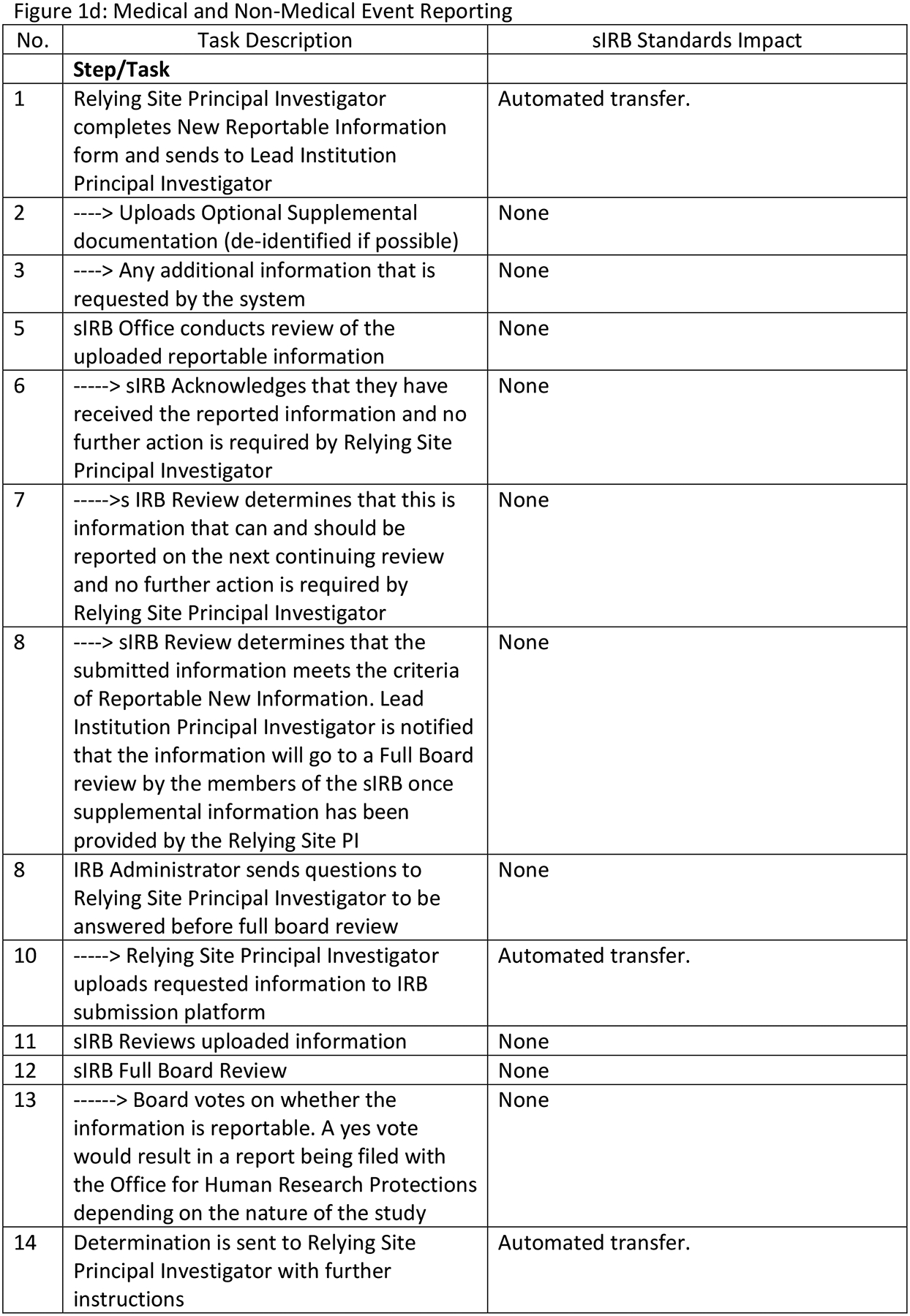
Methods and results: We conducted a study to determine whether the use of this standard would be economically attractive for sIRB workflows collectively and for Reviewing and Relying institutions. We examined four sIRB-associated workflows at a single institution: (1) Initial Study Protocol Application, (2) Site Addition for an Approved sIRB study, (3) Continuing Review, and (4) Medical and Non-Medical Event Reporting. Task-level information identified personnel roles and their associated hour requirements for completion. Tasks that would be eliminated by the data exchange standard were identified. Personnel costs were estimated using annual salaries by role. No tasks would be eliminated in the Initial Study Protocol Application or Medical and Non-Medical Event Reporting workflows through use of the proposed data exchange standard. Site Addition workflow hours would be reduced by 2.50 h per site (from 15.50 to 13.00 h) and Continuing Review hours would be reduced by 9.00 h per site per study year (from 36.50 to 27.50 h). Associated costs savings were $251 for the Site Addition workflow (from $1609 to $1358) and $1033 for the Continuing Review workflow (from $4110 to $3076).
Conclusion: Use of the proposed HL7 FHIR® data exchange standard would be economically attractive for sIRB workflows collectively and for each entity participating in the new workflows.
Keywords: Cost analysis; Data exchange; HL7 FHIR; Single institutional review board; Workflow.
Copyright © 2022 Elsevier Inc. All rights reserved.
Conflict of interest statement
Declaration of Competing Interest The authors declare that they have no known competing financial interests or personal relationships that could have appeared to influence the work reported in this paper.
Figures
References
-
- National Center for Advancing Translational Sciences (NCATS), IRB Reliance: A New Model for Accelerating Translational Science. Available from https://ncats.nih.gov/pubs/features/irb-reliance. Accessed May 8, 2017.
-
- Klitzman R The Ethics Police? The Struggle to Make Human Research Safe. New York, NY: Oxford University Press; 2015.
-
- Menikoff J, The paradoxical problem with multiple-IRB review. N Engl J Med. 2010. Oct 21;363(17):1591–3. - PubMed
Publication types
MeSH terms
Grants and funding
LinkOut - more resources
Full Text Sources
