


No effect of short term exposure to gambling like reward systems on post game risk taking
- PMID: 36202911
- PMCID: PMC9537418
- DOI: 10.1038/s41598-022-21222-3
No effect of short term exposure to gambling like reward systems on post game risk taking
Abstract
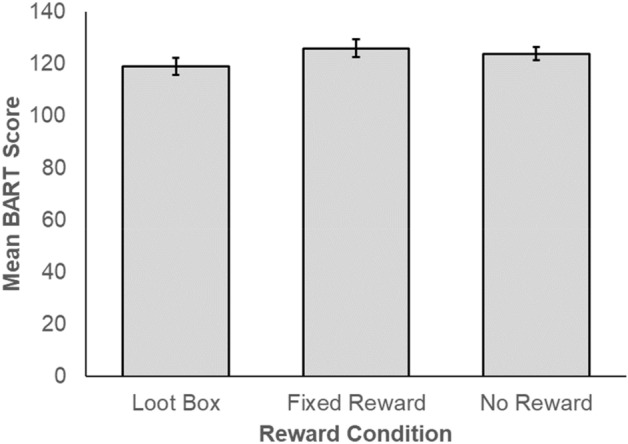
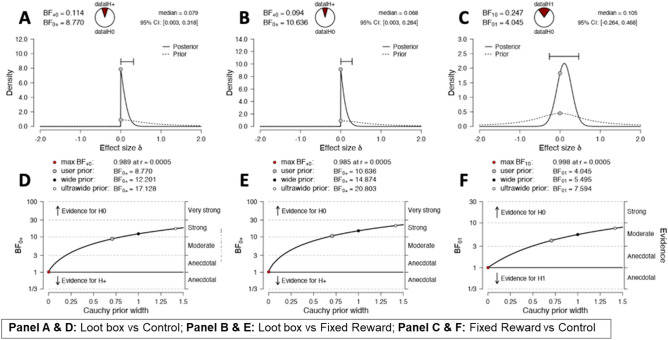
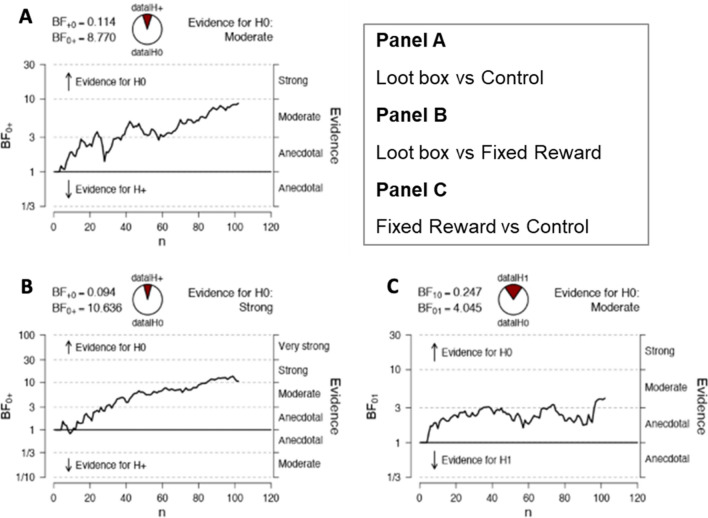
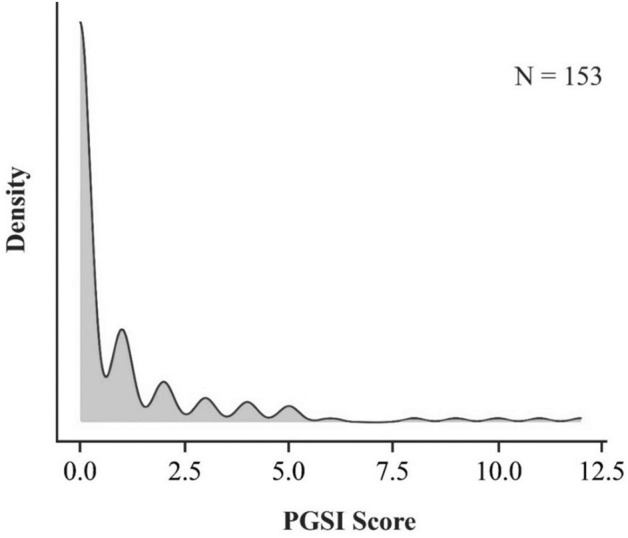
Is engaging with gambling-like video game rewards a risk factor for future gambling? Despite speculation, there are no direct experimental tests of this "gateway hypothesis". We test a mechanism that might support this pathway: the effects of engaging with gambling-like reward mechanisms on risk-taking. We tested the hypothesis that players exposed to gambling-like rewards (i.e., randomised rewards delivered via a loot box) would show increased risk-taking compared to players in fixed and no reward control conditions. 153 participants (Mage = 25) completed twenty minutes of gameplay-including exposure to one of the three reward conditions-before completing a gamified, online version of the Balloon Analogue Risk Task (BART). Self-reports of gambling and loot box engagement were collected via the Problem Gambling Severity Index, and Risky Loot-Box Index. Bayesian t-tests comparing BART scores across reward conditions provided moderate to strong evidence for a null effect of condition on risk-taking (BF = 4.05-10.64). Null effects were not moderated by players' problem gambling symptomatology. A Spearman correlation between past loot box engagement and self-reported gambling severity (rs = 0.35) aligned with existing literature. Our data speak against a "gateway" hypothesis, but add support to the notion that problem gambling symptoms might make players vulnerable to overspending on loot boxes.
© 2022. The Author(s).
Conflict of interest statement
Aaron Drummond prepared an impartial witness briefing summarizing the current state of the scientific literature on the subject of loot boxes for a Canadian court. He was financially compensated for his time. Nicholas J D'Amico, Kristy de Salas, Ian Lewis, Callan Waugh, Breanna Bannister, and James D. Sauer all declare no potential competing interests.
Figures
References
-
- Brand, J.E., Jervis, J., Huggins, P.M., & Wilson, T.W. Digital Australia 2020 (DA20). Interactive Games & Entertainment Association (IGEA). 2019. 67 p. Report. https://igea.net/2019/07/digital-australia-2020-da20/.
-
- Entertainment Software Association. Essential facts about the video game industry. 2021. Report. http://www.theesa.com/facts/pdfs/esa_ef_2014.pdf. 2020 Jun 28.
-
- Mordor Intelligence. Global Gaming Market | 2021–26 | Industry Share, Size, Growth—Mordor Intelligence (2020). https://www.mordorintelligence.com/industry-reports/global-gaming-market.
-
- Billieux J, Thorens G, Khazaal Y, Zullino D, Achab S, Van der Linden M. Problematic involvement in online games: A cluster analytic approach. Comput. Hum. Behav. 2015;43:242–250. doi: 10.1016/j.chb.2014.10.055. - DOI
-
- Kneer J, Rieger D, Ivory JD, Ferguson C. Awareness of risk factors for digital game addiction: Interviewing players and counselors. Int. J. Ment. Heal. Addict. 2014;12(5):585–599. doi: 10.1007/s11469-014-9489-y. - DOI
Publication types
MeSH terms
LinkOut - more resources
Full Text Sources
Medical
Miscellaneous
