


The Economic Burden of Severe Osteoporotic Fractures in the French Healthcare Database: The FRACTOS Study
- PMID: 36203366
- PMCID: PMC9828635
- DOI: 10.1002/jbmr.4720
The Economic Burden of Severe Osteoporotic Fractures in the French Healthcare Database: The FRACTOS Study
Abstract
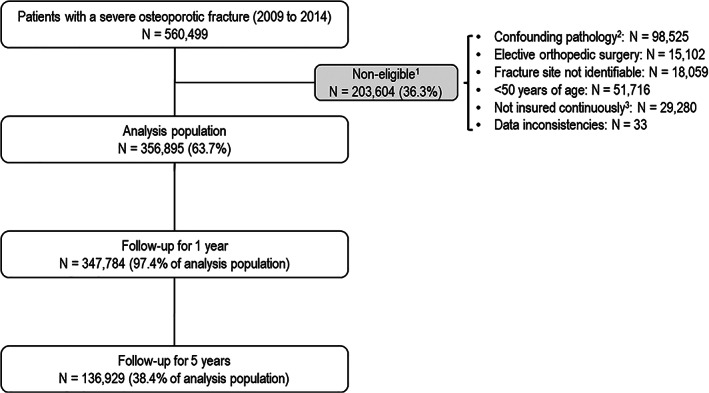
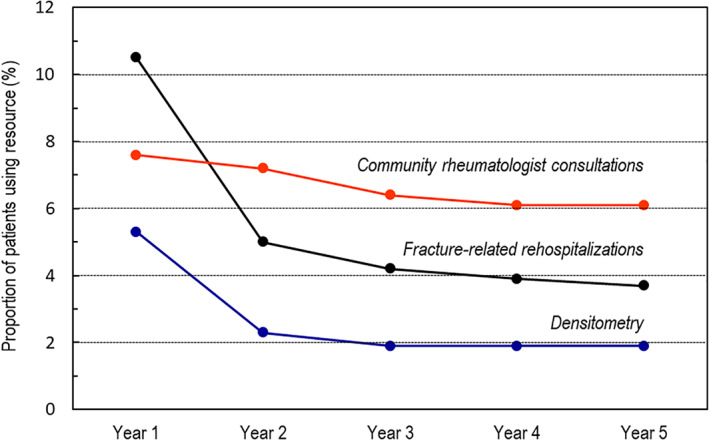
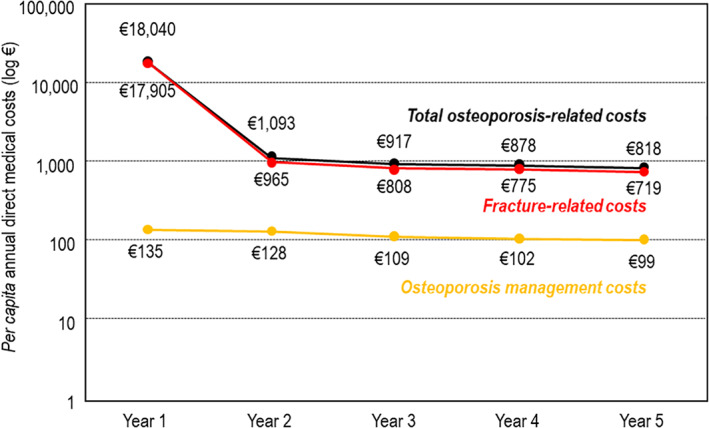
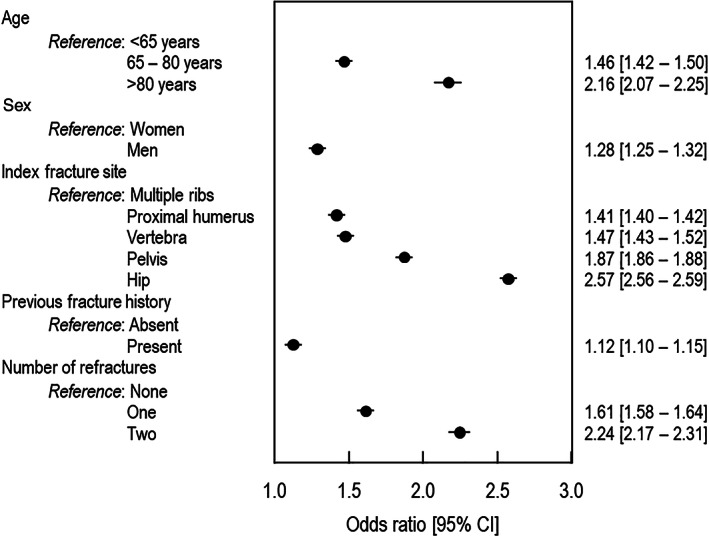
Osteoporosis carries a high medical, economic, and societal burden principally because of the risk of severe fractures. The objective of this cost-of-illness study was to describe health resource utilization and associated costs in all patients aged ≥50 years hospitalized for a severe osteoporotic fracture over a 6-year period (2009 to 2014) in France. Data were extracted from the French national healthcare database (SNDS) on all health care resource utilization between the index date (date of hospitalization for first fracture during the enrollment period) and study end (December 31, 2016) or until the patient died. Costing was restricted to direct costs and determined from the payer perspective. Variables related to costs were identified through multivariate logistic regression analysis. A total of 356,895 patients were included (median follow-up 39.1 months). In the year after the index fracture, 36,622 patients (10.5%) were rehospitalized for a fracture-related reason. Only 18,474 (5.3%) underwent bone densitometry and 58,220 (16.7%) received a specific treatment. The total annual per capita osteoporosis-related cost in the year after the index severe osteoporotic fracture was €18,040 (from €8598 for multiple ribs to €21,085 for hip fracture) of which €17,905 was incurred by fracture-related costs. The cost incurred by management of osteoporosis was €135. Over years 2 to 5, the mean annual per capita costs of fracture treatment (€806, mostly attributable to the treatment of refractures) continued to dominate those of osteoporosis management (€99). Total annual cost of care was €1260 million (year 2014). Variables associated with higher cost were older age, male sex, site of fracture, a history of prior osteoporotic fracture, and the number of refracture events. The 5-year cost of severe osteoporotic fractures to the French health care system is high and mostly attributable to the treatment of refractures. Improved fracture prevention measures in patients with osteoporosis is crucial to reduce the economic burden of the disease. © 2022 The Authors. Journal of Bone and Mineral Research published by Wiley Periodicals LLC on behalf of American Society for Bone and Mineral Research (ASBMR).
Keywords: FRACTURE PREVENTION; GENERAL POPULATION STUDIES; HEALTH ECONOMICS; OSTEOPOROSIS; THERAPEUTICS.
© 2022 The Authors. Journal of Bone and Mineral Research published by Wiley Periodicals LLC on behalf of American Society for Bone and Mineral Research (ASBMR).
Figures
Comment in
-
Economic Costs of Severe Osteoporotic Fractures Continue to Increase at Expense of Refracture.J Bone Miner Res. 2022 Oct;37(10):1809-1810. doi: 10.1002/jbmr.4713. Epub 2022 Oct 17. J Bone Miner Res. 2022. PMID: 36252570 No abstract available.
References
-
- Hernlund E, Svedbom A, Ivergard M, et al. Osteoporosis in the European Union: medical management, epidemiology and economic burden. A report prepared in collaboration with the International Osteoporosis Foundation (IOF) and the European Federation of Pharmaceutical Industry Associations (EFPIA). Arch Osteoporos. 2013;8:136. - PMC - PubMed
-
- Levy P, Levy E, Audran M, Cohen‐Solal M, Fardellone P, Le Parc JM. The cost of osteoporosis in men: the French situation. Bone. 2002;30(4):631‐636. - PubMed
-
- Maravic M, Jouaneton B, Vainchtock A, Tochon V. Economic burden of osteoporosis in women: data from the 2008 French hospital database (PMSI). Clin Exp Rheumatol. 2012;30(2):222‐227. - PubMed
-
- Maravic M, Le Bihan C, Landais P, Fardellone P. Incidence and cost of osteoporotic fractures in France during 2001. A methodological approach by the national hospital database. Osteoporos Int. 2005;16(12):1475‐1480. - PubMed
Publication types
MeSH terms
Grants and funding
LinkOut - more resources
Full Text Sources
Medical
