


Evolving trend change during the COVID-19 pandemic
- PMID: 36203708
- PMCID: PMC9531778
- DOI: 10.3389/fpubh.2022.957265
Evolving trend change during the COVID-19 pandemic
Abstract
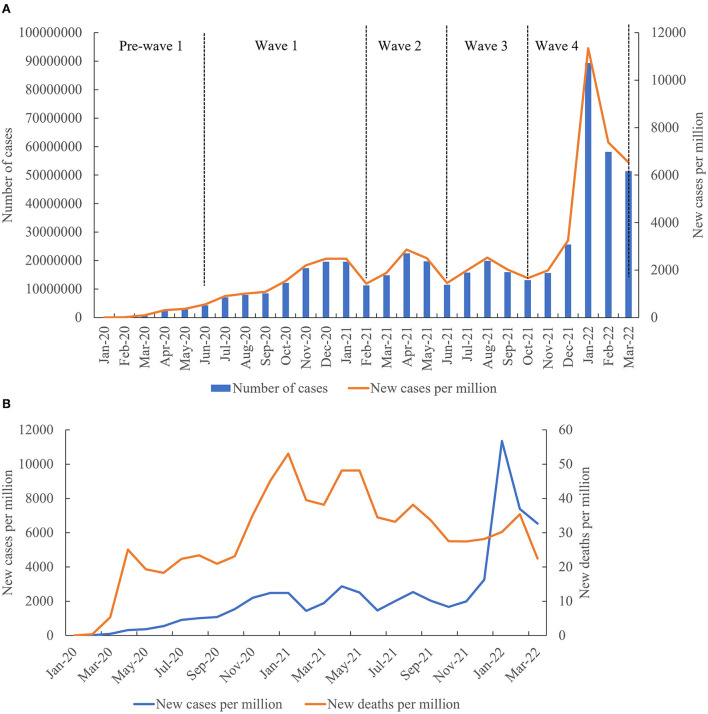
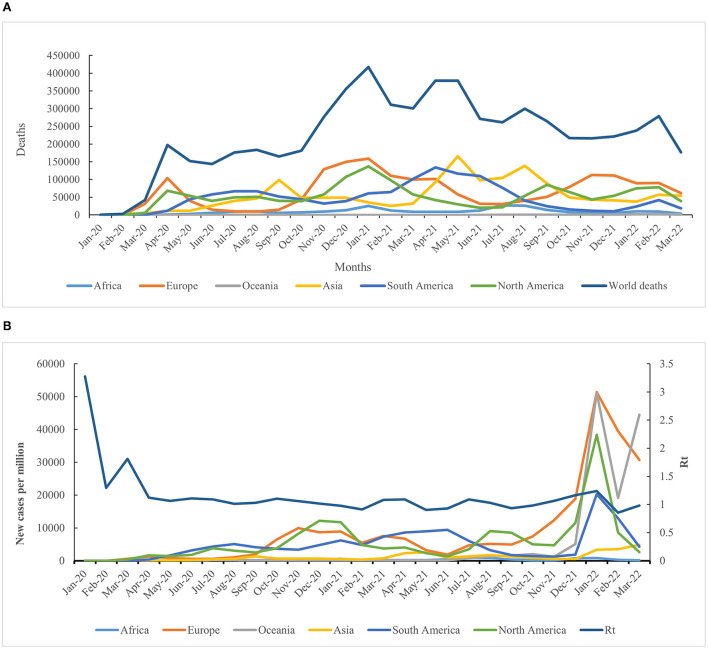
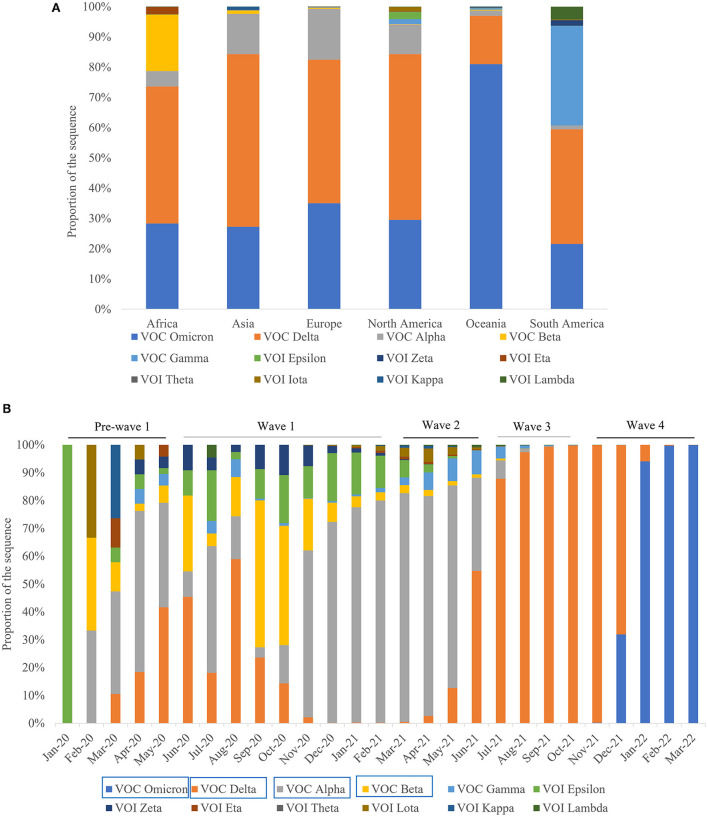
Coronavirus disease (COVID-19) has caused unimaginable damage to public health and socio-economic structures worldwide; thus, an epidemiological depiction of the global evolving trends of this disease is necessary. As of March 31, 2022, the number of cases increased gradually over the four waves of the COVID-19 pandemic, indicating the need for continuous countermeasures. The highest total cases per million and total deaths per million were observed in Europe (240,656.542) and South America (2,912.229), despite these developed countries having higher vaccination rates than other continents, such as Africa. In contrast, the lowest of the above two indices were found in undeveloped African countries, which had the lowest number of vaccinations. These data indicate that the COVID-19 pandemic is positively related to the socio-economic development level; meanwhile, the data suggest that the vaccine currently used in these continents cannot completely prevent the spread of COVID-19. Thus, rethinking the feasibility of a single vaccine to control the disease is needed. Although the number of cases in the fourth wave increased exponentially compared to those of the first wave, ~43.1% of deaths were observed during the first wave. This was not only closely linked to multiple factors, including the inadequate preparation for the initial response to the COVID-19 pandemic, the gradual reduction in the severity of additional variants, and the protection conferred by prior infection and/or vaccination, but this also indicated the change in the main driving dynamic in the fourth wave. Moreover, at least 12 variants were observed globally, showing a clear spatiotemporal profile, which provides the best explanation for the presence of the four waves of the pandemic. Furthermore, there was a clear shift in the trend from multiple variants driving the spread of disease in the early stage of the pandemic to a single Omicron lineage predominating in the fourth wave. These data suggest that the Omicron variant has an advantage in transmissibility over other contemporary co-circulating variants, demonstrating that monitoring new variants is key to reducing further spread. We recommend that public health measures, along with vaccination and testing, are continually implemented to stop the COVID-19 pandemic.
Keywords: COVID-19; epidemics evolve; geographic distribution; vaccine; variants.
Copyright © 2022 Gao, Zheng, Shi, Xiao, Wang, Liu, Li and Dong.
Conflict of interest statement
The authors declare that the research was conducted in the absence of any commercial or financial relationships that could be construed as a potential conflict of interest.
Figures
References
Publication types
MeSH terms
Supplementary concepts
LinkOut - more resources
Full Text Sources
Medical
Research Materials
