


Lymphomas associated with Epstein-Barr virus infection in 2020: Results from a large, unselected case series in France
- PMID: 36204003
- PMCID: PMC9531037
- DOI: 10.1016/j.eclinm.2022.101674
Lymphomas associated with Epstein-Barr virus infection in 2020: Results from a large, unselected case series in France
Abstract
Background: Despite mounting evidence for a causal role in an increasing number of lymphoma subtypes, very few studies have systematically tested the entire spectrum of Hodgkin and non-Hodgkin lymphomas for the presence of Epstein-Barr virus (EBV). Here, we describe the prevalence of EBV in a large, unselected series of patients diagnosed with any type of lymphoma during 2020, in the pathology department of a single University Hospital in France.
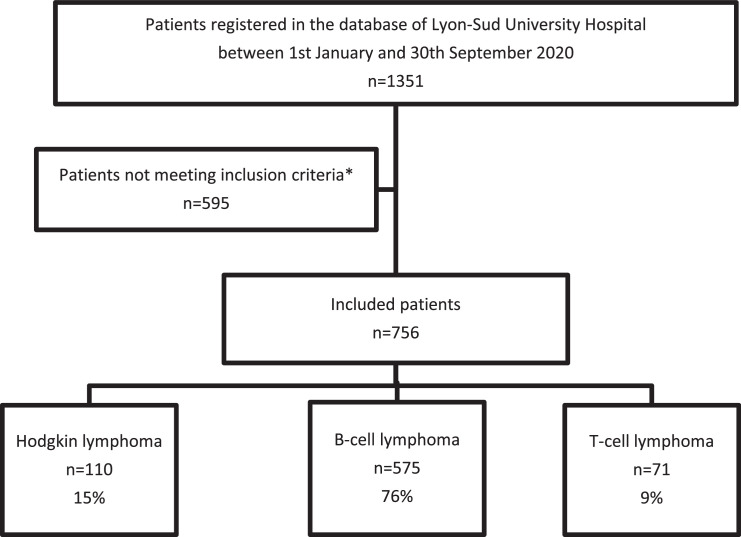
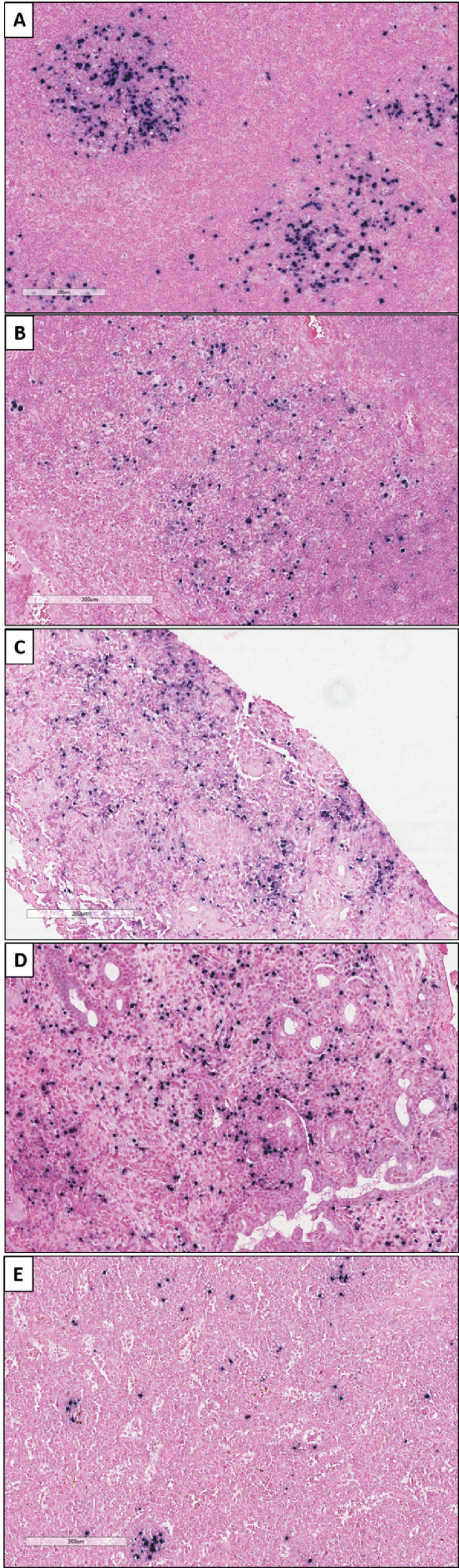
Methods: A total of 756 lymphoma cases (89% new diagnoses and 11% relapses), were registered in the department between Jan 1 and Sept 30, 2020 and 616 were successfully tested for EBV presence in tumour cells by EBV-encoding RNA in-situ hybridisation, using double-blinded assessment and a scoring system designed in accordance with the current state of knowledge in the literature.
Findings: A strong association with EBV was described in 27/87 (31%) classic Hodgkin lymphomas, 12/223 (5%) diffuse large B-cell lymphomas, and 18/71 (25%) NK and T-cell lymphomas: 4 extranodal NK/T-cell lymphomas, nasal type, 14 angioimmunoblastic T-cell lymphomas (48%). In Hodgkin and NK and T-cell lymphomas, there was a statistically significant association between EBER positivity and relapse (p < 0·01). Among other subtypes, a potential association with EBV (≥10% stained cells) was found in 2/97 (2%) follicular lymphomas, both of grades 1-2, 1/19 (5%) chronic lymphocytic leukaemia (CLL), 1/9 lymphoplasmacytic lymphomas (11%), and 2/47 (4%) marginal zone lymphomas.
Interpretation: When applied to the distribution of lymphomas in France as described in the Lymphopath database, our data suggested that at least 8% of all combined Hodgkin and non-Hodgkin lymphomas are associated with EBV.
Funding: International Agency for Research on Cancer (IARC/WHO).
Keywords: EBV; Epidemiology; Hodgkin lymphoma; Lymphoma; Non-Hodgkin lymphoma; Prevalence.
© 2022 World Health Organization.
Conflict of interest statement
PS has received personal fees from Incyte, Chugai, Kite, Novartis and Janssen, and support for attending meetings from Janssen and Kite Gilead. The other authors declare no competing interests.
Figures
References
-
- Epstein MA, Achong BG, Barr YM. Virus particles in cultured lymphoblasts from Burkitt's lymphoma. Lancet. 1964;1(7335):702–703. - PubMed
-
- Young LS, Rickinson AB. Epstein-Barr virus: 40 years on. Nat Rev Cancer. 2004;4(10):757–768. - PubMed
-
- IARC. Biological agents A review of human carcinogens. 100B: 1-441. IARC Monogr Eval Carcinog Risks Hum. 2012 https://monographs.iarc.fr/wp-content/uploads/2018/06/mono100B.pdf Accessed 26 April 2022. - PMC - PubMed
-
- de Martel C, Georges D, Bray F, Ferlay J, Clifford GM. Global burden of cancer attributable to infections in 2018: a worldwide incidence analysis. Lancet Glob Health. 2020;8(2):e180–e190. - PubMed
Grants and funding
LinkOut - more resources
Full Text Sources
