


Correlation of the position and status of the polar body from the fertilized oocyte to the euploid status of blastocysts
- PMID: 36204310
- PMCID: PMC9530936
- DOI: 10.3389/fgene.2022.1006870
Correlation of the position and status of the polar body from the fertilized oocyte to the euploid status of blastocysts
Abstract
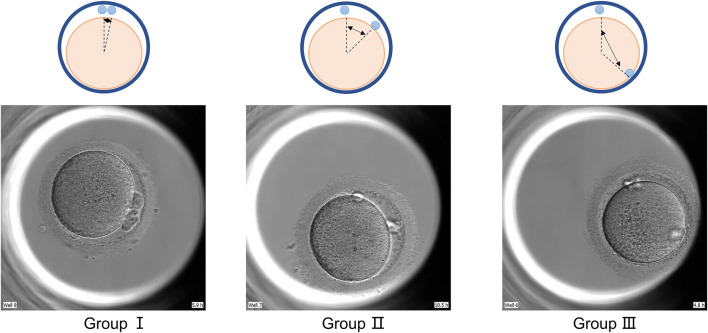
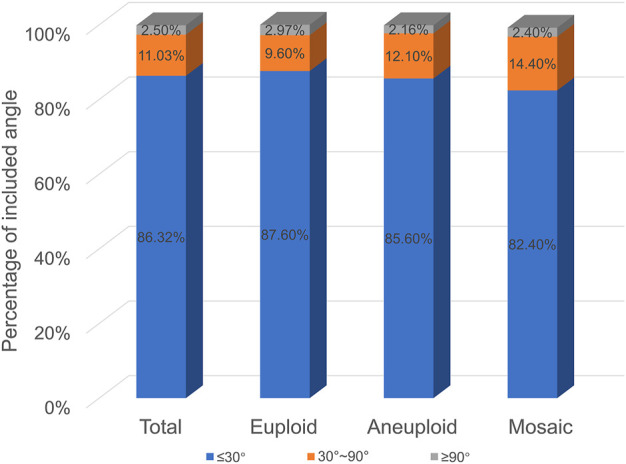
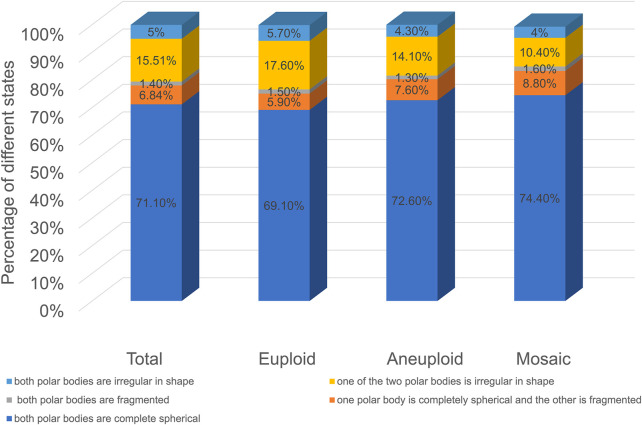
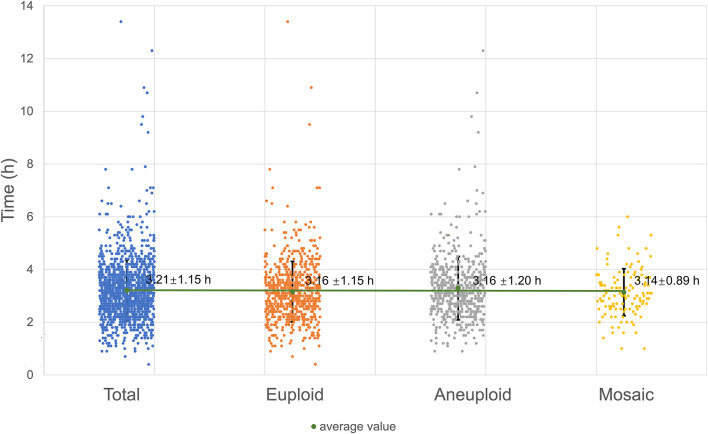
Polar bodies are tiny cells that are extruded during oocyte meiosis and are generally considered not essential for embryonic development. Therefore, polar bodies have been widely used as important materials for the preimplantation genetic diagnosis of human embryos. Recent studies have shown that polar bodies mediate embryonic development and that their morphology is related to embryo quality and developmental potential. However, the relationship between the emission of the polar body and embryonic euploidy remains unclear. In this study, a total of 1,360 blastocyst trophectoderm (TE) biopsies were performed, and blastocyst ploidy results were correlated with the state of polar bodies. The results showed that polar body angle size and polar body status are not directly related to whether the blastocysts are euploid, aneuploid, or mosaic (p > 0.05). Therefore, in the process of clinical embryo selection, embryologists should not predict the euploidy of blastocysts based on the state of polar bodies, thus affecting embryo selection.
Keywords: aneuploidy; blastocyst; euploidy; mosaicism; polar body.
Copyright © 2022 Yang, Tan, Chen, Jin and Huang.
Conflict of interest statement
Author WT and CC was employed by the Wuhan Huchuang Union Technology Co.,Ltd. The remaining authors declare that the research was conducted in the absence of any commercial or financial relationships that could be construed as a potential conflict of interest.
Figures
References
LinkOut - more resources
Full Text Sources
Other Literature Sources
