Impact of hormonal contraceptives on sex differences in fear conditioning and fear extinction in PTSD
- PMID: 36206397
- PMCID: PMC9488024
- DOI: 10.1101/lm.053597.122
Impact of hormonal contraceptives on sex differences in fear conditioning and fear extinction in PTSD
Abstract
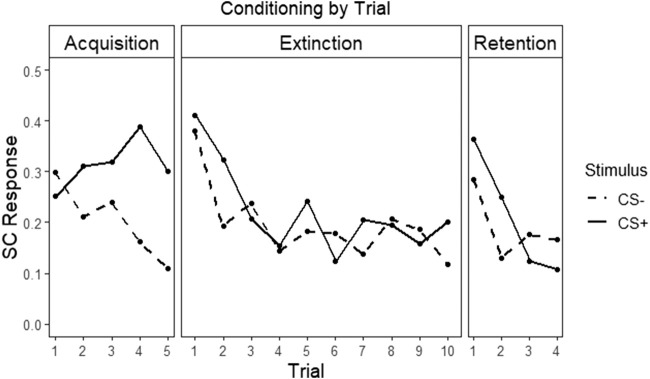
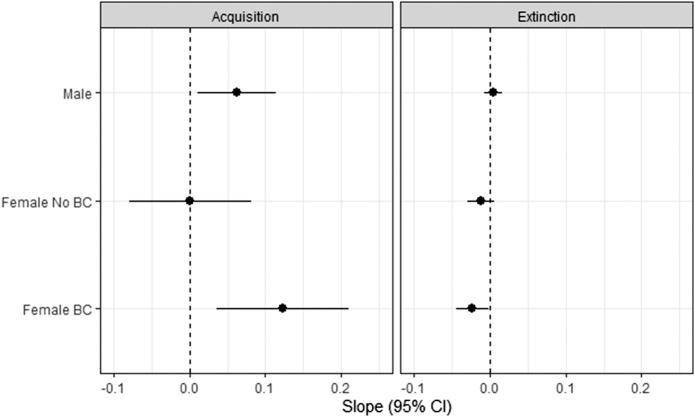
Sex differences in the neurobiological mechanisms involved in fear conditioning and extinction have been suggested to contribute to differential vulnerability for the development of posttraumatic stress disorder (PTSD) in women compared with men. Reproductive hormones, such as estradiol, have been shown to facilitate fear conditioning and extinction learning and may explain some of these differences. However, the effect of commonly used hormonal contraceptives on the neurobiological mechanisms of fear conditioning and extinction is poorly understood. A laboratory study was conducted in trauma-exposed men and women with and without full or partial PTSD to examine effects of sex and use of hormonal birth control on fear conditioning, fear extinction learning, and extinction retention. Participants underwent fear conditioning with stimuli that were paired (CS+) or unpaired (CS-) with shock. Extinction learning occurred 72 h later, and extinction retention was tested 1 wk after extinction. Women on hormonal contraceptives (HCs) demonstrated enhanced acquisition of fear conditioning and enhanced extinction of fear as compared with women off hormonal birth control and men. While clinical implications have yet to be determined, these results suggest that hormonal contraceptives may facilitate learning during both fear acquisition and extinction. Understanding the impact of sex and hormones on fear conditioning and extinction processes may lead to new insights into the pathophysiology of PTSD and result in advancements in treatment that may vary by sex.
Published by Cold Spring Harbor Laboratory Press.
Figures