


DNA damage response revisited: the p53 family and its regulators provide endless cancer therapy opportunities
- PMID: 36207426
- PMCID: PMC9636249
- DOI: 10.1038/s12276-022-00863-4
DNA damage response revisited: the p53 family and its regulators provide endless cancer therapy opportunities
Abstract
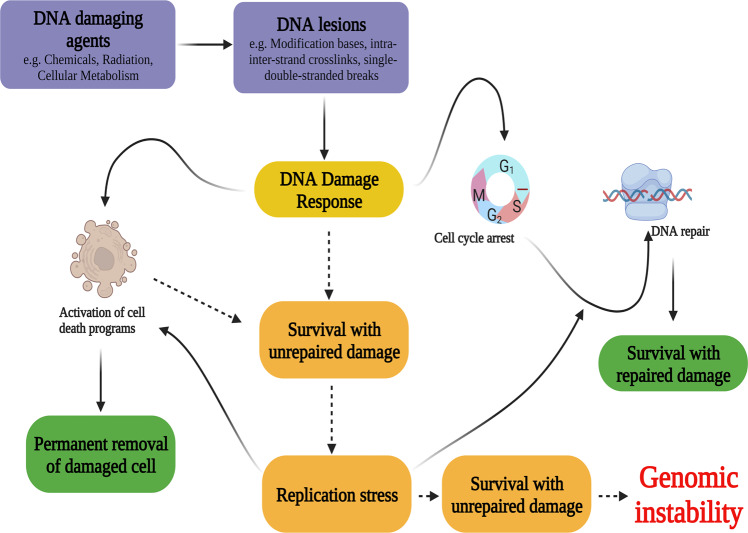
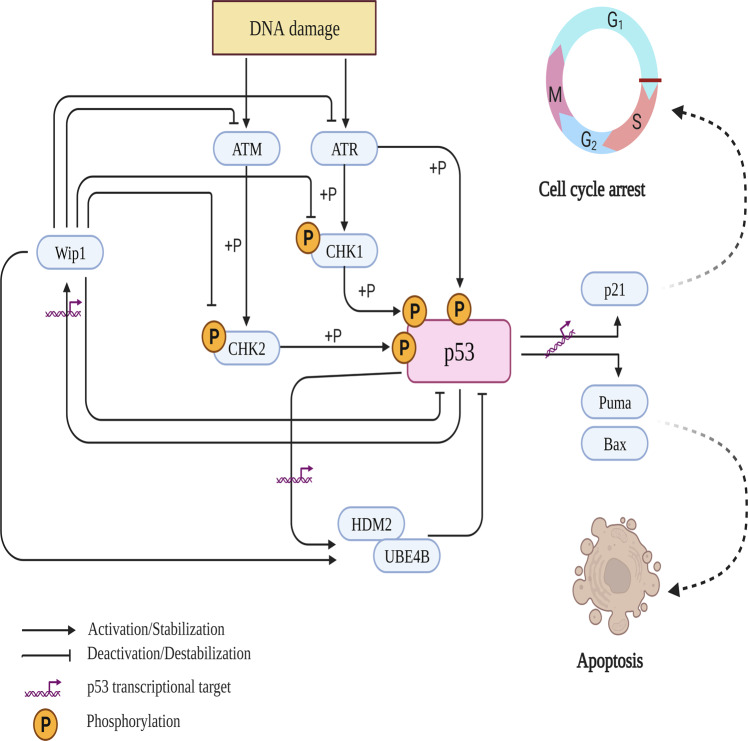
Antitumor therapeutic strategies that fundamentally rely on the induction of DNA damage to eradicate and inhibit the growth of cancer cells are integral approaches to cancer therapy. Although DNA-damaging therapies advance the battle with cancer, resistance, and recurrence following treatment are common. Thus, searching for vulnerabilities that facilitate the action of DNA-damaging agents by sensitizing cancer cells is an active research area. Therefore, it is crucial to decipher the detailed molecular events involved in DNA damage responses (DDRs) to DNA-damaging agents in cancer. The tumor suppressor p53 is active at the hub of the DDR. Researchers have identified an increasing number of genes regulated by p53 transcriptional functions that have been shown to be critical direct or indirect mediators of cell fate, cell cycle regulation, and DNA repair. Posttranslational modifications (PTMs) primarily orchestrate and direct the activity of p53 in response to DNA damage. Many molecules mediating PTMs on p53 have been identified. The anticancer potential realized by targeting these molecules has been shown through experiments and clinical trials to sensitize cancer cells to DNA-damaging agents. This review briefly acknowledges the complexity of DDR pathways/networks. We specifically focus on p53 regulators, protein kinases, and E3/E4 ubiquitin ligases and their anticancer potential.
© 2022. The Author(s).
Conflict of interest statement
The authors declare no competing interests.
Figures
References
-
- Anand SK, Sharma A, Singh N, Kakkar P. Entrenching role of cell cycle checkpoints and autophagy for maintenance of genomic integrity. DNA Repair (Amst.) 2020;86:102748. - PubMed
-
- Hanahan D, Weinberg RA. Hallmarks of cancer: the next generation. Cell. 2011;144:646–674. - PubMed
-
- Hoeijmakers JH. DNA damage, aging, and cancer. N. Engl. J. Med. 2009;361:1475–1485. - PubMed
-
- Reginato G, Cejka P. The MRE11 complex: a versatile toolkit for the repair of broken DNA. DNA Repair (Amst.) 2020;91-92:102869. - PubMed
Publication types
MeSH terms
Substances
Grants and funding
LinkOut - more resources
Full Text Sources
Other Literature Sources
Medical
Research Materials
Miscellaneous
