


Selection-driven adaptation to the extreme Antarctic environment in the Emperor penguin
- PMID: 36207436
- PMCID: PMC9708836
- DOI: 10.1038/s41437-022-00564-8
Selection-driven adaptation to the extreme Antarctic environment in the Emperor penguin
Abstract
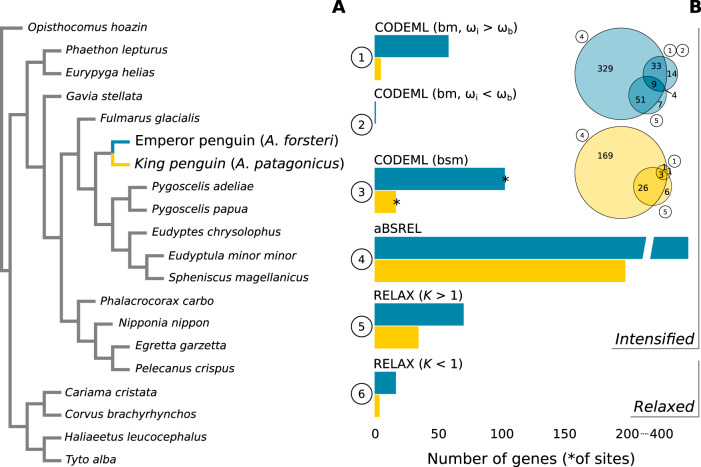
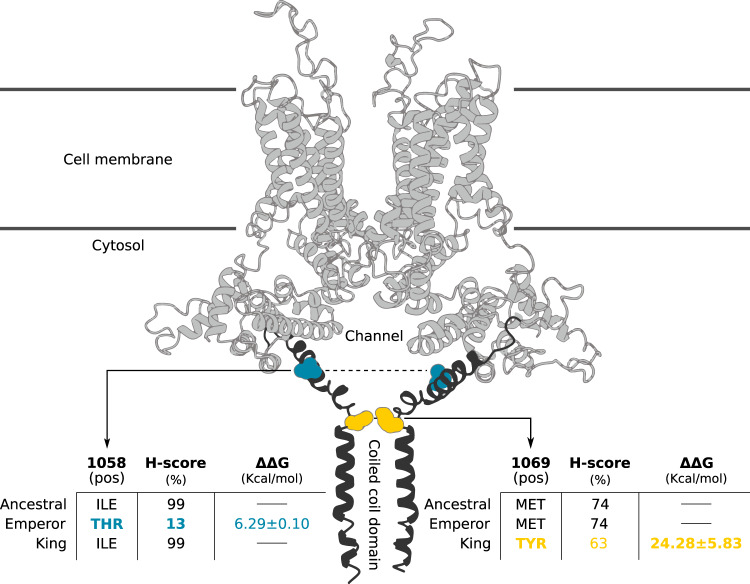
The eco-evolutionary history of penguins is characterised by shifting from temperate to cold environments. Breeding in Antarctica, the Emperor penguin appears as an extreme outcome of this process, with unique features related to insulation, heat production and energy management. However, whether this species actually diverged from a less cold-adapted ancestor, more ecologically similar to its sister species, the King penguin, is still an open question. As the Antarctic colonisation likely resulted in vast changes in selective pressure experienced by the Emperor penguin, the relative quantification of the genomic signatures of selection, unique to each sister species, could answer this question. Applying phylogeny-based selection tests on 7651 orthologous genes, we identified a more pervasive selection shift in the Emperor penguin than in the King penguin, supporting the hypothesis that its extreme cold adaptation is a derived state. Furthermore, among candidate genes under selection, four (TRPM8, LEPR, CRB1, and SFI1) were identified before in other cold-adapted homeotherms, like the woolly Mammoth, while other 161 genes can be assigned to biological functions relevant to cold adaptation identified in previous studies. Location and structural effects of TRPM8 substitutions in Emperor and King penguin lineages support their functional role with putative divergent effects on thermal adaptation. We conclude that extreme cold adaptation in the Emperor penguin largely involved unique genetic options which, however, affect metabolic and physiological traits common to other cold-adapted homeotherms.
© 2022. The Author(s), under exclusive licence to The Genetics Society.
Conflict of interest statement
The authors declare no competing interests.
Figures
References
-
- Allen JA. The influence of Physical conditions in the genesis of species. Radic Rev. 1877;1:108–140.
-
- Blem CR. Avian energy storage. Curr Ornithol. 1990;7:59–113.
Publication types
MeSH terms
LinkOut - more resources
Full Text Sources
Research Materials
Miscellaneous
