Review
. 2022 Jul;19(4):1133-1144.
doi: 10.1007/s13311-022-01297-6. Epub 2022 Oct 7.

Axon Biology in ALS: Mechanisms of Axon Degeneration and Prospects for Therapy

Affiliations
Review

Axon Biology in ALS: Mechanisms of Axon Degeneration and Prospects for Therapy

Michael P Coleman. Neurotherapeutics. 2022 Jul.

Abstract

This review addresses the longstanding debate over whether amyotrophic lateral sclerosis (ALS) is a 'dying back' or 'dying forward' disorder in the light of new gene identifications and the increased understanding of mechanisms of action for previously identified ALS genes. While the topological pattern of pathology in animal models, and more anecdotally in patients is indeed 'dying back', this review discusses how this fits with the fact that many of the major initiating events are thought to occur within the soma. It also discusses how widely varying ALS risk factors, including some impacting axons directly, may combine to drive a common pathway involving TAR DNA binding protein 43 (TDP-43) and neuromuscular junction (NMJ) denervation. The emerging association between sterile alpha and TIR motif-containing 1 (SARM1), a protein so far mostly associated with axon degeneration, and sporadic ALS is another major theme. The strengths and limitations of the current evidence supporting an association are considered, along with ways in which SARM1 could become activated in ALS. The final section addresses SARM1-based therapies along with the prospects for targeting other axonal steps in ALS pathogenesis.

Keywords: Axon degeneration; Axonal transport; NAD; NMNAT2; Programmed axon death; SARM1.


Figures

Fig. 1
Fig. 1
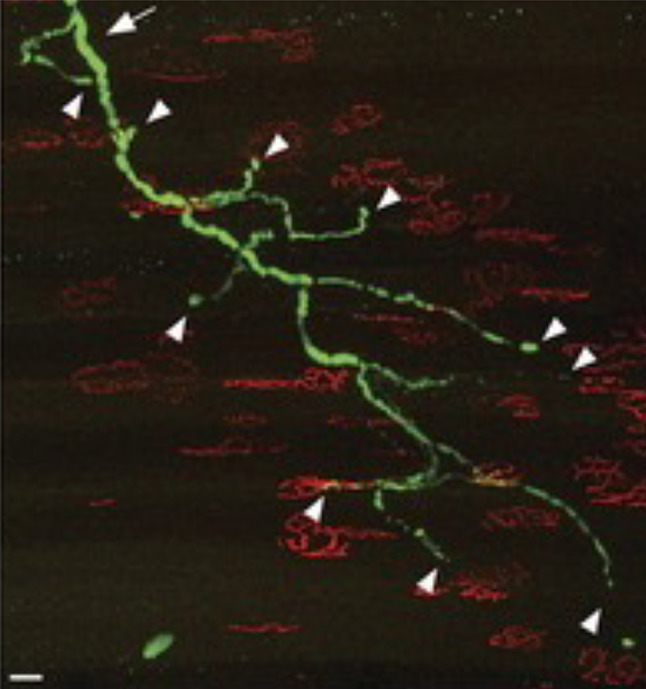
Fully denervated NMJs in SOD1G93A transgenic mice. A complete motor unit in the sternomastoid muscle that lacks a single normal junction. More proximal parts of this intramuscular axon arbor appear substantially normal giving the characteristic ‘winter tree’ appearance. (Reproduced with permission from Schaefer et al. [18])
Fig. 2
Fig. 2
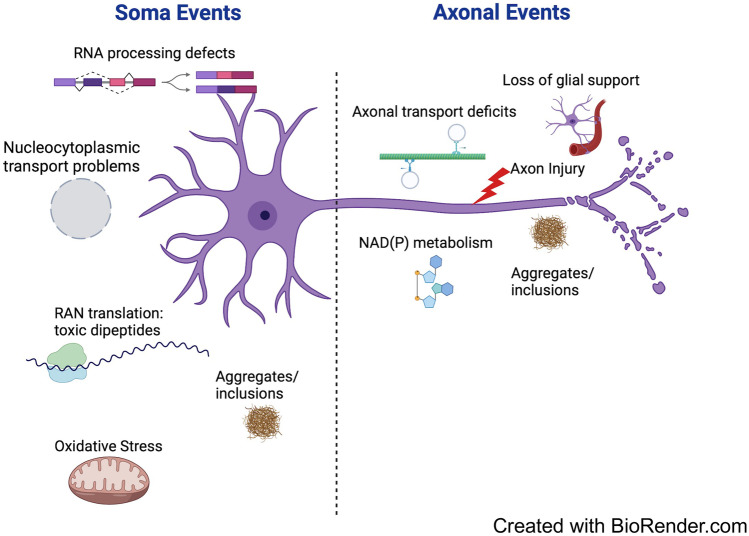
Soma and axonal deficits in ALS. Many of the most important causal steps in ALS are likely to take place in the soma but some are primarily axonal. ‘Dying back’ can result from a failure of the weakened soma to support its axon but this may be particularly reinforced when combined with additional problems in the axon
Fig. 3
Fig. 3
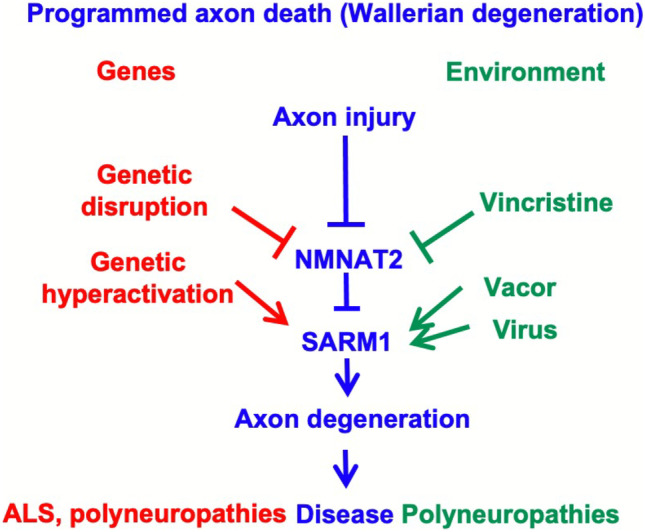
The multiple triggers of programmed axon death in human disease. The NAD(P)ase and/or base exchange activity of SARM1 drives degeneration. It occurs in axons specifically when its upstream regulator, NMNAT2, falls below a threshold level, which may occur after axon injury, NMNAT2 LoF mutation or axonal transport deficits, such as caused by some cancer chemotherapeutics targeting microtubules. SARM1 can also be activated directly by GoF mutation or some toxins, and this can also cause death of the soma. Some viruses also cause SARM1-dependent degeneration
Fig. 4
Fig. 4
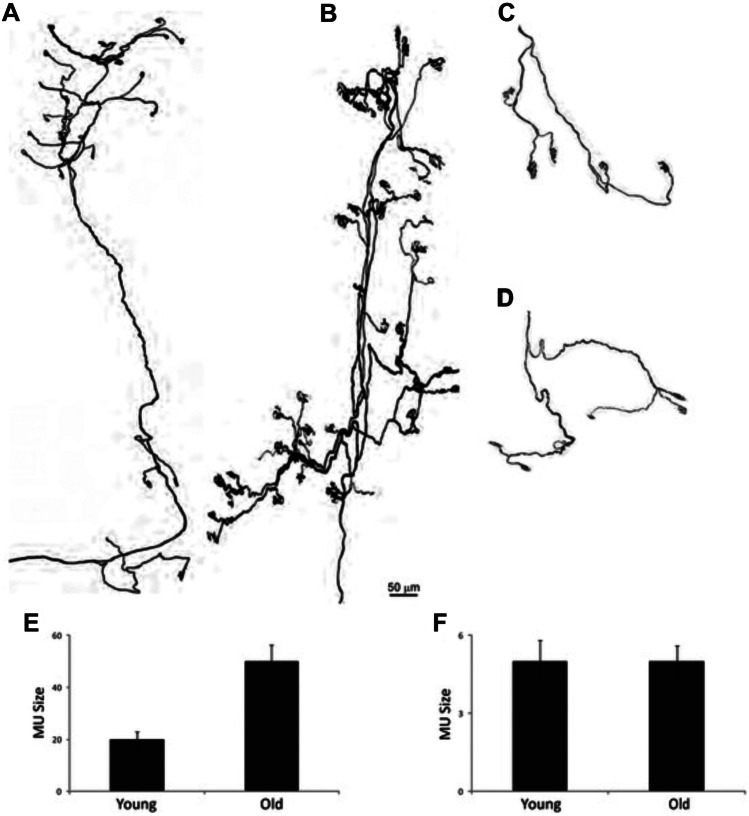
Age-related changes in motor unit size. AD: Motor units from the omohyoid (A, B) and extraocular (C, D) muscles of young adult (A, C) and old (B, D) mice. E, F: Motor unit size in young adult and old omohyoid (E) and extraocular (F) muscles showing the increase in size specifically in the omohyoid motor units due to sprouting of surviving motor neurons. (Reproduced from Valdez et al. [83])

References

    1. Eisen A. The dying forward hypothesis of ALS: tracing its history. Brain Sci. 2021;11:300. - PMC - PubMed
    1. Fischer LR, Culver DG, Tennant P, et al. Amyotrophic lateral sclerosis is a distal axonopathy: evidence in mice and man. Exp Neurol. 2004;185:232–240. - PubMed
    1. Osterloh JM, Yang J, Rooney TM, et al. dSarm/Sarm1 is required for activation of an injury-induced axon death pathway. Science. 2012;337:481–484. - PMC - PubMed
    1. Gerdts J, Summers DW, Sasaki Y, et al. Sarm1-mediated axon degeneration requires both SAM and TIR interactions. J Neurosci. 2013;33:13569–13580. - PMC - PubMed
    1. Gilley J, Jackson O, Pipis M, et al. Enrichment of SARM1 alleles encoding variants with constitutively hyperactive NADase in patients with ALS and other motor nerve disorders. eLife. 2021;10:e70905. - PMC - PubMed

Publication types

MeSH terms