Risk of maternal exposure to mixed air pollutants during pregnancy for congenital heart diseases in offspring
- PMID: 36207835
- PMCID: PMC9511474
- DOI: 10.3724/zdxbyxb-2022-0073
Risk of maternal exposure to mixed air pollutants during pregnancy for congenital heart diseases in offspring
Abstract
Objective: To explore the risk of maternal exposure to mixed air pollutants of particulate matter 1 (PM 1), particulate matter 2.5 (PM 2.5), particulate matter 10 (PM 10) and NO 2 for congenital heart disease (CHD) in offspring, and to estimate the ranked weights of the above pollutants.
Methods: 6038 CHD patients and 5227 healthy controls from 40 medical institutions in 21 cities in Guangdong Registry of Congenital Heart Disease (GRCHD) from 2007 to 2016 were included. Logistic regression model was used to estimate the effect of maternal exposure to a single air pollutant on the occurrence of CHD in offspring. Spearman correlation coefficient was used to analyze the correlation between various pollutants, and Quantile g-computation was used to evaluate the joint effects of mixed exposure of air pollutants on CHD and the weights of various pollutants.
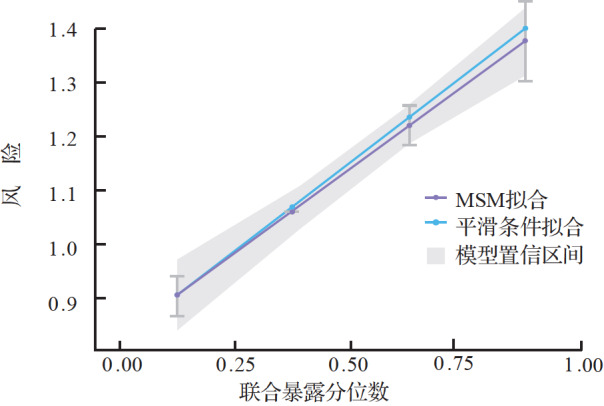
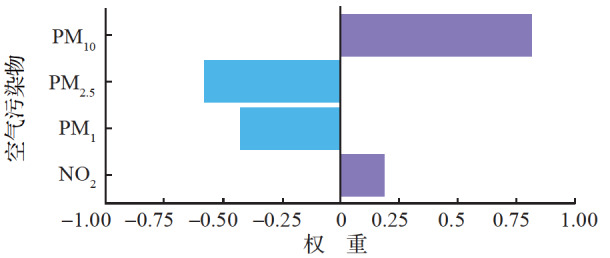
Results: The exposure levels of PM 1, PM 2.5, PM 10 and NO 2 in the CHD group were significantly higher than those in the control group (all P<0.01). The correlation coefficients among PM 1, PM 2.5, PM 10 and NO 2 were greater than 0.80. PM 1, PM 2.5, PM 10 and NO 2 exposure were associated with a significantly increased risk of CHD in offspring. Mixed exposure of these closely correlated pollutants presented much stronger effect on CHD than exposure of any single pollutants. There was a monotonic increasing relationship between mixed exposure and CHD risk. For each quantile increase in mixed exposure, the risk of CHD increased by 47% ( OR=1.47, 95% CI: 1.34-1.61). Mixed exposure had greater effect on CHD in the early pregnancy compared with middle and late pregnancy, but the greatest effect was the exposure in the whole pregnancy. The weight of PM 10 is the highest in the mixed exposure (81.3%).
Conclusions: Maternal exposure to the mixture of air pollutants during pregnancy increases the risk of CHD in offspring, and the effect is much stronger than that of single exposure of various pollutants. PM 10 has the largest weights and the strongest effect in the mixed exposure.
Keywords: Air pollution; Congenital heart disease; Joint effects; Mixed exposure; Nitrogen dioxide; Particulate matter 1; Particulate matter 10; Particulate matter 2.5.
Conflict of interest statement
所有作者均声明不存在利益冲突
Figures
References
-
- ROTH G A, MENSAH G A, JOHNSON C O, et al. Global burden of cardiovascular diseases and risk factors, 1990—2019[J] J Am College Cardiol. . 2020;76(25):2982–3021. doi: 10.1016/j.jacc.2020.11.010. - DOI - PMC - PubMed
-
- BURCHILL L J, GAO L, KOVACS A H, et al. Hospitalization trends and health resource use for adult congenital heart disease-related heart failure[J/OL] J Am Heart Assoc. . 2018;7(15):e008775. doi: 10.1161/JAHA.118.008775. - DOI - PMC - PubMed
-
- PIERPONT M E, BASSON C T, BENSON JR D W, et al. Genetic basis for congenital heart defects: current knowledge[J] Circulation. . 2007;115(23):3015–3038. doi: 10.1161/CIRCULATIONAHA.106.183056. - DOI - PubMed
-
- PIERPONT M E, BRUECKNER M, CHUNG W K, et al. Genetic basis for congenital heart disease: revisited: a scientific statement from The American Heart Association[J/OL] Circulation. . 2018;138(21):e653–e711. doi: 10.1161/CIR.0000000000000606. - DOI - PMC - PubMed
-
- JENKINS K J, CORREA A, FEINSTEIN J A, et al. Noninherited risk factors and congenital cardiovascular defects: current knowledge[J] Circulation. . 2007;115(23):2995–3014. doi: 10.1161/CIRCULATIONAHA.106.183216. - DOI - PubMed
MeSH terms
Substances
LinkOut - more resources
Full Text Sources
Medical