


Co-modulation of T cells and B cells enhances the inhibition of inflammation in experimental hypersensitivity pneumonitis
- PMID: 36209215
- PMCID: PMC9547367
- DOI: 10.1186/s12931-022-02200-9
Co-modulation of T cells and B cells enhances the inhibition of inflammation in experimental hypersensitivity pneumonitis
Abstract
Background: Hypersensitivity pneumonitis (HP) is an interstitial lung disease characterized by antigen-triggered neutrophilic exacerbations. Although CD4+ T cells are sufficient for HP pathogenesis, this never translated into efficient T cell-specific therapies. Increasing evidence shows that B cells also play decisive roles in HP. Here, we aimed to further define the respective contributions of B and T cells in subacute experimental HP.
Methods: Mice were subjected to a protocol of subacute exposure to the archaeon Methanosphaera stadmanae to induce experimental HP. Using models of adoptive transfers of B cells and T cells in Rag1-deficient mice and of B cell-specific S1P1 deletion, we assessed the importance of B cells in the development of HP by evaluating inflammation in bronchoalveolar lavage fluid. We also aimed to determine if injected antibodies targeting B and/or T cells could alleviate HP exacerbations using a therapeutic course of intervention.
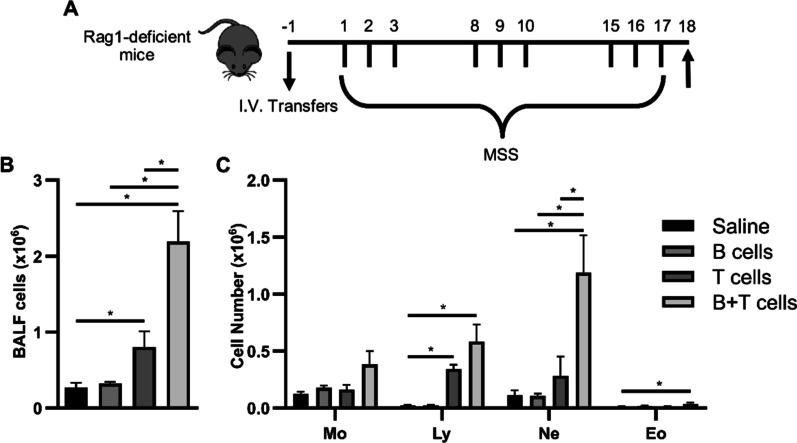
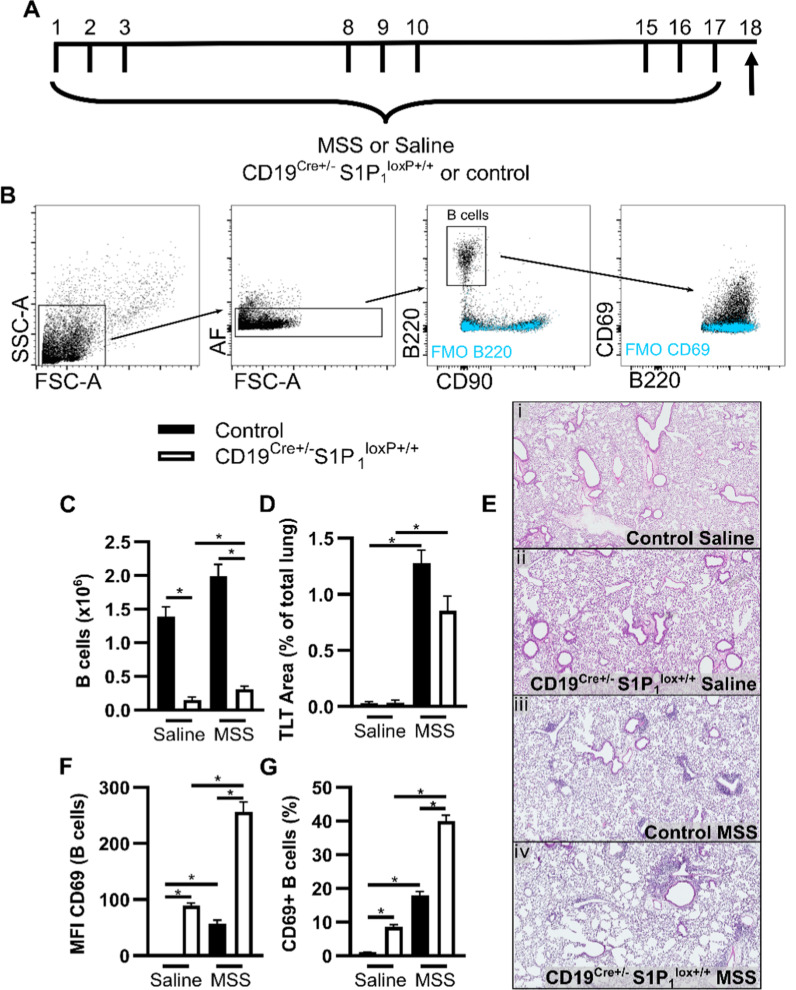
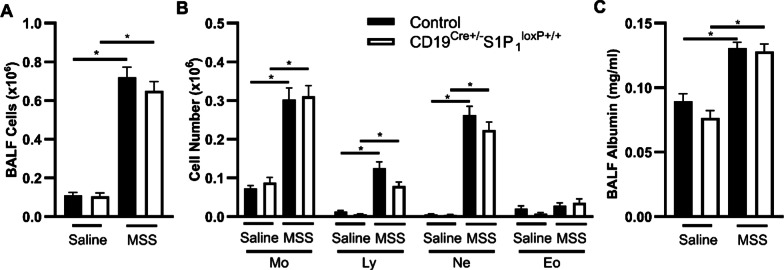
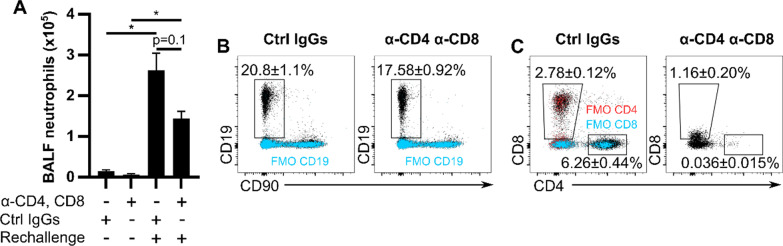
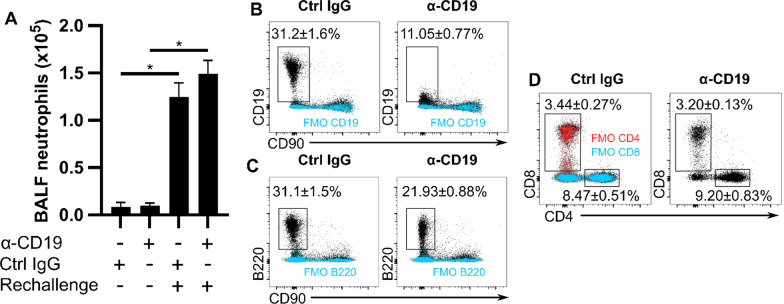
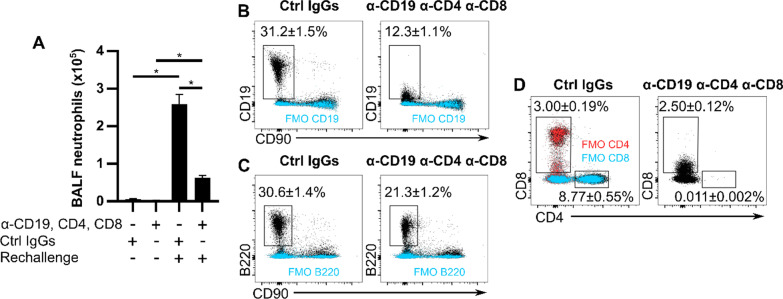
Results: Even though B cells are not sufficient to induce HP, they strongly potentiate CD4+ T cell-induced HP‑associated neutrophilic inflammation in the airways. However, the reduction of 85% of lung B cells in mice with a CD19-driven S1P1 deletion does not dampen HP inflammation, suggesting that lung B cells are not necessary in large numbers to sustain local inflammation. Finally, we found that injecting antibodies targeting B cells after experimental HP was induced does not dampen neutrophilic exacerbation. Yet, injection of antibodies directed against B cells and T cells yielded a potent 76% inhibition of neutrophilic accumulation in the lungs. This inhibition occurred despite partial, sometimes mild, depletion of B cells and T cells subsets.
Conclusions: Although B cells are required for maximal inflammation in subacute experimental HP, partial reduction of B cells fails to reduce HP-associated inflammation by itself. However, co-modulation of T cells and B cells yields enhanced inhibition of HP exacerbation caused by an antigenic rechallenge.
Keywords: Adoptive lymphocyte transfer; B cells; Biologics; CD69; Conditional knockout; Extrinsic allergic alveolitis; Hypersensitivity pneumonitis; Rituximab; S1P1.
© 2022. The Author(s).
Conflict of interest statement
DM received a funding from BMS for a COVID-19 project. There is no financial link with this project. The authors declare that they have no competing interests.
Figures
References
-
- Schuyler M, Gott K, Shopp G, Crooks L. CD3+ AND CD4+ cells adoptively transfer experimental hypersensitivity pneumonitis. Am Rev Respir Dis. 1992;146:1582–1588. - PubMed
-
- Schuyler M, Gott K, Edwards B, Nikula KJ. Experimental hypersensitivity pneumonitis - effect of CD4 cell depletion. Am J Respir Crit Care Med. 1994;149:1286–1294. - PubMed
-
- Denis M, Cormier Y, Laviolette M, Ghadirian E. T cells in hypersensitivity pneumonitis: effects of in vivo depletion of T cells in a mouse model. Am J Respir Cell Mol Biol. 1992;6:183–189. - PubMed
-
- Schuyler M, Gott K, Shopp G, Crooks L. CD3+, CD4+, CD8-, IA- T-cells adoptively transfer murine experimental hypersensitivity pneumonitis. Chest. 1993;103:S143–S145. - PubMed
MeSH terms
Substances
LinkOut - more resources
Full Text Sources
Research Materials
Miscellaneous
