


A WhatsApp-delivered intervention to promote physical activity in young children with autism spectrum disorder
- PMID: 36210901
- PMCID: PMC9542335
- DOI: 10.1080/20473869.2021.1887436
A WhatsApp-delivered intervention to promote physical activity in young children with autism spectrum disorder
Abstract
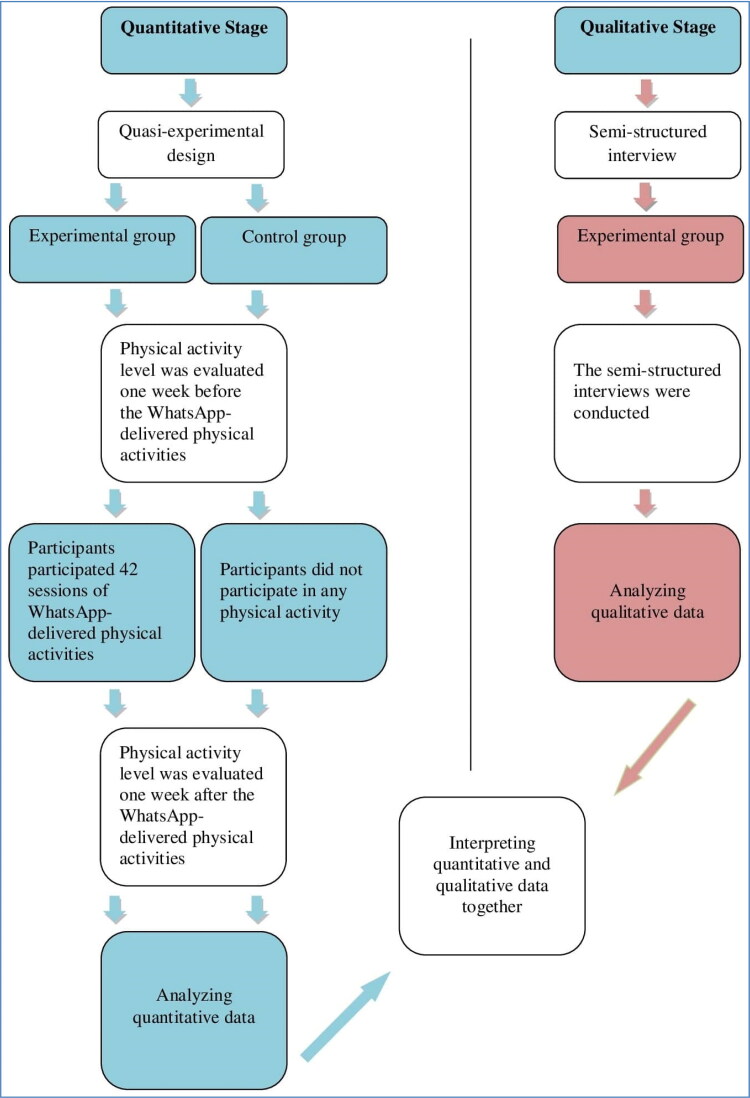
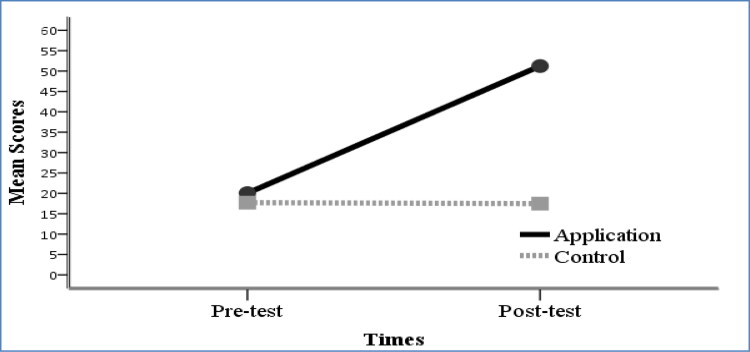
Objective: The aim of this study was to examine the effects of WhatsApp-delivered physical activities on the physical activity level of children with Autism Spectrum Disorder (ASD). Method: This study used the mixed-method sequential exploratory design that consisted of the quantitative stage and the qualitative stage. The 42 family (parent and child dyads) participated in the study. Families were assigned randomly to an experimental group (n: 21) and a control group (n: 21). Families in the experimental group were engaged in 6 weeks of the WhatsApp-delivered physical activities. The data were collected through Leisure Time Exercise Questionnaire (LTEQ) and Semi-Structured Interview Questions. A two-way mixed ANOVA (2 groups × 2 time points) was used to determine the effects of WhatsApp-delivered physical activities on the physical activity level of children with ASD. Results: After the WhatsApp-delivered physical activities, a significant increase was observed in the physical activity level of children with ASD in the experimental group compared to the control group. Conclusions: The results provided evidence that WhatsApp-delivered physical activities positively affect the physical activity level of children with ASD.
Keywords: WhatsApp; autism spectrum disorder; exercise; intervention; physical activity.
© The British Society of Developmental Disabilities 2021.
Conflict of interest statement
No potential conflict of interest was reported by the authors.
Figures
References
-
- American Psychiatric Association . 2013. Diagnostic and statistical manual of mental disorders. 5th ed. Washington DC: American Psychiatric Association.
-
- Amireault, S. and Godin, G.. 2015. The Godin-Shephard Leisure-Time Physical Activity Questionnaire: Validity evidence supporting its use for classifying healthy adults into active and insufficiently active categories. Perceptual and Motor Skills, 120, 604–622. 10.2466/03.27.PMS.120v19x7 - DOI - PubMed
-
- Bogdan, R. and Biklen, S. K.. 2007. Qualitative research for education: An introduction to theory and methods. Boston, MA: Pearson Allyn & Bacon.
LinkOut - more resources
Full Text Sources
