


The predictive value of CatLet© angiographic scoring system for long-term prognosis in patients with acute myocardial infarction presenting > 12 h after symptom onset
- PMID: 36211570
- PMCID: PMC9532528
- DOI: 10.3389/fcvm.2022.943229
The predictive value of CatLet© angiographic scoring system for long-term prognosis in patients with acute myocardial infarction presenting > 12 h after symptom onset
Abstract
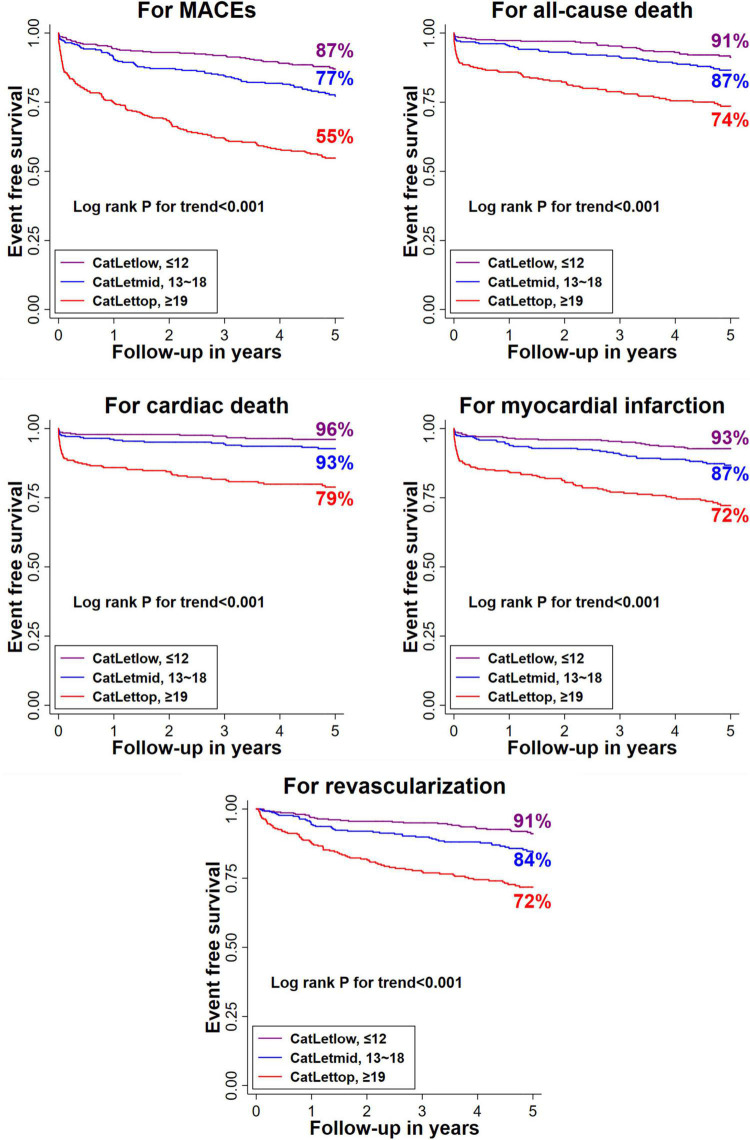
Background: We have recently developed the C oronary A rtery T ree description and L esion E valua T ion (CatLet©) angiographic scoring system, which is capable of accounting for the variability in coronary anatomy, and risk-stratifying patients with coronary artery disease. This study aimed to clarify whether the CatLet score had a predictive value for long-term prognosis in patients with acute myocardial infarction (AMI) presenting > 12 h after symptom onset.
Materials and methods: The CatLet score was calculated for 1,018 consecutively enrolled AMI patients, who were divided into 3 groups according to the CatLet score tertiles. The primary endpoint was major adverse cardiac events (MACEs), defined as a composite of myocardial infarction, cardiac death, and ischemia-driven revascularization; secondary endpoints were all-cause death, cardiac death, myocardial infarction, and ischemia-driven revascularization.
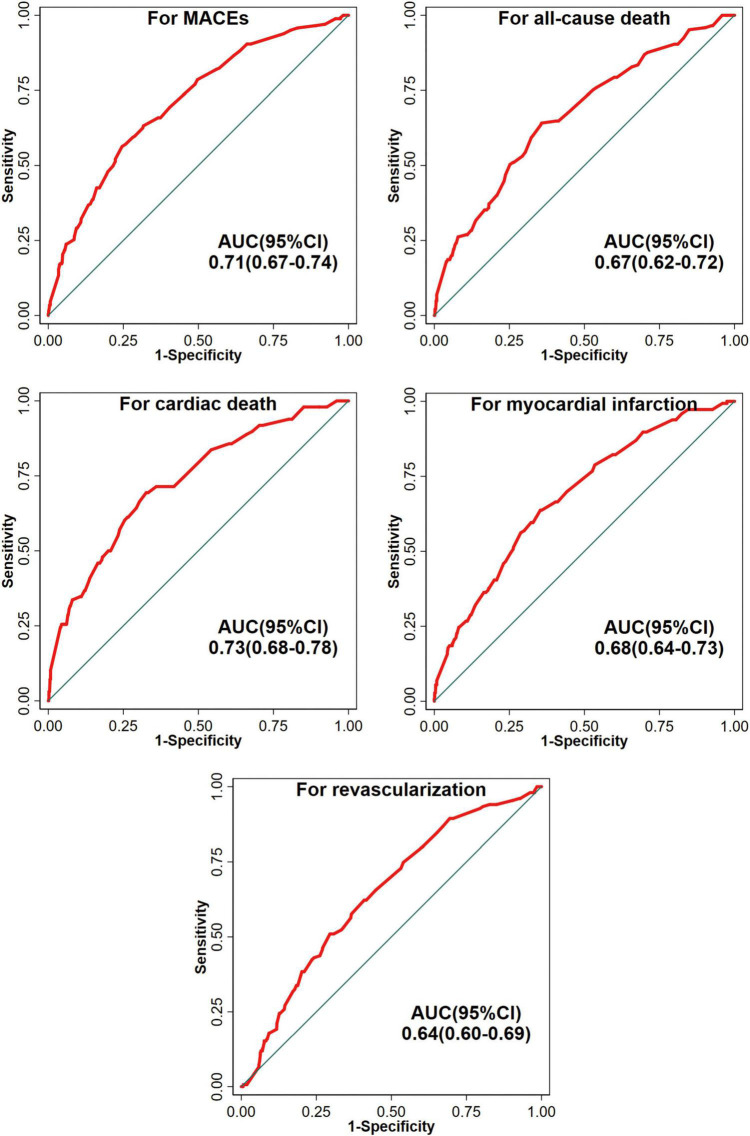
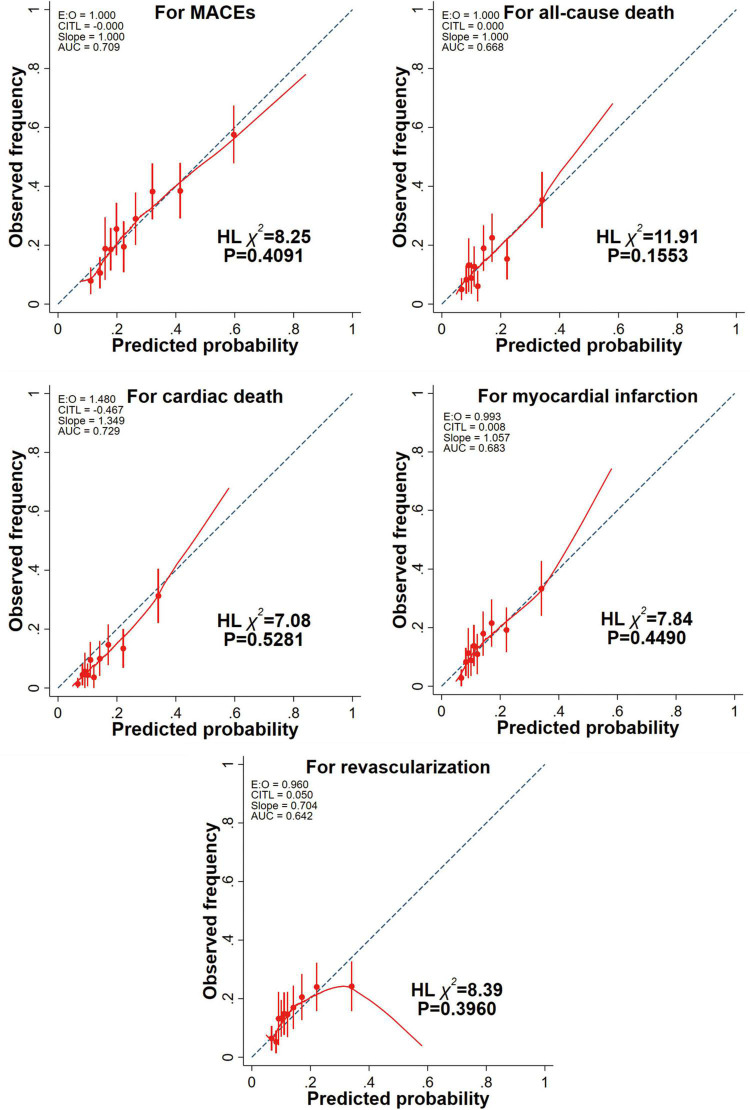
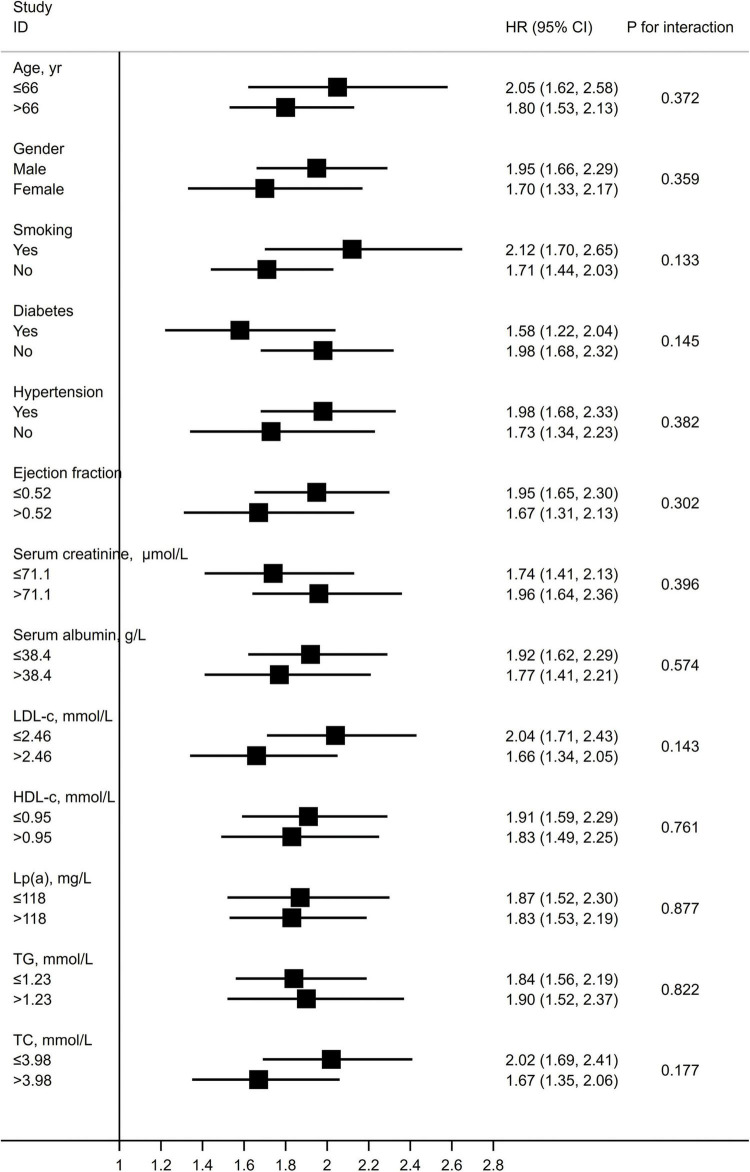
Results: The CatLet score was capable of predicting long-term prognosis at a median 4.9-year follow-up alone or after adjustment for risk factors. Multivariable-adjusted hazard ratios (95% CI)/unit higher score were 1.06 (1.05-1.08) for MACEs, 1.05 (1.03-1.07) for all-cause death, 1.06 (1.04-1.09) for cardiac death, 1.06 (1.04-1.08) for myocardial infarction, and 1.06 (1.04-1.08) for revascularization. The univariate model showed good calibration (χ2 = 8.25, P = 0.4091) and good discrimination (area under ROC curve = 0.7086) for MACEs.
Conclusion: The CatLet score is an independent predictor of long-term clinical outcomes of patients with AMI presenting > 12 h after symptom onset (http://www.chictr.org.cn; Registry Number: ChiCTR2000033730).
Keywords: Percutaneous Coronary Intervention; acute myocardial infarction; angiographic score; major adverse cardiac events; prognosis.
Copyright © 2022 Wang, He, Fan, Li, Zhou, Jiang and He.
Conflict of interest statement
The authors declare that the research was conducted in the absence of any commercial or financial relationships that could be construed as a potential conflict of interest.
Figures
References
-
- van Nunen LX, Zimmermann FM, Tonino PA, Barbato E, Baumbach A, Engstrøm T, et al. Fractional flow reserve versus angiography for guidance of PCI in patients with multivessel coronary artery disease (FAME): 5-year follow-up of a randomised controlled trial. Lancet. (2015) 386:1853–60. - PubMed
-
- De Bruyne B, Pijls NH, Kalesan B, Barbato E, Tonino PA, Piroth Z, et al. Fractional flow reserve-guided PCI versus medical therapy in stable coronary disease. N Engl J Med. (2012) 367:991–1001. - PubMed
-
- Sianos G, Morel MA, Kappetein AP, Morice MC, Colombo A, Dawkins K, et al. The SYNTAX Score: an angiographic tool grading the complexity of coronary artery disease. EuroIntervention. (2005) 1:219–27. - PubMed
-
- Leaman DM, Brower RW, Meester GT, Serruys P, van den Brand M. Coronary artery atherosclerosis: severity of the disease, severity of angina pectoris and compromised left ventricular function. Circulation. (1981) 63:285–99. - PubMed
LinkOut - more resources
Full Text Sources
