


MYC and therapy resistance in cancer: risks and opportunities
- PMID: 36214609
- PMCID: PMC9627787
- DOI: 10.1002/1878-0261.13319
MYC and therapy resistance in cancer: risks and opportunities
Abstract
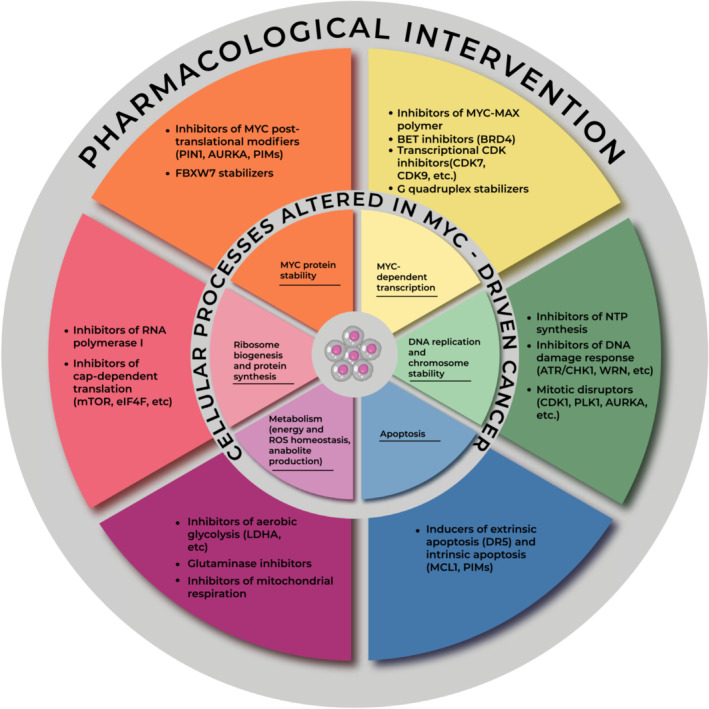
The MYC transcription factor, encoded by the c-MYC proto-oncogene, is activated by growth-promoting signals, and is a key regulator of biosynthetic and metabolic pathways driving cell growth and proliferation. These same processes are deregulated in MYC-driven tumors, where they become critical for cancer cell proliferation and survival. As other oncogenic insults, overexpressed MYC induces a series of cellular stresses (metabolic, oxidative, replicative, etc.) collectively known as oncogenic stress, which impact not only on tumor progression, but also on the response to therapy, with profound, multifaceted consequences on clinical outcome. On one hand, recent evidence uncovered a widespread role for MYC in therapy resistance in multiple cancer types, with either standard chemotherapeutic or targeted regimens. Reciprocally, oncogenic MYC imparts a series of molecular and metabolic dependencies to cells, thus giving rise to cancer-specific vulnerabilities that may be exploited to obtain synthetic-lethal interactions with novel anticancer drugs. Here we will review the current knowledge on the links between MYC and therapeutic responses, and will discuss possible strategies to overcome resistance through new, targeted interventions.
Keywords: Myc; synthetic lethality; targeted therapy; therapy resistance.
© 2022 The Authors. Molecular Oncology published by John Wiley & Sons Ltd on behalf of Federation of European Biochemical Societies.
Conflict of interest statement
The authors declare no conflict of interest.
Figures
References
Publication types
MeSH terms
Substances
LinkOut - more resources
Full Text Sources
Other Literature Sources
Medical
Research Materials
