


Aging is associated with maladaptive episodic memory-guided social decision-making
- PMID: 36215461
- PMCID: PMC9586277
- DOI: 10.1073/pnas.2208681119
Aging is associated with maladaptive episodic memory-guided social decision-making
Abstract
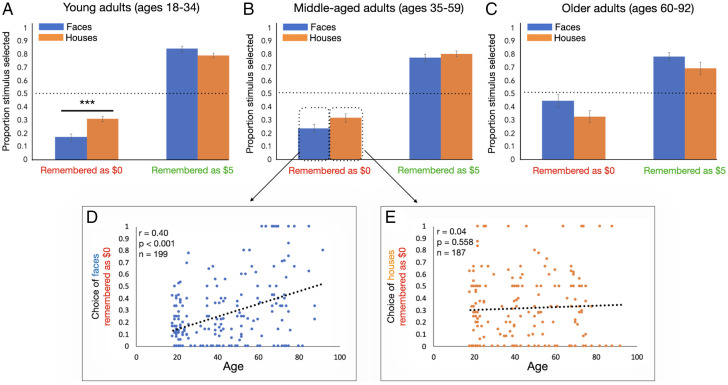
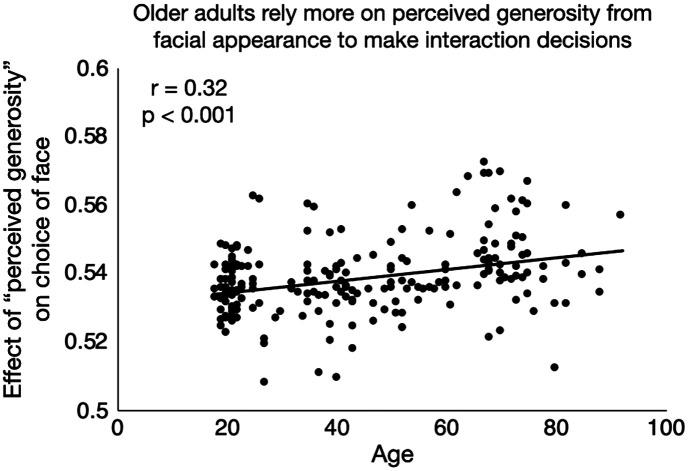
Older adults are frequent targets and victims of financial fraud. They may be especially susceptible to revictimization because of age-related changes in both episodic memory and social motivation. Here we examined these factors in a context where adaptive social decision-making requires intact associative memory for previous social interactions. Older adults made more maladaptive episodic memory-guided social decisions but not only because of poorer associative memory. Older adults were biased toward remembering people as being fair, while young adults were biased toward remembering people as being unfair. Holding memory constant, older adults engaged more with people that were familiar (regardless of the nature of the previous interaction), whereas young adults were prone to avoiding others that they remembered as being unfair. Finally, older adults were more influenced by facial appearances, choosing to interact with social partners that looked more generous, even though those perceptions were inconsistent with prior experience.
Keywords: aging; decision-making; episodic memory; social; trust.
Conflict of interest statement
The authors declare no competing interest.
Figures
References
-
- Nyberg L., Lövdén M., Riklund K., Lindenberger U., Bäckman L., Memory aging and brain maintenance. Trends Cogn. Sci. 16, 292–305 (2012). - PubMed
-
- Buckner R. L., Memory and executive function in aging and AD: Multiple factors that cause decline and reserve factors that compensate. Neuron 44, 195–208 (2004). - PubMed
-
- Lighthall N. R., Neural mechanisms of decision-making in aging. Wiley Interdiscip. Rev. Cogn. Sci. 11, e1519 (2020). - PubMed
Publication types
MeSH terms
Grants and funding
LinkOut - more resources
Full Text Sources
