. 2022 Oct;28(10):2056-2065.
doi: 10.1038/s41591-022-01974-1. Epub 2022 Oct 10.

Effects of elevated systolic blood pressure on ischemic heart disease: a Burden of Proof study

Affiliations

Effects of elevated systolic blood pressure on ischemic heart disease: a Burden of Proof study

Christian Razo et al. Nat Med. 2022 Oct.

Abstract

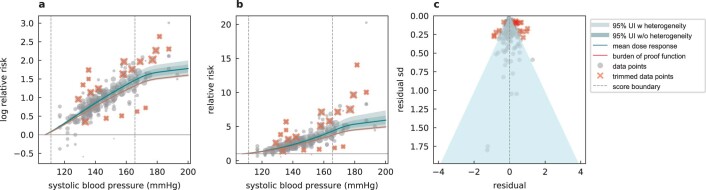
High systolic blood pressure (SBP) is a major risk factor for ischemic heart disease (IHD), the leading cause of death worldwide. Using data from published observational studies and controlled trials, we estimated the mean SBP-IHD dose-response function and burden of proof risk function (BPRF), and we calculated a risk outcome score (ROS) and corresponding star rating (one to five). We found a very strong, significant harmful effect of SBP on IHD, with a mean risk-relative to that at 100 mm Hg SBP-of 1.39 (95% uncertainty interval including between-study heterogeneity 1.34-1.44) at 120 mm Hg, 1.81 (1.70-1.93) at 130 mm Hg and 4.48 (3.81-5.26) at 165 mm Hg. The conservative BPRF measure indicated that SBP exposure between 107.5 and 165.0 mm Hg raised risk by 101.36% on average, yielding a ROS of 0.70 and star rating of five. Our analysis shows that IHD risk was already increasing at 120 mm Hg SBP, rising steadily up to 165 mm Hg and increasing less steeply above that point. Our study endorses the need to prioritize and strengthen strategies for screening, to raise awareness of the need for timely diagnosis and treatment of hypertension and to increase the resources allocated for understanding primordial prevention of elevated blood pressure.


Conflict of interest statement

A.R. is listed as one of the inventors on submitted patent applications related to low-fixed-dose combination products for the treatment of cardiovascular or cardiometabolic disease; he does not have a direct financial interest in these patent applications or investments. The other authors of this manuscript declare no competing interests.

Figures
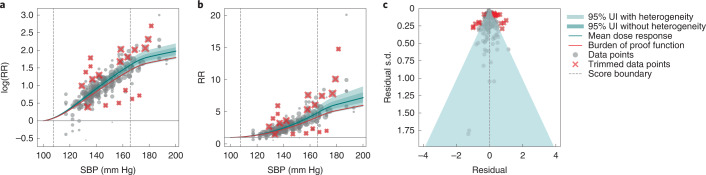
Fig. 1
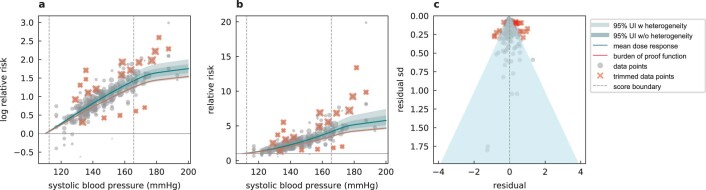
Fig. 1. Relative risk of ischemic heart disease for different values of systolic blood pressure (SBP) in mm Hg.
a, Log-relative risk (log(RR)) function. b, Relative risk (RR) function. c, Modified funnel plot showing the residuals (relative to 0) on the x axis and estimated s.d., including reported s.d. and between-study heterogeneity, on the y axis.
Extended Data Fig. 1
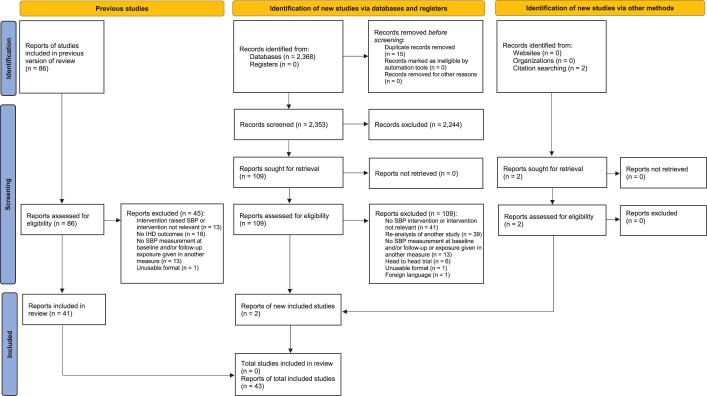
Extended Data Fig. 1. PRISMA flow diagram of systolic blood pressure and ischemic heart disease data seeking approach.
The PRISMA flow diagram covering systolic blood pressure and ischemic heart disease. Template is from: Page MJ, McKenzie JE, Bossuyt PM, Boutron I, Hoffmann TC, Mulrow CD, et al. The PRISMA 2020 statement: an updated guideline for reporting systematic reviews. BMJ 2021;372:n71. doi: 10.1136/bmj.n71. For more information, visit: http://www.prisma-statement.org/.
Extended Data Fig. 2
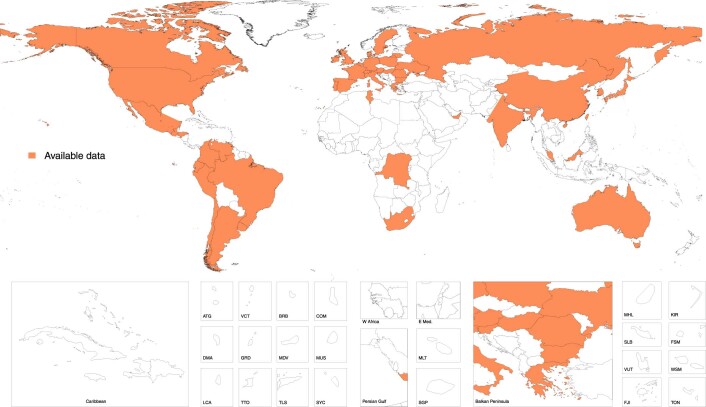
Map of countries where input studies were conducted.
Extended Data Fig. 3
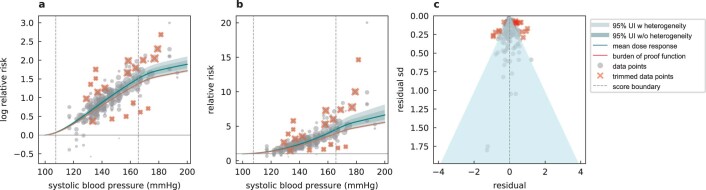
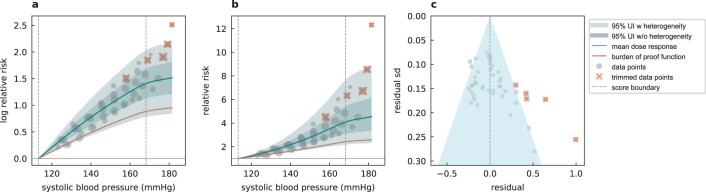
Extended Data Fig. 3. Relative risk of ischemic heart disease for different values of systolic blood pressure in mm Hg, starting at systolic blood pressure levels of 107.5 mm Hg.
a, Log-relative risk (log(RR)) function. b, Relative risk (RR) function. c, Modified funnel plot showing the residuals (relative to 0) on the x axis and estimated s.d., including reported s.d. and between-study heterogeneity, on the y axis.
Extended Data Fig. 4
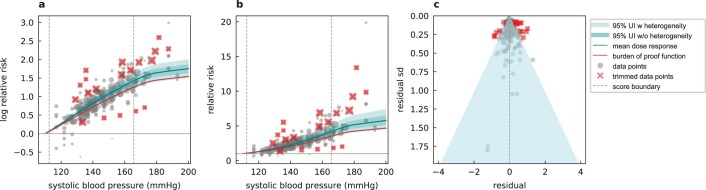
Extended Data Fig. 4. Relative risk of ischemic heart disease for different values of systolic blood pressure in mm Hg, starting at systolic blood pressure levels of 110 mm Hg.
a, Log-relative risk (log(RR)) function. b, Relative risk (RR) function. c, Modified funnel plot showing the residuals (relative to 0) on the x axis and estimated s.d., including reported s.d. and between-study heterogeneity, on the y axis.
Extended Data Fig. 5
Extended Data Fig. 5. Relative risk of ischemic heart disease for different values of systolic blood pressure in mm Hg, starting at systolic blood pressure of 115 mm Hg.
a, Log-relative risk (log(RR)) function. b, Relative risk (RR) function. c, Modified funnel plot showing the residuals (relative to 0) on the x axis and estimated s.d., including reported s.d. and between-study heterogeneity, on the y axis.
Extended Data Fig. 6
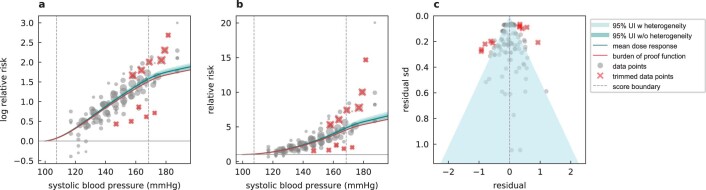
Extended Data Fig. 6. Relative risk of ischemic heart disease for different values of systolic blood pressure in mm Hg based, unconstrained.
a, Log-relative risk (log(RR)) function. b, Relative risk (RR) function. c, Modified funnel plot showing the residuals (relative to 0) on the x axis and estimated s.d., including reported s.d. and between-study heterogeneity, on the y axis.
Extended Data Fig. 7
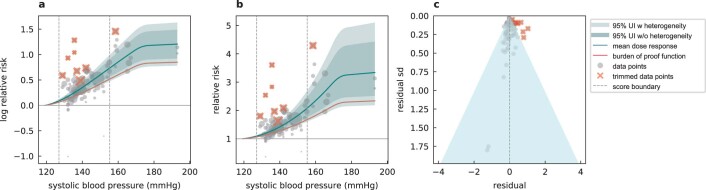
Extended Data Fig. 7. Relative risk of ischemic heart disease for different values of systolic blood pressure in mm Hg based on data from randomized control trials (RCTs).
a, Log-relative risk (log(RR)) function. b, Relative risk (RR) function. c, Modified funnel plot showing the residuals (relative to 0) on the x axis and estimated s.d., including reported s.d. and between-study heterogeneity, on the y axis.
Extended Data Fig. 8
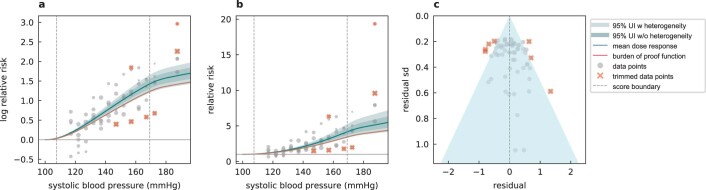
Extended Data Fig. 8. Relative risk of ischemic heart disease for different values of systolic blood pressure in mm Hg based on data from the Multiple Risk Factor Intervention Trial (MRFIT).
a, Log-relative risk (log(RR)) function. b, Relative risk (RR) function. c, Modified funnel plot showing the residuals (relative to 0) on the x axis and estimated s.d., including reported s.d. and between-study heterogeneity, on the y axis.
Extended Data Fig. 9
Extended Data Fig. 9. Relative risk of ischemic heart disease for different values of systolic blood pressure in mm Hg based on data from the Pacific Collaborator Research Pooled Cohort Study (PSC).
a, Log-relative risk (log(RR)) function. b, Relative risk (RR) function. c, Modified funnel plot showing the residuals (relative to 0) on the x axis and estimated s.d., including reported s.d. and between-study heterogeneity, on the y axis.
Extended Data Fig. 10
Extended Data Fig. 10. Relative risk of ischemic heart disease for different values of systolic blood pressure in mm Hg based on data from the Multiple Risk Factors Intervention Trial (MRFIT) and the Pacific Collaborator Research Pooled Cohort Study (PSC).
a, Log-relative risk (log(RR)) function. b, Relative risk (RR) function. c, Modified funnel plot showing the residuals (relative to 0) on the x axis and estimated s.d., including reported s.d. and between-study heterogeneity, on the y axis.

Comment in

References

    1. Forouzanfar MH, et al. Global burden of hypertension and systolic blood pressure of at least 110 to 115 mm Hg, 1990-2015. JAMA. 2017;317:165–182. doi: 10.1001/jama.2016.19043. - DOI - PubMed
    1. Murray CJL, et al. Global burden of 87 risk factors in 204 countries and territories, 1990–2019: a systematic analysis for the Global Burden of Disease Study 2019. Lancet. 2020;396:1223–1249. doi: 10.1016/S0140-6736(20)30752-2. - DOI - PMC - PubMed
    1. Vos T, et al. Global burden of 369 diseases and injuries in 204 countries and territories, 1990–2019: a systematic analysis for the Global Burden of Disease Study 2019. Lancet. 2020;396:1204–1222. doi: 10.1016/S0140-6736(20)30925-9. - DOI - PMC - PubMed
    1. Fuchs FD, Whelton PK. High blood pressure and cardiovascular disease. Hypertension. 2020;75:285–292. doi: 10.1161/HYPERTENSIONAHA.119.14240. - DOI - PMC - PubMed
    1. SPRINT Research Group et al. Final report of a trial of intensive versus standard blood-pressure control. N. Engl. J. Med. 2021;384:1921–1930. doi: 10.1056/NEJMoa1901281. - DOI - PMC - PubMed

Publication types

MeSH terms

Substances