. 2022 Oct;28(10):2075-2082.
doi: 10.1038/s41591-022-01968-z. Epub 2022 Oct 10.

Health effects associated with consumption of unprocessed red meat: a Burden of Proof study

Affiliations

Health effects associated with consumption of unprocessed red meat: a Burden of Proof study

Haley Lescinsky et al. Nat Med. 2022 Oct.

Abstract

Characterizing the potential health effects of exposure to risk factors such as red meat consumption is essential to inform health policy and practice. Previous meta-analyses evaluating the effects of red meat intake have generated mixed findings and do not formally assess evidence strength. Here, we conducted a systematic review and implemented a meta-regression-relaxing conventional log-linearity assumptions and incorporating between-study heterogeneity-to evaluate the relationships between unprocessed red meat consumption and six potential health outcomes. We found weak evidence of association between unprocessed red meat consumption and colorectal cancer, breast cancer, type 2 diabetes and ischemic heart disease. Moreover, we found no evidence of an association between unprocessed red meat and ischemic stroke or hemorrhagic stroke. We also found that while risk for the six outcomes in our analysis combined was minimized at 0 g unprocessed red meat intake per day, the 95% uncertainty interval that incorporated between-study heterogeneity was very wide: from 0-200 g d-1. While there is some evidence that eating unprocessed red meat is associated with increased risk of disease incidence and mortality, it is weak and insufficient to make stronger or more conclusive recommendations. More rigorous, well-powered research is needed to better understand and quantify the relationship between consumption of unprocessed red meat and chronic disease.


Conflict of interest statement

The authors declare no competing interests.

Figures
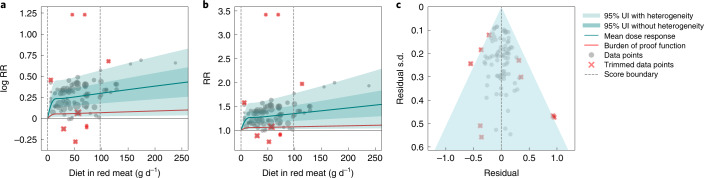
Fig. 1
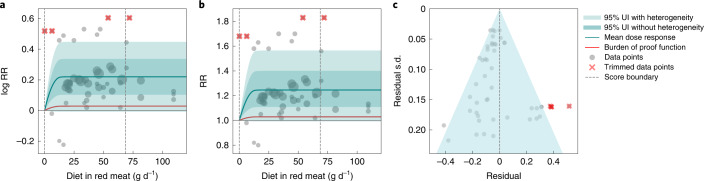
Fig. 1. Unprocessed red meat consumption and colorectal cancer.
a, Log-RR function. b, RR function. c, A modified funnel plot showing the residuals (relative to 0) on the x axis and the estimated s.d. that includes reported s.d. and between-study heterogeneity on the y axis.
Fig. 2
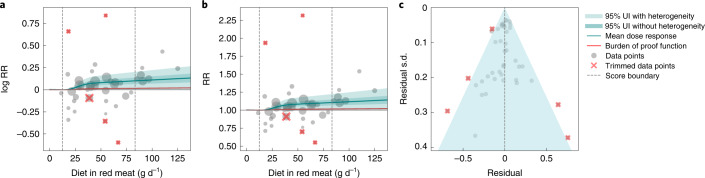
Fig. 2. Unprocessed red meat consumption and breast cancer.
a, Log-RR function. b, RR function. c, A modified funnel plot showing the residuals (relative to 0) on the x axis and the estimated s.d. that includes reported s.d. and between-study heterogeneity on the y axis.
Fig. 3
Fig. 3. Unprocessed red meat consumption and ischemic heart disease.
a, Log-RR function. b, RR function. c, A modified funnel plot showing the residuals (relative to 0) on the x axis and the estimated s.d. that includes reported s.d. and between-study heterogeneity on the y axis.
Fig. 4
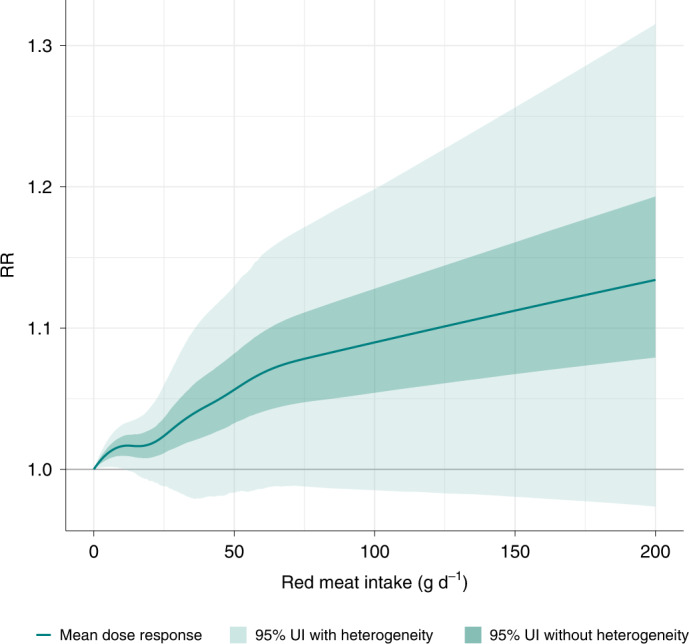
Fig. 4. Aggregate RR curve for unprocessed red meat consumption and six health outcomes combined.
The dark line indicates the combined-cause mean RR curve.
Extended Data Fig. 1
Extended Data Fig. 1. PRISMA flow diagram of unprocessed red meat data seeking approach.
The PRISMA flow diagram covering unprocessed red meat and all 6 outcomes. Template is from: Page MJ, McKenzie JE, Bossuyt PM, Boutron I, Hoffmann TC, Mulrow CD, et al. The PRISMA 2020 statement: an updated guideline for reporting systematic reviews. BMJ 2021;372:n71. doi: 10.1136/bmj.n71. For more information, visit: http://www.prisma-statement.org/. * EMBASE and Web of Science were searched for recent records (from January 1, 2020, to May 10, 2022) to augment the date-unrestricted PubMed search (records up to May 10, 2022).
Extended Data Fig. 2
Extended Data Fig. 2. Red meat consumption and type 2 diabetes.
a, log-relative risk function. b, relative risk function. c, A modified funnel plot showing the residuals (relative to 0) on the x-axis and the estimated standard deviation (SD) that includes reported SD and between-study heterogeneity on the y-axis.
Extended Data Fig. 3
Extended Data Fig. 3. Red meat consumption and ischemic stroke.
a, log-relative risk function. b, relative risk function. c, A modified funnel plot showing the residuals (relative to 0) on the x-axis and the estimated standard deviation (SD) that includes reported SD and between-study heterogeneity on the y-axis.
Extended Data Fig. 4
Extended Data Fig. 4. Red meat consumption and hemorrhagic stroke.
a, log-relative risk function. b, relative risk function. c, A modified funnel plot showing the residuals (relative to 0) on the x-axis and the estimated standard deviation (SD) that includes reported SD and between-study heterogeneity on the y-axis.

Comment in

References

    1. Pan A, et al. Red meat consumption and risk of type 2 diabetes: 3 cohorts of US adults and an updated meta-analysis. Am. J. Clin. Nutr. 2011;94:1088–1096. doi: 10.3945/ajcn.111.018978. - DOI - PMC - PubMed
    1. Demeyer D, Mertens B, De Smet S, Ulens M. Mechanisms linking colorectal cancer to the consumption of (processed) red meat: a review. Crit. Rev. Food Sci. Nutr. 2016;56:2747–2766. doi: 10.1080/10408398.2013.873886. - DOI - PubMed
    1. Bellavia A, Stilling F, Wolk A. High red meat intake and all-cause cardiovascular and cancer mortality: is the risk modified by fruit and vegetable intake? Am. J. Clin. Nutr. 2016;104:1137–1143. doi: 10.3945/ajcn.116.135335. - DOI - PubMed
    1. Larsson SC, Orsini N. Red meat and processed meat consumption and all-cause mortality: a meta-analysis. Am. J. Epidemiol. 2014;179:282–289. doi: 10.1093/aje/kwt261. - DOI - PubMed
    1. Murray CJL, et al. Global burden of 87 risk factors in 204 countries and territories, 1990–2019: a systematic analysis for the Global Burden of Disease Study 2019. Lancet. 2020;396:1223–1249. doi: 10.1016/S0140-6736(20)30752-2. - DOI - PMC - PubMed

Publication types