


Renal Sympathetic Denervation for Hypertension
- PMID: 36217529
- PMCID: PMC9546727
- DOI: 10.1016/j.ekir.2022.06.019
Renal Sympathetic Denervation for Hypertension
Abstract
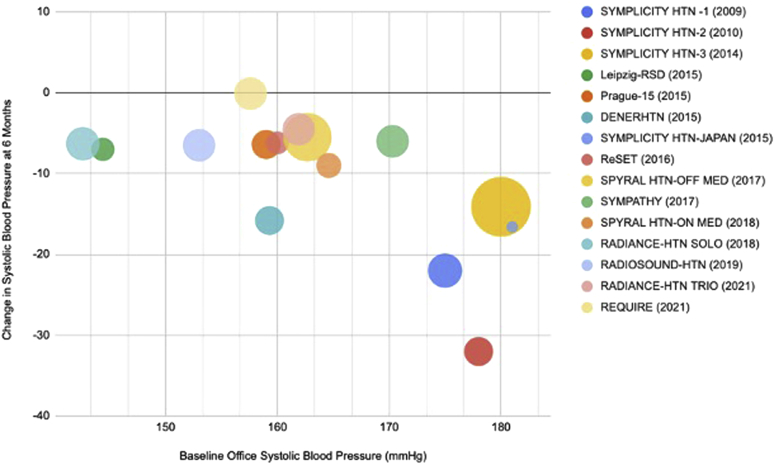
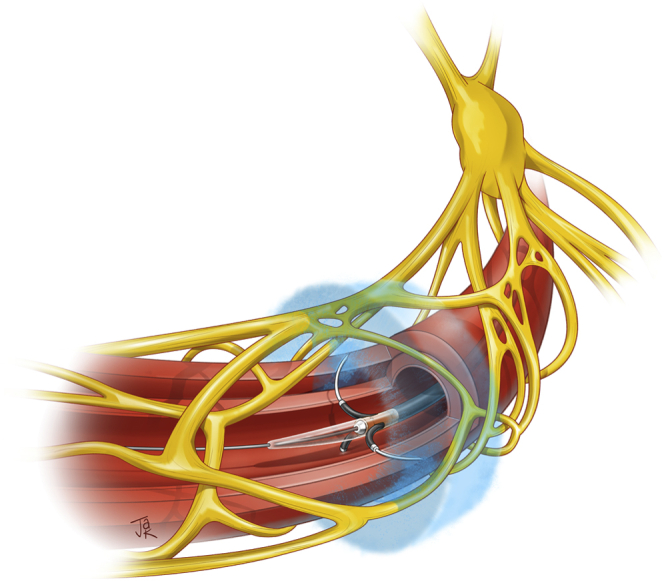
Arterial hypertension is the most prevalent global modifiable risk factor for cardiovascular morbidity and mortality. Despite the availability of numerous pharmacologic treatments, many patients do not achieve guideline-recommended blood pressure targets. Therefore, renal sympathetic denervation (RDN), a process in which catheter-directed techniques are used to ablate portions of the renal artery to reduce sympathetic activity, has been extensively investigated as a complementary and nonpharmacologic approach for the treatment of arterial hypertension. This review seeks to discuss the pathophysiological rationale of this strategy, to survey its history and development, and to highlight the current clinical evidence and possible future directions of its employment. In sum, RDN has demonstrated itself to be a safe and well-tolerated endovascular intervention that can reliably contribute to improved blood pressure control and, perhaps ultimately, significant cardiovascular prognosis.
Keywords: Denervation; Endovascular; Hypertension; Radiofrequency; Renal; Ultrasound.
© 2022 International Society of Nephrology. Published by Elsevier Inc.
Figures
References
Publication types
LinkOut - more resources
Full Text Sources
