


Effect of maternal sleep on embryonic development
- PMID: 36224237
- PMCID: PMC9556600
- DOI: 10.1038/s41598-022-21516-6
Effect of maternal sleep on embryonic development
Erratum in
-
Author Correction: Effect of maternal sleep on embryonic development.Sci Rep. 2024 Apr 3;14(1):7836. doi: 10.1038/s41598-024-58405-z. Sci Rep. 2024. PMID: 38570583 Free PMC article. No abstract available.
Abstract
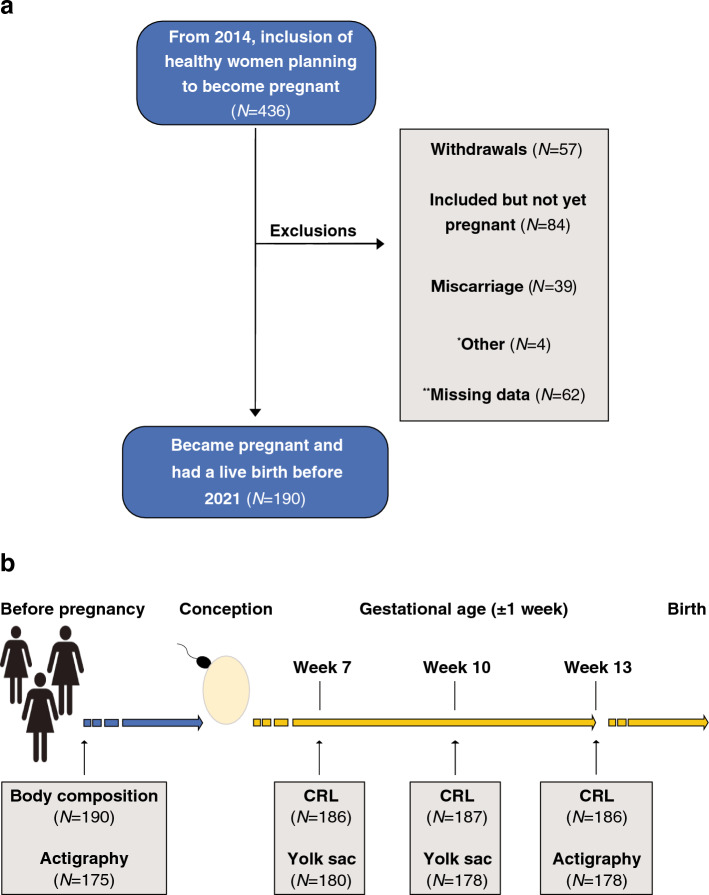
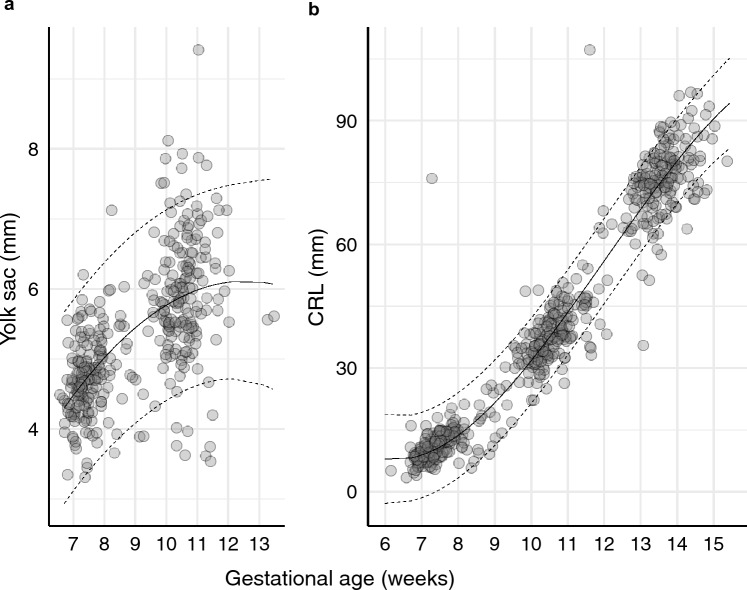
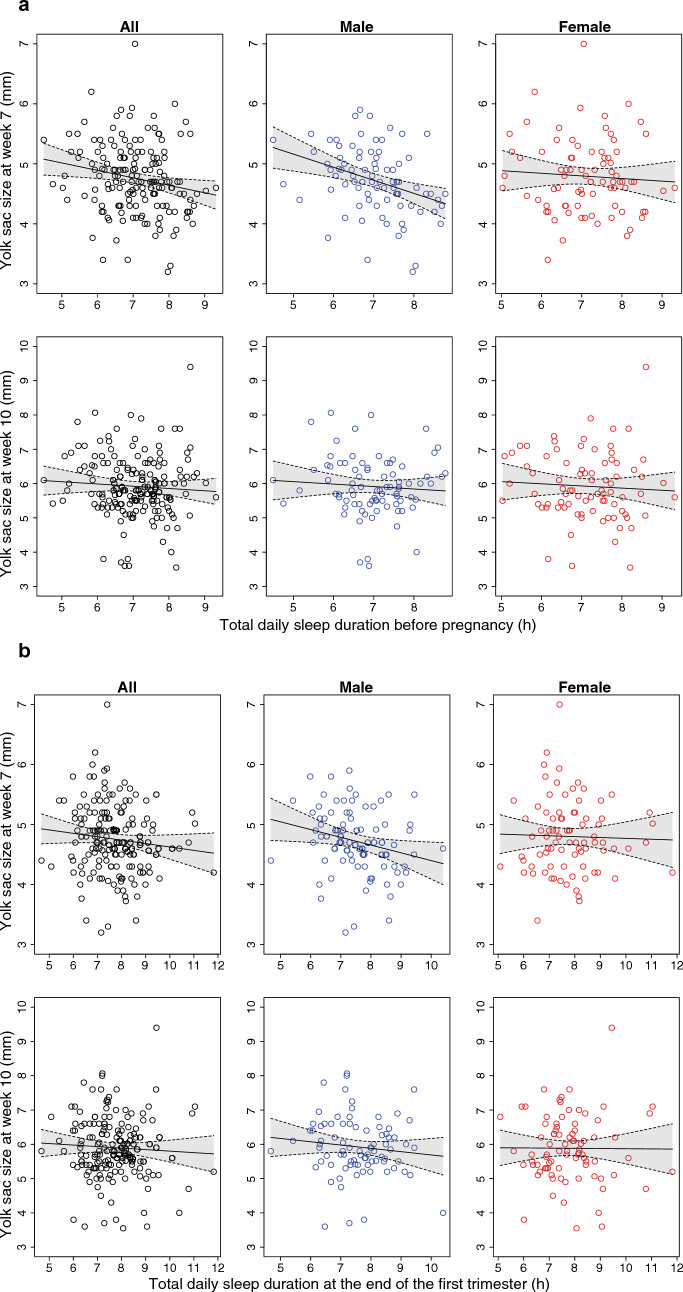
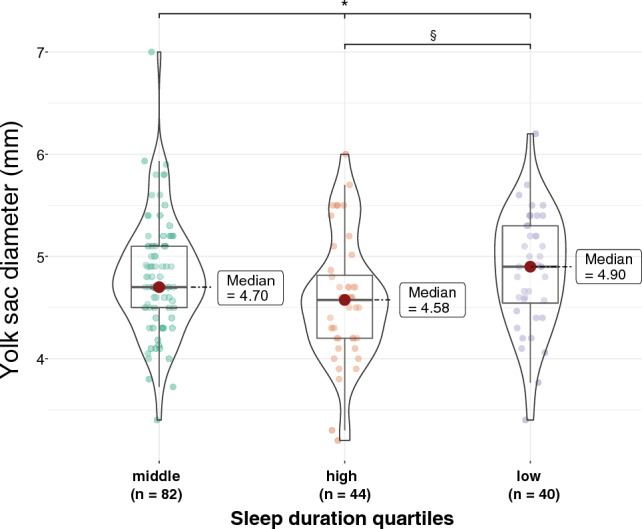
The concept of developmental origin of health and disease has ignited a search for mechanisms and health factors influencing normal intrauterine development. Sleep is a basic health factor with substantial individual variation, but its implication for early prenatal development remains unclear. During the embryonic period, the yolk sac is involved in embryonic nutrition, growth, hematopoiesis, and likely in fetal programming. Maternal body measures seem to influence its size in human female embryos. In this prospective, longitudinal observational study of 190 healthy women recruited before natural conception, we assessed the effect of prepregnant sleep duration (actigraphy) on the fetal crown-rump-length (CRL) and yolk sac size (ultrasound). All women gave birth to a live child. The prepregnancy daily sleep duration had an effect on the male yolk sac and CRL at the earliest measurement only (7 weeks). I.e., the yolk sac diameter decreased with increasing sleep duration (0.22 mm·h-1d-1, 95%CI [0.35-0.09], P < 0.01), and CRL increased (0.92 mm·h-1d-1, 95%CI [1.77-0.08], P = 0.03). Since there was no association at the second measurement (10 weeks), and in the group of female fetuses at any measure point, we suggest a sex- and time-dependent embryonic adaptation to sleep generated differences in the intrauterine environment in normal pregnancies.
© 2022. The Author(s).
Conflict of interest statement
The authors declare no competing interests.
Figures
References
Publication types
MeSH terms
LinkOut - more resources
Full Text Sources
